

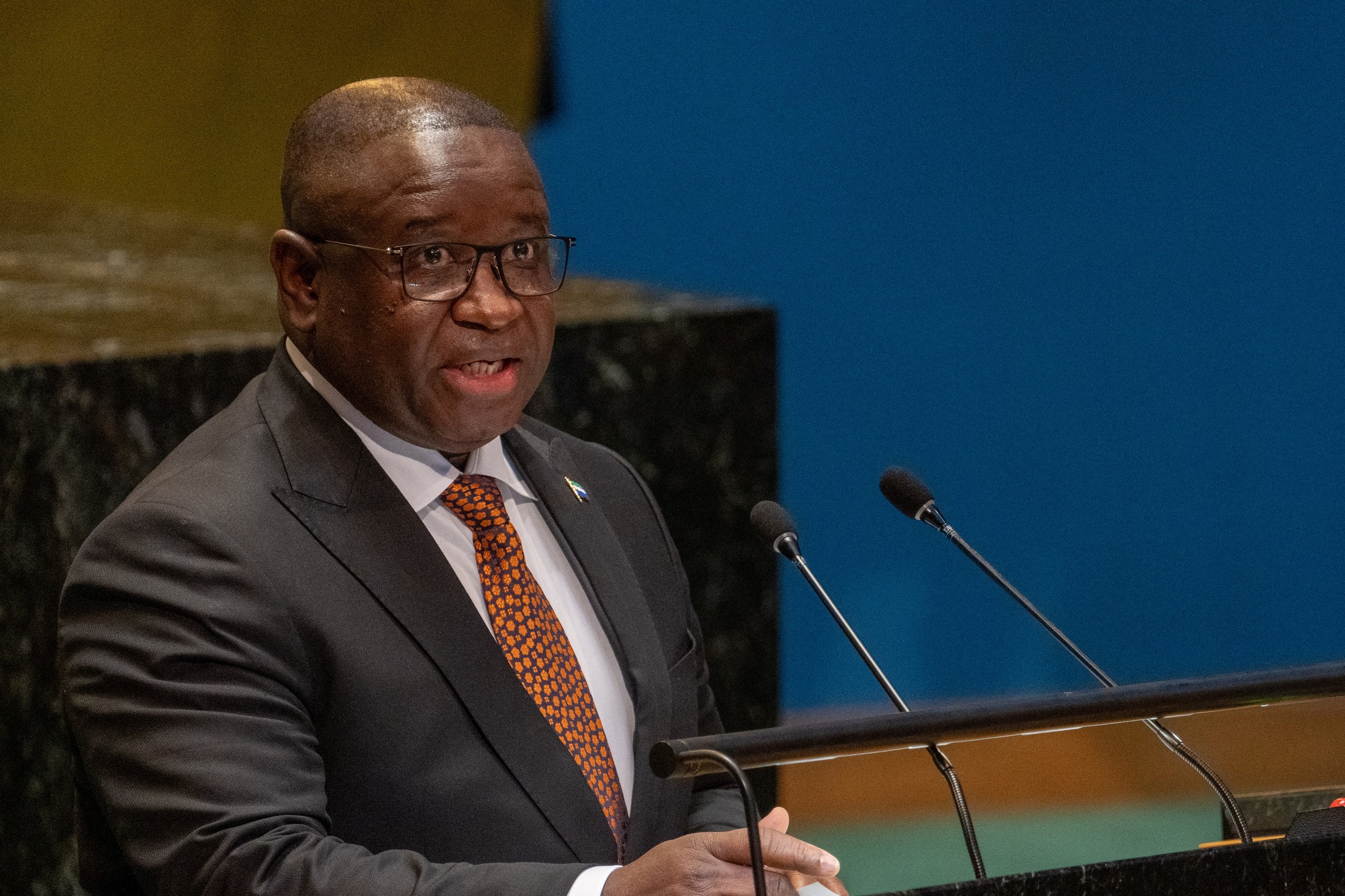
Gambiaj.com – (FREETOWN, Sierra Leone) – President Julius Maada Bio on Sunday formally apologized to victims and survivors of Sierra Leone’s brutal civil war, as the country marked its first-ever National Remembrance Day in memory of those killed and maimed during the 1991–2002 conflict.
Speaking in a nationwide address on January 18, President Bio asked for forgiveness “in the name of the nation” for the atrocities committed during a war that left more than 100,000 people dead and thousands more wounded or mutilated.
“I ask for forgiveness on behalf of our nation and on behalf of our leaders, past and present,” Bio said. “We cannot erase what was done, but we can face it with humility, honesty, and courage.”
The National Remembrance Day, decreed by President Bio, implements a key recommendation of Sierra Leone’s Truth and Reconciliation Commission.
Authorities have called on citizens to observe the day as a collective act of memory and solidarity, encouraging reflection on the past and what officials described as “conscious” and “patriotic” actions to do what is right for the country, affectionately known as “Mama Salone.”
January 18 holds deep significance in Sierra Leone’s history, marking the official end of the 11-year civil war in 2002. Despite the passage of time, the conflict’s scars remain vivid for thousands of survivors.
President Bio, who was himself a soldier and later a member of the military junta during the war years, acknowledged the enduring pain of victims and urged a path toward national healing.
“To all victims and survivors, I cannot ask you to forget,” he said. “I only ask, in your own time and in your own way, that our nation may find the grace to heal fully, restore dignity, and move forward together.”
He also cautioned Sierra Leoneans, particularly those active on social media, to choose their words carefully and reject all forms of hate speech. “We must refuse all incitement to hatred,” he said.
Remembering a War That Scarred a Nation
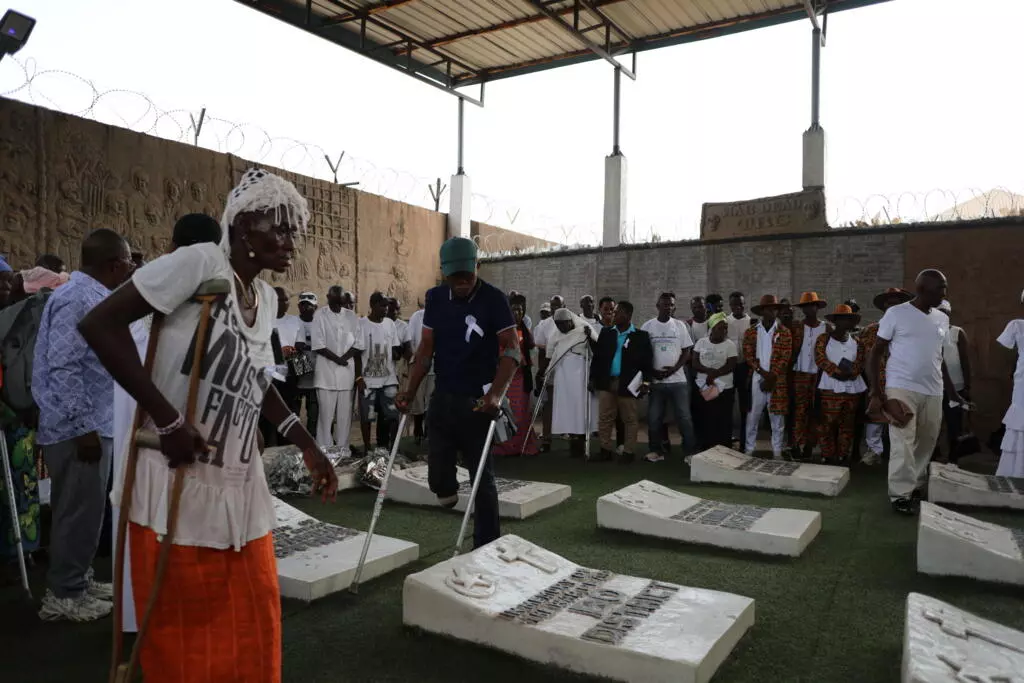
Earlier on Sunday, a small group of amputees and war-wounded survivors gathered at the former Special Court complex in the capital, Freetown, to honor those who lost their lives during the conflict.
Dressed in white and wearing white ribbons, they laid wreaths at symbolic graves at the museum, prayed, and observed a minute of silence.
The Sierra Leone civil war is widely regarded as one of the most horrific conflicts in recent history. It began on March 23, 1991, when the Revolutionary United Front (RUF) launched an insurgency in the eastern part of the country, claiming it sought to liberate Sierra Leone from corruption, injustice, and social exclusion.
The rebellion quickly descended into widespread terror, marked by burned villages, attacks on civilians, forced recruitment of child soldiers, sexual violence, and mass amputations.
Control of diamond-rich areas, particularly in the Kono district, became central to the conflict, with so-called “blood diamonds” financing the fighting and intensifying factional rivalries amid political instability and repeated coups.
One of the most traumatic moments of the war came on January 6, 1999, when violence engulfed Freetown, the country’s political and economic heart.
After several failed peace accords, the deployment of United Nations forces, and the gradual disarmament of combatants, the war officially ended in 2002.
This was followed by the establishment of the Truth and Reconciliation Commission and the Special Court for Sierra Leone. However, many victims continue to feel that justice remains incomplete.
Against this backdrop, the National Remembrance Day is intended not only to honor the dead but also to confront the causes of the conflict, with the aim of preventing Sierra Leone from ever sliding back into such violence.