

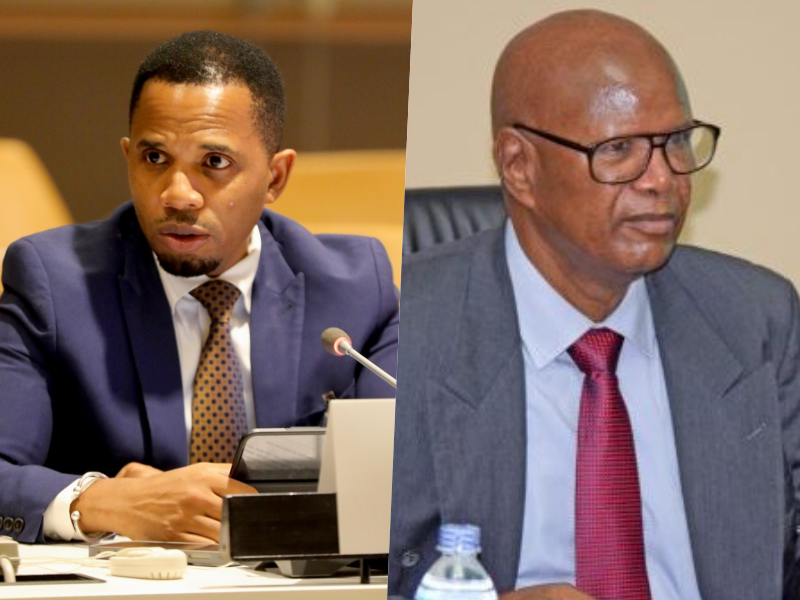
Gambiaj.com – (BANJUL, The Gambia) – The Minister of Information, Media and Broadcasting Services, Dr Ismaila Ceesay, has sparked renewed debate over press freedom after dismissing claims that The Gambia’s media laws are draconian, arguing instead that they are necessary safeguards to protect peace, stability, and public order.
Speaking in an interview with journalist Peter Gomez, Dr Ceesay challenged journalists, civil society groups, and the Gambia Press Union (GPU) to clearly identify the laws they believe are oppressive.
“I am not sure there are any draconian laws in the Constitution of the Republic of The Gambia,” he said, maintaining that existing legal provisions are designed to protect citizens rather than suppress the media.
His remarks come amid sustained criticism from human rights advocates, including Madi Jobarteh, who have pointed to sections of the Criminal Code, the Information and Communication Act, the Official Secrets Act, and the Newspaper Act as restrictive, even years after the end of former president Yahya Jammeh’s authoritarian rule.
Although President Adama Barrow has repeatedly pledged to repeal or amend restrictive media laws, Dr Ceesay warned that outright repeal could create what he described as “a dangerous vacuum.” He argued that no democratic country operates without legal mechanisms to ensure accountability in the media sector.
The minister also questioned whether existing media bodies have the authority to effectively regulate journalists. He noted that the Media Council of The Gambia currently lacks legal backing because it is not established by an Act of Parliament.
Minister Ceesay suggested that the council should be legislated and granted regulatory powers, a proposal that critics, including activist Madi Jobarteh, have warned could open the door to state control over media content.
Dr Ceesay further raised concerns about the rapid growth of online media, warning that unregulated digital platforms publishing unchecked information could fuel hate speech, damage reputations, and threaten national stability.
Despite ongoing concerns from media practitioners and rights groups, the minister insisted that press freedom has improved under President Barrow’s administration, noting that no journalist has been jailed for carrying out their professional duties since 2017.
D.A Jawo Labels Existing Media Laws “Clearly Draconian,” Rejects Safeguards Argument
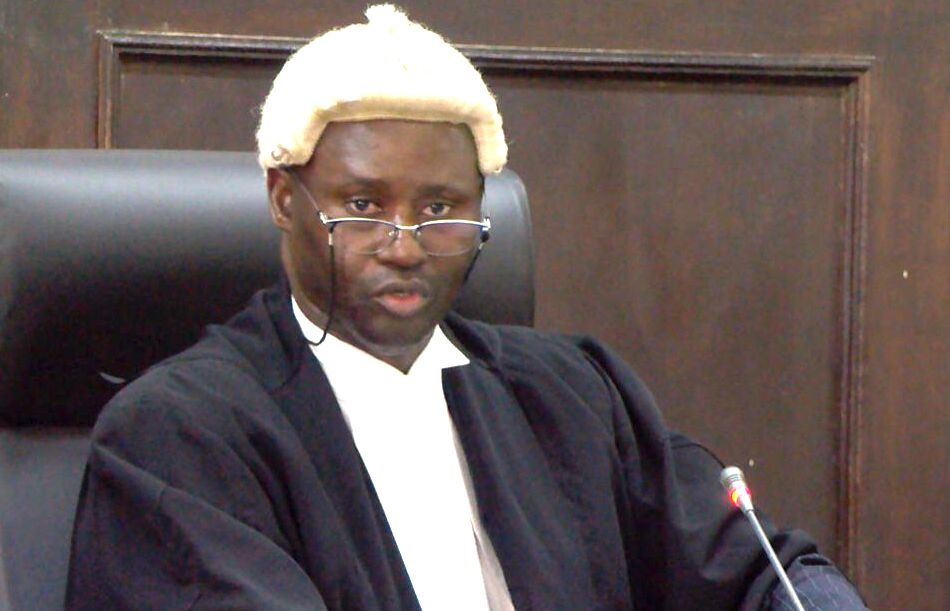
However, Dr Ceesay’s position has been strongly contested by former Minister of Information and ex-Gambia Press Union president Ali Jawo, who described several existing media laws as “clearly draconian” and incompatible with democratic norms.
Jawo said he had no hesitation using the term, arguing that some laws “should not exist in a democracy.” He disclosed that during his time as information minister, he established a committee specifically tasked with identifying repressive media laws for repeal or amendment.
Rejecting the notion that such laws serve as safeguards, Jawo questioned who they are intended to protect, stressing that journalists, who bear the brunt of the legislation, are best placed to judge their impact.
Jawo defended media self-regulation through the GPU and the Media Council of The Gambia, cautioning against any form of government-controlled regulation.
Drawing on history, Jawo recalled attempts under both the Jawara and Jammeh administrations to impose state media regulators, efforts he said were resisted by journalists and ultimately repealed following strong opposition.
His comments directly contradict Dr Ceesay’s assertions and reinforce long-standing demands from journalists and human rights defenders for the repeal or substantial reform of media laws they view as restrictive.
As the exchange intensifies, the debate over whether The Gambia’s media laws are essential safeguards or lingering tools of repression remains unresolved, deepening tensions between the government, the media, and civil society.