


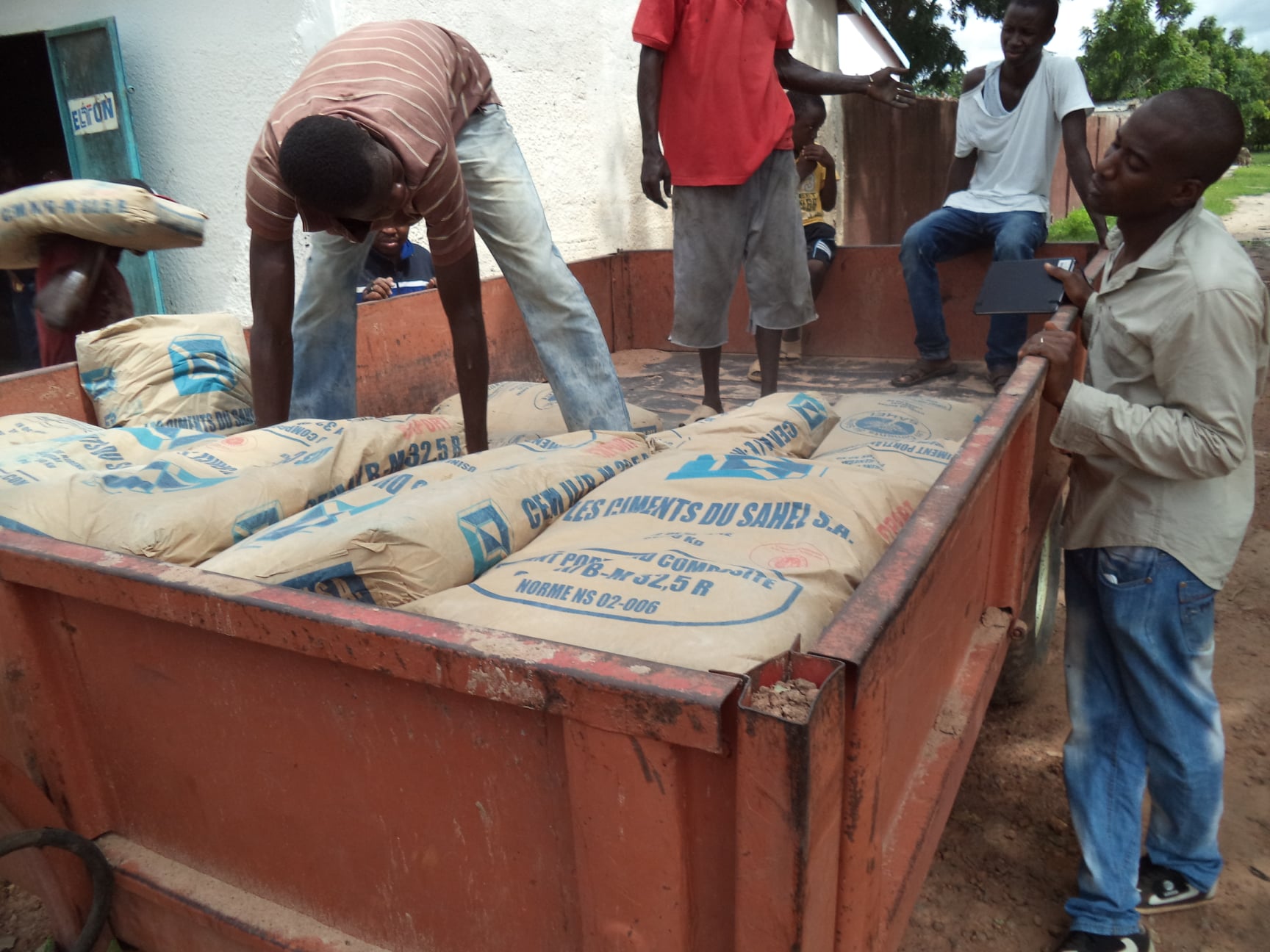




Gambiaj.com – (Banjul, The Gambia) – The Gambian government’s decision to allow the temporary overland importation of bagged cement will lapse on 1 February 2026, with excise duty fully reinstated at D180 per 50 kg bag, the Ministry of Trade, Industry, Regional Integration, and Employment has announced.
The move comes despite persistent high prices and ongoing shortages, raising fresh questions about the effectiveness of the country’s cement import policy and its broader impact on inflation and competition.
In a press statement dated 20 January 2026, the ministry confirmed that the temporary authorization—introduced amid acute shortages—was always intended as a stopgap measure. Information Minister Dr Ismaila Ceesay later reiterated that the policy reversal would last only one month and would be “reviewed and adjusted” as bottlenecks are addressed.
However, market data and consumer experience suggest that the core problem lies not in temporary supply disruptions but in a regulatory framework that has concentrated cement importation and distribution in the hands of a narrow group of operators, with little effective price oversight.
Protectionism Without Price Relief
The current controversy traces back to April 2024, when the government sharply increased excise duty on imported cement from D30 to D180 per bag, equivalent to a D3-per-kilo levy. Authorities framed the decision as a patriotic measure to protect local production and promote industrialization.
Instead, critics argue, the policy effectively narrowed market access and strengthened the pricing power of a small cartel of importers and distributors. Rather than encouraging competitive local production, the restrictions limited supply alternatives and reduced downward pressure on prices.
When the government lifted the moratorium on cross-border cement imports in December 2025, expectations were high that prices would ease.
Yet cement continues to retail between D500 and D625 per bag across much of the country—barely below peak levels recorded during the height of the restrictions in mid-2024.
This outcome, traders say, demonstrates a classic policy failure: restricting competition in a market with inelastic demand, such as cement, almost inevitably leads to higher prices. Construction projects cannot easily substitute away from cement, giving suppliers disproportionate leverage once imports are constrained.
Evidence of Inefficiency
Recent import figures further underscore the problem. According to reliable sources, approximately 4,000 tons of cement are cleared daily at the peak of the trafic with Senegal. Despite this injection of supply, prices have barely moved.
Gambian cement traders argue that this disconnect shows the policy’s inefficiency. “Lifting the moratorium is a positive step,” one of them said, “but without addressing unrestrained profiteering and logistics inefficiencies, prices will remain inflated.”
He added that powerful importers, bulk distributors, and retailers have been able to maintain excessive margins because the regulatory environment shields them from meaningful competition. In effect, the state absorbed political costs for a protectionist policy while consumers paid the economic price.
Inflationary Effects on the Wider Economy, Regulatory Gaps, and Policy Lessons
The cement market’s dysfunction has had broader inflationary consequences. Cement is a key input in housing, public infrastructure, and private construction.
Elevated prices have stalled projects nationwide, increased building costs, and fed into overall inflation at a time when household purchasing power is already under strain.
Artisans and consumers say the burden is increasingly unsustainable. The burden is increasingly unsustainable, and many fear the long-term impacts on the economy.
The episode has exposed weaknesses in coordination between key institutions. Gambian economists and other analysts argue that the Ministry of Finance, the Gambia Revenue Authority, and the Ministry of Trade must jointly regulate the cement market, including tighter valuation checks, transparent tracking of duty waivers, and conditional pricing controls tied to any future concessions.
Without such measures, narrowing import rights to a small group of actors risks repeating the same cycle: artificial scarcity, price manipulation, and inflation that undermines the very development goals the policy claims to advance.
As the government prepares to reinstate excise duties and re-tighten import controls, the cement market stands as a cautionary example of how protectionist policies—when poorly regulated—can entrench cartels, fail consumers, and exacerbate inflation rather than promote industrial growth.