




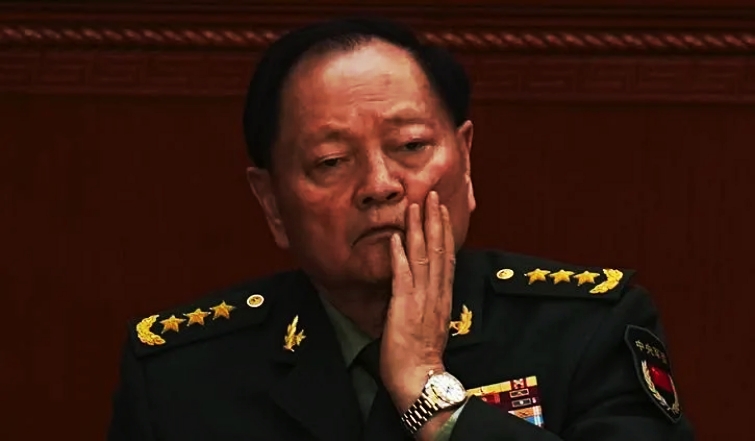
Gambiaj.com – (BEIJING, China) – China has launched an investigation into its most senior uniformed officer, Zhang Youxia, a move that has sent tremors through the country’s military and political establishment and raised fresh questions about stability at the top of the Chinese Communist Party (CCP).
Zhang, vice chairman of the Central Military Commission (CMC) and long regarded as President Xi Jinping’s closest military ally, is under investigation for what authorities have described only as “serious discipline violations.”
Beijing has not confirmed details of the allegations, but reports suggest they include leaking sensitive nuclear information to the United States or selling military promotions in exchange for bribes.
The probe, disclosed on January 24, represents the most dramatic step yet in a sweeping purge that has engulfed China’s armed forces. Analysts say it leaves Xi increasingly isolated at the summit of the military hierarchy and signals deep internal discipline and loyalty within the People’s Liberation Army (PLA).
According to China analysts who spoke to Radio Free Europe/Radio Liberty (RFE/RL), the investigation has major implications for military succession planning and for how China’s partners and rivals assess the durability of Xi’s control.
With eight generals reportedly ousted in 2025 alone and two defense ministers removed over corruption in recent years, the PLA is facing its most severe internal shake-up in decades.
Beijing has framed the investigation as part of a zero-tolerance campaign against corruption. However, the scale and seniority of those targeted have drawn heightened scrutiny from security experts.
Over the past two years, numerous senior officers and defense-industry executives have been removed, while command structures linked to Taiwan contingencies and China’s strategic missile forces have been reorganized.
Analysts interpret these moves as signs of acute concern within the leadership over loyalty, discipline, and command integrity at a time of growing external pressure, particularly from the United States and its allies.
The purge could also have tangible operational consequences. China’s rapid military modernization has depended heavily on continuity among experienced commanders.
The sudden removal of senior leaders, analysts warn, risks slowing decision-making and complicating coordination across services. Such disruption could be especially consequential in sensitive theaters such as the Taiwan Strait, where rapid, unified command is considered critical.
“For decades, China has projected an image that it is a country with long-term plans to project influence and rival the United States as a superpower,” said Temur Umarov, a fellow at the Carnegie Russia Eurasia Center in Berlin. “But this brings lots of questions and doubts about what is happening in China and whether Xi is as in control of his inner circle as he seems.”
Zhang, until now the most prominent figure in China’s military leadership after Xi, has also been central to Beijing’s deepening defense ties with Moscow.
As CMC vice chairman, he played a leading role in expanding military cooperation with Russia, including joint production initiatives and missile defense coordination following Moscow’s 2022 full-scale invasion of Ukraine.
“Zhang Youxia was central to the Russian relationship,” said Dennis Wilder, a former CIA China analyst and expert on the Chinese military.
The timing of the investigation adds to its significance. It comes ahead of a potential April summit in Beijing with U.S. President Donald Trump and during political maneuvering in the run-up to the CCP’s once-in-five-year leadership reshuffle in 2027, when Xi is widely expected to seek a fourth term.
For Washington, the allegations are particularly sensitive. U.S. and Chinese officials are preparing for talks expected to cover tariffs, technology controls, and regional security.
Claims that a top Chinese general may have compromised nuclear secrets could weaken Beijing’s negotiating position and expose vulnerabilities in its governance model.
President Donald Trump, known for his transactional approach to diplomacy, may see the unfolding scandal as leverage in pressing Beijing for concessions or assurances. Meanwhile, observers say the full extent of the damage to China’s military leadership—and to Xi’s authority—may not be known for some time.