

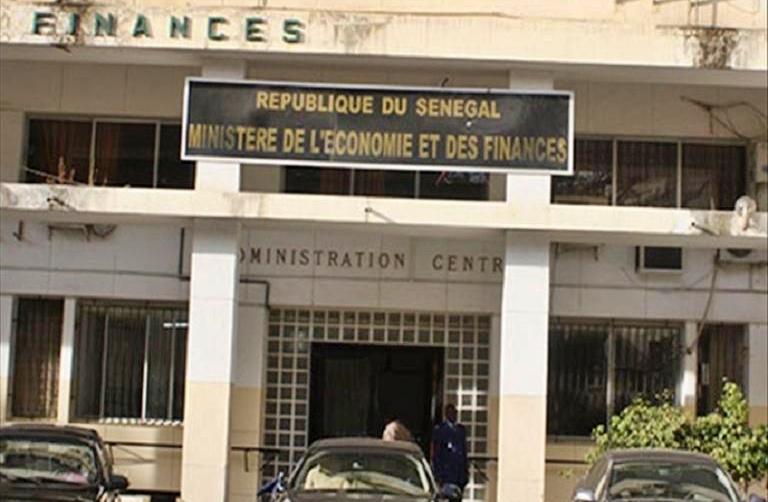


Gambiaj.com – (DAKAR, Senegal) – Senegal has become the only African country still classified by markets as being in “financial distress,” as rising risk premiums underscore deepening concerns over its sovereign debt position, according to data cited by Bloomberg on Monday.
While countries such as Gabon and Mozambique have seen investor confidence improve, Senegal’s sovereign risk premium remains firmly above critical levels.
JPMorgan Chase & Co. indices show that investors are now demanding an additional 1,247 basis points to hold Senegalese dollar-denominated bonds instead of US Treasury securities—well above the 1,000-basis-point threshold widely regarded as signaling financial distress.
By contrast, Gabon and Mozambique have managed to push their spreads below that symbolic red line, buoyed by improving market sentiment.
Analysts attribute this shift largely to expectations of progress toward agreements with the International Monetary Fund (IMF). “The market has reacted very positively” to the prospect of IMF-backed programs in both countries, said Carmen Altenkirch, an analyst at Aviva Investors.
Senegal’s continued vulnerability is linked to a convergence of troubling factors. Investor confidence was badly shaken by revelations of previously undisclosed debt accumulated under the former administration, forcing the current government into a difficult effort to restore credibility and stabilize public finances.
Adding to the pressure is a particularly tight debt repayment schedule. Senegal is expected to service around $635 million in debt during the first half of the year, including a “substantial” €333 million payment due in March, according to Kaan Nazli, a portfolio manager at Neuberger Berman Europe Ltd.
This burden far exceeds that of regional peers; Gabon, for instance, is required to repay only about $81 million over the same period.
Despite mounting market anxiety, Senegalese authorities have so far ruled out restructuring the country’s debt—a stance that continues to unsettle investors. “The path is narrow, and the market is pricing the debt accordingly,” Altenkirch warned.
With no immediate financial safety net and crucial repayments looming, analysts say Senegal faces a delicate balancing act as it seeks to reassure investors, meet its obligations, and prevent further deterioration in market confidence.