



Gambiaj.com – (BANJUL, The Gambia) – The Gambia has taken a decisive step toward reengineering its education, research, and innovation architecture following the conclusion of an eleven-day strategic study tour to South Africa by a high-level delegation of the Ministry of Higher Education, Research, Science, and Technology (MoHERST).
Undertaken under the World Bank-funded Resilience, Inclusion, Skills, and Equity (RISE) Project, the mission has returned with what officials describe as an actionable, generational blueprint that will redefine how skills are developed, research is governed, and innovation is translated into economic and social value.
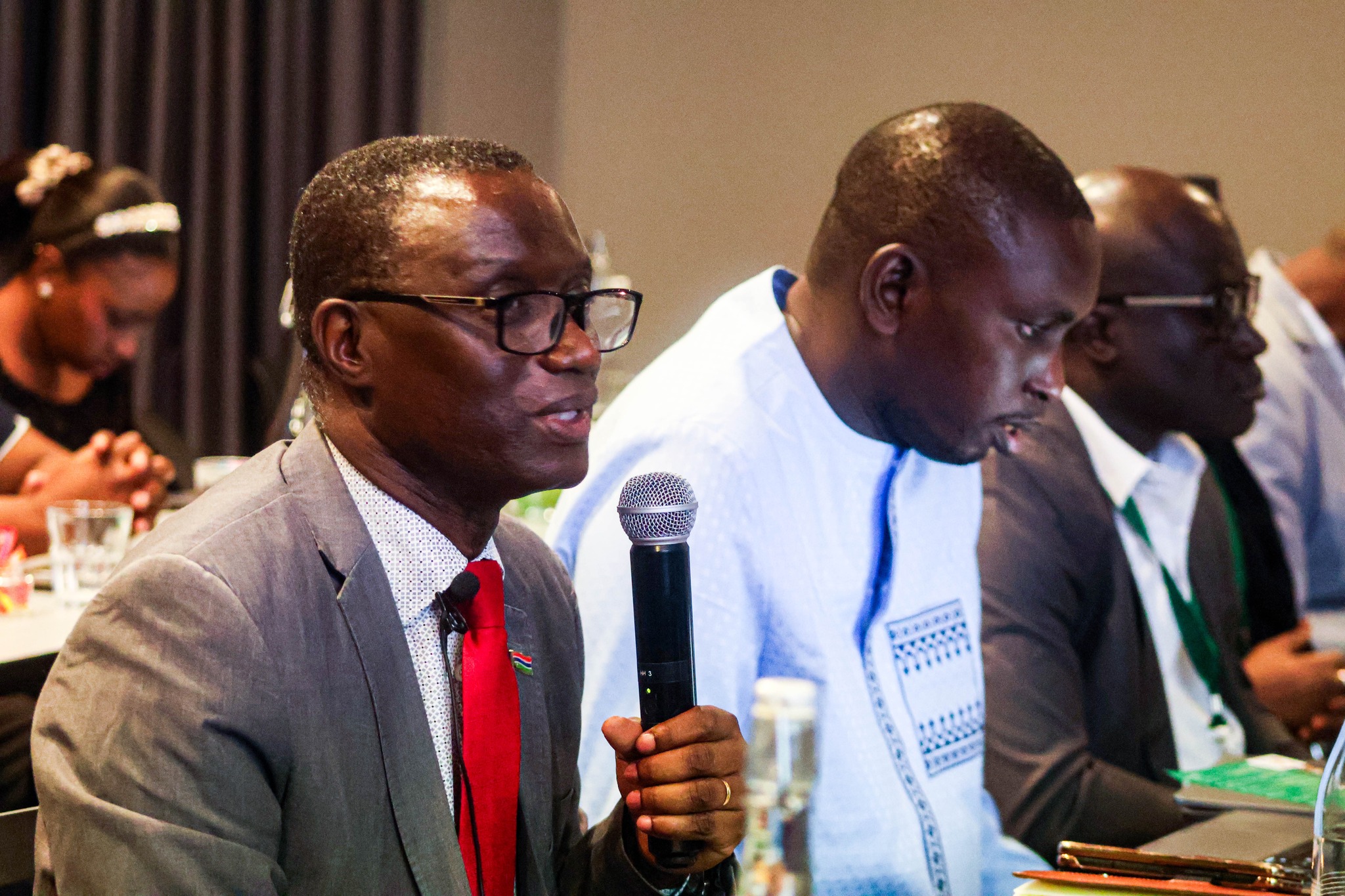
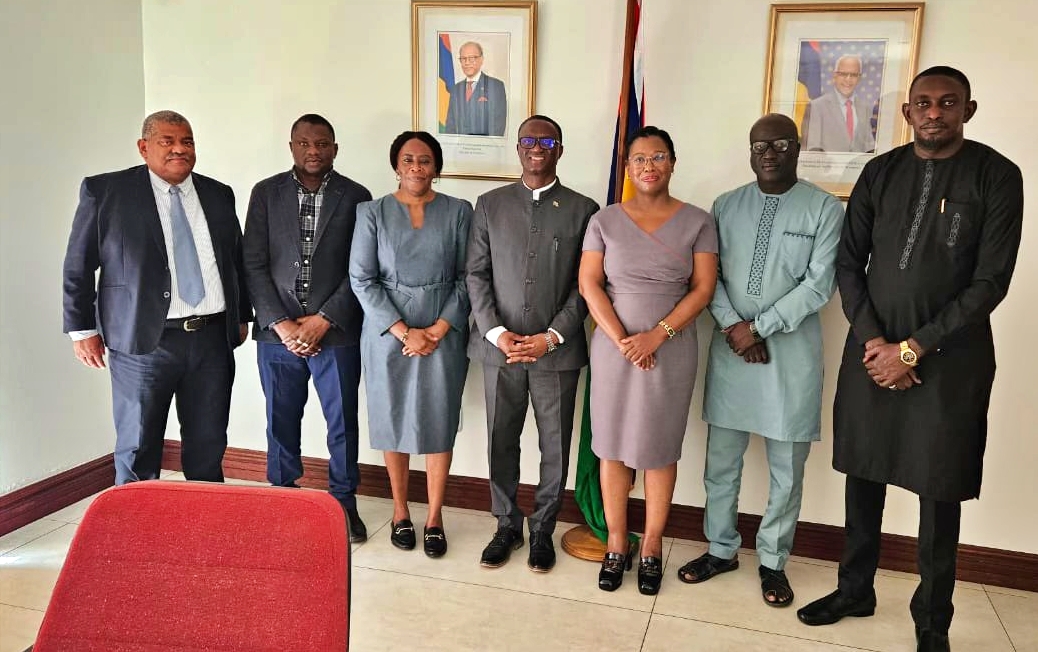
Led by the Minister of Higher Education, Research, Science, and Technology, Prof. Pierre Gomez, the nine-member delegation engaged South Africa’s most advanced education, science, and innovation institutions between January 24 and February 4, 2026.
These included the Department of Higher Education and Training (DHET), the National Research Foundation (NRF), the Department of Science, Technology and Innovation (DSTI), the Technology Innovation Agency (TIA), the South African Qualifications Authority (SAQA), UMALUSI, Sector Education and Training Authorities (SETAs), and leading Technical and Vocational Education and Training (TVET) colleges.
According to MoHERST, the tour was not designed as a ceremonial exchange but as a deliberate effort to extract governance, financing, and implementation lessons from one of Africa’s most sophisticated post-school education and innovation ecosystems.
Prof. Gomez framed the mission as a pan-African partnership anchored in adaptation rather than imitation, stressing that The Gambia’s objective is to build systems suited to its own realities while drawing on proven continental experience.
Building Institutions That Will Outlast Projects
At the heart of the mission’s outcomes is a restructuring of how The Gambia will govern and finance skills development, research, and innovation for decades to come. One major focus was South Africa’s tri-sectoral Post-School Education and Training system, which balances national policy coherence with institutional autonomy through layered quality assurance and oversight mechanisms.
These insights will directly inform the design and governance of The Gambia’s planned Centres of Excellence under the RISE Project, ensuring that TVET institutions are not only responsive to labor market needs but also embedded in a nationally coordinated, quality-assured framework.
Officials say this approach is intended to correct long-standing fragmentation in skills training and align it with industrial and economic priorities.
Equally transformative are the lessons drawn from South Africa’s sustainable financing models. Engagements with SETAs and the National Skills Fund exposed the delegation to levy-grant mechanisms that pool employer contributions to fund training at scale.
These models are now expected to shape the operationalisation of The Gambia’s proposed Skills, Innovation and Entrepreneurship (SIE) Fund, designed to survive beyond the lifespan of donor-funded projects.
Laying the Foundations of a National Research System
The study tour coincided with a critical moment for The Gambia’s emerging research landscape, as the country moves to establish its National Research and Innovation Fund (NRIF). Meetings with the NRF and DSTI provided a practical template for setting up a national research funding body anchored in accountability, predictable financing, and strategic priority-setting.
Key lessons included the use of Annual Performance Plans to align research investments with national development goals, the creation of competitive grant systems, and the deliberate construction of postgraduate and doctoral pipelines to grow local research capacity.
For The Gambia, where research governance structures are still nascent, these insights are expected to prevent institutional weaknesses that often take decades to correct.
The delegation also examined how innovation agencies such as the TIA bridge the gap between academic research and marketable products. This experience is now informing plans to nurture grassroots innovation alongside applied research, ensuring that knowledge generation translates into jobs, enterprises, and public value.
Designing Equity Into the System From the Start
A recurring theme throughout the engagements was human capital development, particularly the long-term challenge of building and retaining high-level academic and research talent. Discussions focused on PhD pipeline development, competitive staffing models, and incentives for excellence.
Gender equity emerged as a central design principle rather than a peripheral concern. The delegation held frank exchanges on embedding gender considerations into every new science, technology, and innovation instrument from inception, a move MoHERST officials say will shape the inclusivity of The Gambia’s future knowledge economy.
From Study Tour to State Policy
Unlike previous exposure visits, MoHERST says this mission has produced a clear, time-bound implementation framework.
Within the next 30 to 60 days, the Ministry plans to finalize an annual performance plan for the NRIF, submit an expression of interest to join the Science Granting Council Initiative, and table a cabinet paper proposing an Interministerial Committee on Science, Technology, and Innovation, alongside the establishment of a National Science Academy.
Further steps include formalizing partnerships with South African institutions through Memoranda of Understanding, launching The Gambia’s first comprehensive labor market intelligence study, and advancing legislative reforms to entrench TVET and research transformation well beyond the RISE Project window.
A Rare Strategic Opportunity
Officials describe the study tour as a moment of reckoning and resolve. South Africa’s experience, expanding from 16 to 57 Centers of Specialization over eight years while confronting challenges such as donor dependency and staffing constraints, offered The Gambia a realistic map rather than an iidealizedmodel.
Crucially, The Gambia is building its TVET system and its research and innovation system simultaneously, a rare strategic advantage. If deliberately integrated at this formative stage, policymakers believe the country can leapfrog structural inefficiencies that have hindered other systems.
“This was not about rising alone,” Prof. Gomez said on the delegation’s return. “It was about rising together as Africans, as partners, and as a nation that has decided its future will not be left to chance.”
With commitments already moving toward Cabinet and implementation, MoHERST says the South Africa mission marks the beginning of a generational transformation, one intended to reposition education, research, and innovation as the backbone of The Gambia’s long-term development.