


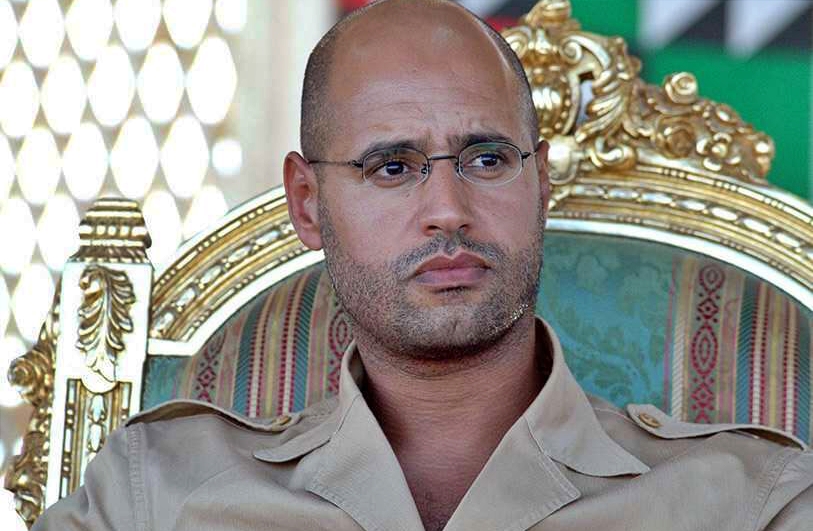
Gambiaj.com – (BANJUL, The Gambia) – Nearly fifteen years after the killing of former Libyan leader Muammar Gaddafi in 2011, the assassination of his son, Saif al-Islam Gaddafi, is being widely interpreted as a decisive blow to lingering hopes of a Gaddafi family return to power.
Saif al-Islam was killed on Tuesday, February 2, in Zintan, north-western Libya, according to reports cited by several observers. He was regarded as the last major political heir of the Gaddafi era and a symbolic figure for tribes and loyalists who believed the family could re-emerge as a national force.
Analysts say his death could also have wider repercussions for Libya’s already fractured political landscape. Some observers warn that the disappearance of a figure seen as capable of mobilizing a distinct political constituency may not serve the country’s long-term stability.
A Rival to Existing Power Centers
Political scientist Virginie Collombier, a professor at Luiss Guido Carli University in Rome, noted that Saif al-Islam’s death benefits a number of political actors who viewed him as a direct rival.
According to analysts, Saif al-Islam represented the prospect of a third political force in Libya, one that promoted national reconciliation and sought to rally supporters nostalgic for the pre-2011 order.
This vision, they argue, alarmed Libya’s two dominant power centers, which feared that a new political component could undermine their ability to negotiate power-sharing arrangements and control state resources.
From Reformer to Pariah
Under his father’s rule, Saif al-Islam cultivated an image as a reformer. Educated in London and fluent in English, he acted as an intermediary in sensitive diplomatic negotiations, including talks that led to Libya’s abandonment of weapons of mass destruction.
During the 2000s, he emerged as a favored interlocutor for Western governments, advocating constitutional reforms and respect for human rights.
He was involved in initiatives that led to the release of political prisoners, including Islamists, and spearheaded reform projects aimed at steering Libya toward democracy. These efforts, however, were resisted by hardliners within the regime and ultimately failed.
His reputation as a progressive collapsed at the outset of the 2011 uprising, when he threatened “bloodbaths” against protesters. He was later captured while attempting to flee and spent six years in detention in Zintan under near-total isolation.
In 2015, he was sentenced to death following a swift trial, before later benefiting from an amnesty.
Contested Political Ambitions
Despite his legal troubles, Saif al-Islam retained support among Libyans nostalgic for the former regime. He declared his candidacy in the planned 2021 presidential election, a move that proved deeply controversial.
His bid was ultimately rejected due to his prior conviction, and disputes over candidates later led to the collapse of the entire electoral process.
Deeply marked by the deaths of his father and brother Moatassem in 2011, as well as the imprisonment of two other brothers, Saif al-Islam became increasingly reclusive. He was known to move discreetly, sometimes walking alone on the desert outskirts, often carrying a book, a habit formed during his years in detention.
In 2025, he reactivated official social media accounts, commenting on international affairs and signaling a continued ambition to contest a future presidential election.
Beyond politics, Saif al-Islam, who held degrees in economics and architecture, also pursued art, exhibiting his paintings internationally, including in Paris.
With his assassination, many analysts believe the final chapter of Gaddafiism has effectively closed, further narrowing the already complex pathways toward political reconciliation in Libya.