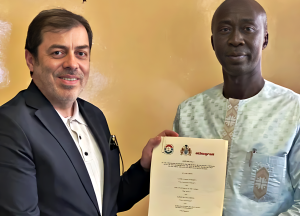


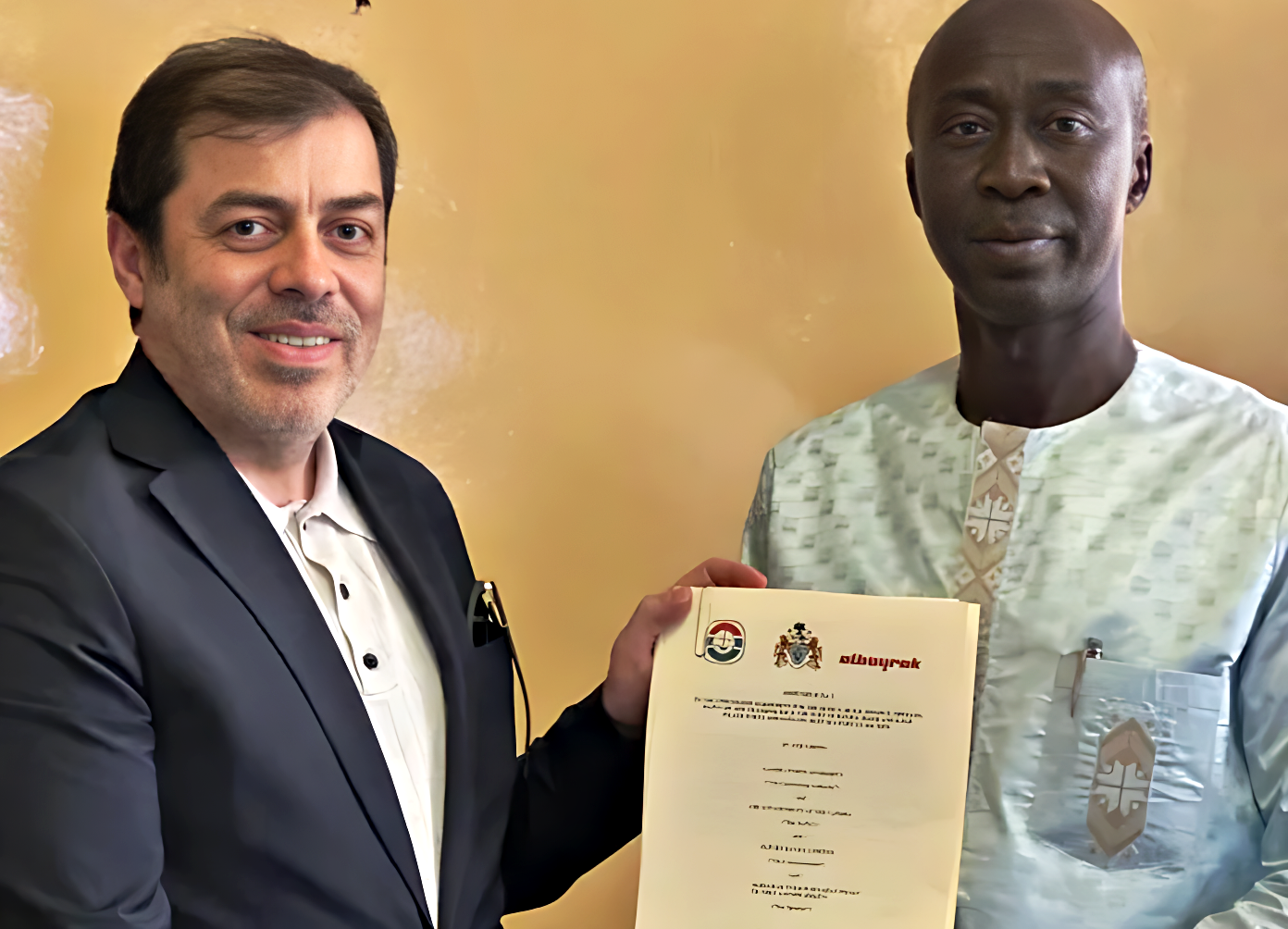
Gambiaj.com – (BANJUL, The Gambia) – The Gambia government has opened talks with Turkish firm Albayrak to renegotiate key terms of the concession agreement for the planned deep-sea port in Sanyang, citing project delays, unmet obligations on both sides, and the need to tighten enforcement mechanisms to protect the state’s interests.
Appearing before the National Assembly, Managing Director of the Gambia Ports Authority (GPA), Ousman Jobarteh, said the renegotiation is driven by the failure to commence pre-construction works nearly one year after the contract became effective on 14 February 2025.
Under the agreement, pre-construction activities were to be completed by 13 February 2026, paving the way for full-scale construction—an obligation that has not been met.
Why Government Wants a Renegotiation
At the heart of the government’s push is concern over accountability and risk exposure. The 30-year concession grants Albayrak six years of operational control over the Port of Banjul and 24 years to build and operate the new Sanyang port.
With no visible progress on the ground, authorities are seeking to reinforce “default clauses” in the contract to ensure that delays or failures trigger tangible financial consequences.
Jobarteh told lawmakers that the strategy is to improve conditions attached to performance bonds so that, in the event of default, a portion can be encashed and the concessionaire compelled to replenish them.
This, he said, would create stronger incentives for timely delivery and reduce the likelihood of prolonged inertia without penalties.
The renegotiation is also intended to realign contractual milestones with on-the-ground realities. Changes to the original master plan, now envisaging offshore and onshore construction with land reclamation, have introduced legal and administrative complications that were not fully anticipated when the agreement was signed.
What the Government Expects to Achieve
Through the renegotiation, the government hopes to achieve three main outcomes: clearer timelines, stronger enforcement tools, and a practical pathway to restart stalled pre-construction works.
On its own side, Jobarteh acknowledged that delays in finalizing leases and subleases, particularly because land reclamation must precede issuance, have slowed progress. The government expects that an addendum to the contract will address these sequencing issues and provide a revised roadmap acceptable to both parties.
For Albayrak, the expectation is to complete outstanding geotechnical and offshore studies and to resolve equipment challenges that have reportedly stalled work for eight months after machinery submerged due to adverse weather.
These setbacks, Jobarteh said, are now central to the renegotiation because they have effectively frozen the project timeline.
The GPA also anticipates that any agreed remediation will formally recognize a likely one-year delay, pushing back the handover date accordingly while resetting obligations in a more enforceable framework.
Can The Gambia Bend Its Turkish Partner?
The chances of The Gambia extracting tougher terms from Albayrak are mixed but not negligible. On one hand, the concessionaire has already secured significant long-term commercial rights, including control of Banjul port operations, which weakens the government’s leverage.
On the other hand, the failure to meet pre-construction milestones within the agreed timeframe provides Banjul with contractual and political grounds to insist on stricter safeguards.
Crucially, the involvement of a cabinet-level taskforce and the insistence that talks be concluded before 13 February signal that the issue has escalated to the highest level of government.
This increases pressure on Albayrak to accommodate revisions rather than risk reputational damage or potential financial penalties through bond enforcement.
However, any attempt to significantly rebalance the agreement will likely depend on how firmly the government is prepared to invoke default provisions and whether it is willing to countenance arbitration or more drastic remedies if talks fail.
In practice, the most probable outcome is a calibrated adjustment, tighter bond conditions, revised milestones, and formal recognition of delays, rather than a wholesale rewriting of the deal.
For now, the renegotiation represents a test of The Gambia’s capacity to assert its interests within a major public-private partnership and of Albayrak’s willingness to reset a troubled project rather than allow delays to harden into long-term uncertainty.