


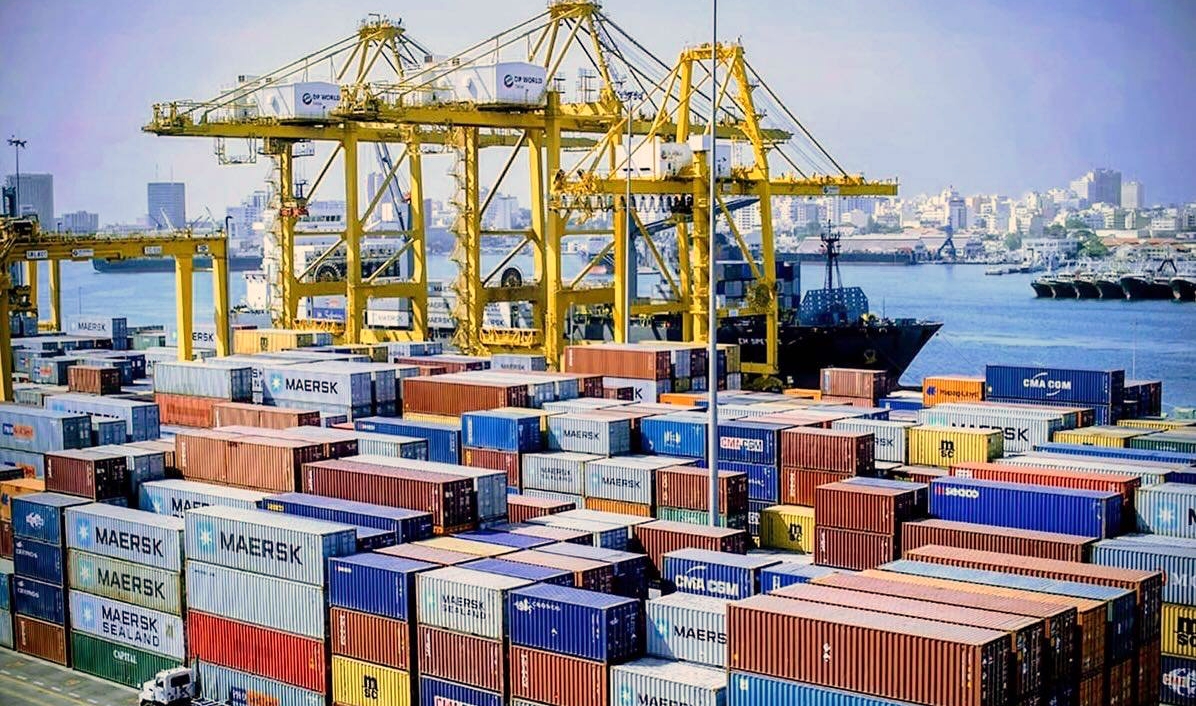
Gambiaj.com – (DAKAR, Senegal) – A fresh logistics standoff is looming between Mali and Senegal as more than 4,000 empty containers remain stuck in Mali, unable to make the return journey to the port of Dakar, raising fears of renewed supply chain disruptions, rising costs, and diplomatic strain.
In a press release issued on Tuesday, February 3, the Malian Shippers’ Council (Conseil Malien des Chargeurs, CMC), which operates under the Ministry of Transport, warned that the situation has become “a major concern for the national and regional logistics chain.”
According to the council, the blockage has led to a “critical scarcity of empty containers at the port of Dakar,” disruptions to Mali’s supply system, and a “real risk of a hardening of operating conditions for Malian economic operators by shipowners.”
The crisis echoes tensions from late 2025, when thousands of full containers were immobilized at the port of Dakar awaiting transport to landlocked Mali. While that episode was temporarily resolved through high-level negotiations, the problem has now resurfaced in reverse, this time with empty containers unable to leave Mali.
Security Risks at the Heart of the Crisis
Bamako is demanding the urgent return of more than 4,000 overdue containers, including 2,800 owned by MSC and about 700 by Hapag-Lloyd.
However, the causes of the blockage remain unresolved. Neither the Malian Shippers’ Council nor the Ministry of Transport responded to requests for clarification from RFI on the origin of the problem.
Malian economic operators point squarely to worsening insecurity along the Mali–Senegal corridor, particularly in the Kayes region near the Senegalese border, where jihadist attacks have intensified in recent months.
“We can’t force them to take the risk,” said a Malian entrepreneur who has empty containers ready for return to Dakar but cannot find transporters willing to make the journey. He cited last week’s deadly attack in which at least a dozen truck drivers were killed despite military escort.
While convoys carrying full containers are sometimes escorted, operators note that empty containers are not. The risks are compounded by fears of improvised mines, deteriorated road conditions that slow travel, and prolonged exposure to ambushes.
Fuel Shortages and Customs Bottlenecks
The security crisis has been aggravated by fuel shortages inside Mali, following an embargo imposed in September by the JNIM jihadist group. Although the Malian army has partially contained the blockade, shortages of diesel and petrol continue to disrupt transport.
Administrative hurdles at Bamako customs are also under scrutiny. Several operators complain that containers can remain on trucks for days before unloading, then sit idle for weeks or even months while clearance procedures drag on, often amid allegations of corruption.
“Sometimes drivers, fed up, just leave without the container,” one business leader lamented. While customs clearance has recently been expedited for incoming fuel tankers to ease energy shortages, no similar measures have been extended to container traffic.
Financial Losses and Inflation Risks
The economic stakes are significant. A new container costs an estimated €5,000 on average. With more than 4,000 containers immobilized, shipping companies are seeking to recover assets worth roughly €20 million. Beyond asset recovery, idle containers represent lost revenue.
“This is a very significant shortfall for shipping companies,” said a Malian economist, warning that the costs will inevitably be passed on to consumers. “Logistics costs are immediately reflected in product prices.”
Nearly 70% of Mali’s imports transit through the port of Dakar, making any disruption particularly sensitive.
The economist pointed to last summer’s surge in cement prices as a cautionary example. With Ramadan approaching, Malian transitional authorities have repeatedly pledged to secure supplies and contain inflation.
Lingering Issues at the Port of Dakar
Complicating matters further, a smaller backlog of full containers bound for Mali still exists at the port of Dakar. Last November, Mali secured Senegal’s agreement to cancel demurrage charges for Malian companies and obtained a three-month grace period to evacuate the containers after more than 2,000 units piled up.
That intervention followed a personal visit to Dakar by Mali’s Minister of Transport, Dembélé Madina Sissoko. According to the Malian Shippers’ Council, only 304 containers now remain at the port. Their owners have been given until February 24 to remove them, after which “no exemptions will be granted.”
Shipping companies have so far declined to comment publicly, allowing Malian authorities to relay their concerns, which were raised during a meeting in Dakar on January 20.
Three months ago, major carriers CMA CGM and MSC briefly suspended deliveries to Mali, citing insecurity and fuel shortages, before quietly resuming operations following negotiations whose details were never disclosed.
As insecurity persists and logistical bottlenecks deepen, operators on both sides of the Mali, Senegal corridor warn that without concrete solutions, the region could soon face a full-blown container crisis, one with serious economic and social consequences.