






Gambiaj.com – (LONDON, United Kingdom) – A BBC investigation into a sharp global rise in the abandonment of commercial vessels has cast renewed attention on the system of flags of convenience (FOCs), with The Gambia emerging as an unexpected point of reference in a crisis that has left thousands of seafarers stranded at sea.
According to figures from the International Transport Workers’ Federation (ITF), the number of abandoned ships worldwide rose dramatically from just 20 in 2016 to 410 in 2025, affecting more than 6,200 merchant sailors.
The increase, experts say, is being driven by geopolitical instability, sanctions-related trade, and the rapid expansion of so-called “shadow fleets” operating beyond effective regulatory oversight.
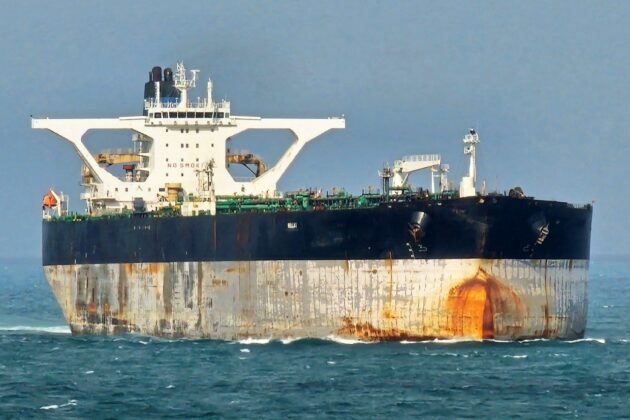
At the heart of the BBC report is the account of “Ivan,” a senior Russian deck officer stranded aboard an oil tanker carrying nearly 750,000 barrels of Russian crude oil, valued at about $50 million.
The vessel has been abandoned in international waters near China since December after its owners reportedly stopped paying wages and providing basic supplies.
“We had shortages of meat, grain, fish, and simple things for survival,” Ivan told the BBC. “The crew was hungry, the crew was angry, and we tried to survive only day-by-day.”
The tanker, which initially sailed from Russia’s Far East bound for China, remains at sea due to heightened scrutiny linked to Western sanctions on Russian oil.
While the ITF has intervened to secure partial wage payments and deliver food and water, most of the crew remain on board, unable to return home.
Shadow Fleets and Flags of Convenience
The investigation highlights the growing role of shadow fleets, typically aging oil tankers with obscure ownership structures, questionable insurance, and limited seaworthiness. These vessels are often used to transport sanctioned crude from countries such as Russia, Iran, and Venezuela, skirting international restrictions.
Such ships almost invariably sail under flags of convenience, meaning they are registered in countries that offer low fees and minimal regulatory oversight. Globally, Panama, Liberia, and the Marshall Islands dominate the FOC system, together accounting for nearly half of the world’s merchant fleet by tonnage.
However, the BBC report notes that The Gambia has recently appeared on the radar. While no oil tankers were registered under the Gambian flag in 2023, by March 2025 the country had become the nominal host to 35 such vessels, benefiting from registration fees.
FOC-registered ships accounted for 82% of all abandoned vessels in 2025, according to the ITF, underscoring concerns that lax oversight leaves crews exposed to exploitation.
Gambia and the Question of Responsibility
Crucially, the BBC investigation clarifies that the tanker carrying Ivan was flying a false Gambian flag and was never registered with Gambian authorities. The vessel was “unregistered and unknown to Gambia”, and has since been provisionally accepted under the flag of another African country, which has reportedly opened a formal inquiry into the ship.
This distinction is significant for The Gambia, as maritime unions increasingly criticize flag states for what they describe as a “derogation of responsibility” toward vessels and crews operating under their registries.
Mark Dickinson, General Secretary of Nautilus International, told the BBC that there must be a “genuine link” between shipowners and the flags they fly, an obligation already referenced in international maritime law but weakly enforced in practice.
Human Cost at Sea
Under International Maritime Organisation (IMO) guidelines, a seafarer is considered abandoned if shipowners fail to repatriate crews, provide essential maintenance and support, or pay contractual wages for at least two months.
In 2025 alone, abandoned crews worldwide were owed $25.8 million in unpaid wages. The ITF says it has recovered about $16.5 million of that sum, including roughly $175,000 owed to the crew on Ivan’s tanker.
Indian sailors were the most affected nationality last year, followed by Filipinos and Syrians. In response, India blacklisted 86 foreign vessels over abandonment and labor violations, many of which had untraceable owners or received no response from flag states.
A Warning for Maritime States
For The Gambia, the BBC findings serve as a cautionary tale as the country’s ship registry grows. While Gambian authorities were not responsible for the false-flagged tanker highlighted in the investigation, the wider global crisis underscores the reputational and ethical risks associated with FOC systems if not backed by strong regulation and enforcement.
As Ivan awaits the offloading of oil from his ship in a planned ship-to-ship transfer at sea, he says the experience has changed him.
“In the future, I will check more carefully,” he said. “About the vessel’s condition, about payment and provisions… and which vessels are banned or under sanction.”
For maritime nations, large and small alike, the surge in abandoned ships is a stark reminder that behind the economics of global shipping lies a human cost that can no longer be ignored.
Source: BBC