


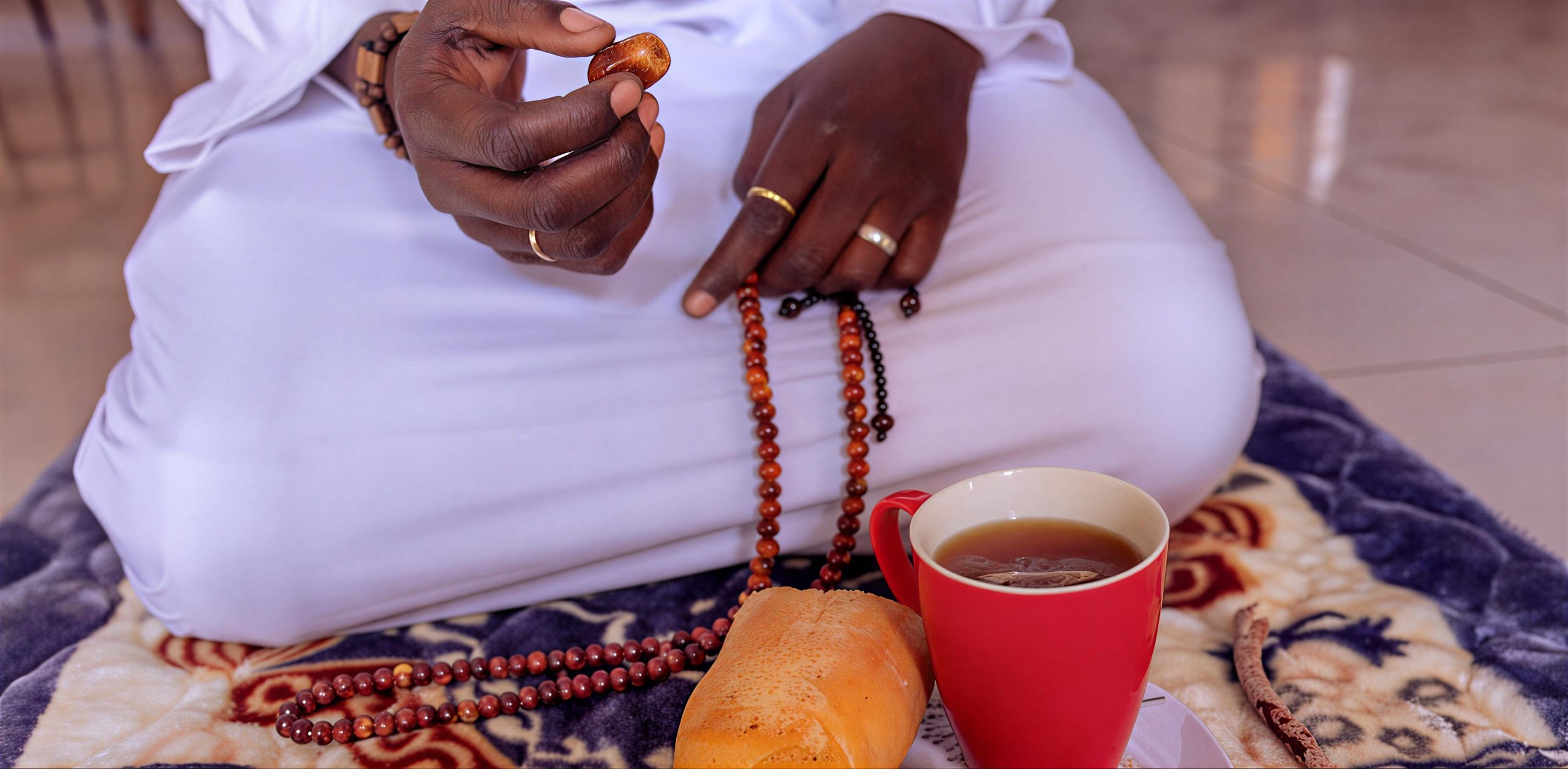



Gambiaj.com – (BANJUL, The Gambia) – Each year, Ramadan arrives as more than a sacred observance. It is a moral invitation to reflect, recalibrate, and return to what matters. It calls us away from accumulation and noise and back to character, discipline, and responsibility.
Over the coming weeks, I will share reflections on the quiet lessons Ramadan teaches: patience, compassion, self-control, and renewal. These essays are written for believers and non-believers alike, drawing on faith not as doctrine, but as a mirror for ethical living.
The Qur’an describes fasting as a path to taqwa, declaring:
“O you who believe, fasting has been prescribed for you as it was prescribed for those before you, that you may attain taqwa.” (Surah Al-Baqarah 2:183)
Taqwa is often translated as “God-consciousness,” but it also signifies moral awareness, a heightened sensitivity to our responsibilities before God and before others. That ancient command continues to speak to modern restlessness.
Fasting is not unique to Islam. Christians observe Lent as a season of sacrifice and reflection, and other faith traditions embrace abstinence as a path to clarity. Across traditions, self-discipline is understood not as deprivation, but as refinement.
Ramadan does not arrive with spectacle. It comes gently, yet demands commitment. It does not ask us to multiply words, opinions, or outward displays. It asks us to hold back.
In a world shaped by immediacy, composure has become a neglected virtue. We are encouraged to react instantly, speak without pause, consume without limit, and defend ourselves loudly. Silence is mistaken for weakness.
Patience is misread as passivity. Ramadan interrupts this rhythm, introducing a countercultural pause.
The fast, as taught by the Holy Prophet Muhammad, peace be upon him, was never limited to food and drink. He cautioned that whoever does not abandon false speech and harmful conduct gains little from hunger alone.
The fast extends to speech, behavior, temperament, and intention. This is especially relevant today, when harm often comes not through action, but through careless words.
The early days of Ramadan are about reorientation. Hunger is felt in the body; the purpose is character. One learns to delay gratification, speak with care, listen attentively, and respond thoughtfully. These are moral recalibrations.
Self-control, Ramadan reminds us, is not repression. It is dignity. Leadership without it becomes arrogance. Freedom without it descends into disorder. Speech without it erodes trust. Families, institutions, and nations fracture not because people lack conviction, but because conviction is left ungoverned.
Even for those outside the faith, the lesson resonates. The ability to pause, reconsider, and choose words carefully is foundational to ethical living. Ramadan begins by restoring self-mastery, reminding us that the strongest person is not the one who overpowers others, but the one who governs themselves.
As the month opens, Ramadan calls us back to a simple discipline: to pause before we speak, think before we act, and measure our intentions before we defend them. In a time that rewards speed and volume, it teaches steadiness and moral clarity.
If we embrace that discipline, the fast becomes more than hunger endured. It becomes character strengthened. The month begins with self-control, but it ends, if we allow it, with a quieter heart, a steadier voice, and a life guided less by impulse and more by principle.
Next week, we reflect on patience, not as passive endurance, but as strength under pressure.