


Gambiaj.com – (DAKAR, Senegal) – A covert Russian influence network operating from Saint Petersburg developed a scenario for a military takeover in Senegal, according to a major international investigation published on February 14, raising fresh concerns about foreign interference in one of West Africa’s most prominent democracies.
The revelation emerged from a cache of 1,431 internal documents obtained anonymously and analyzed over several months by a consortium led by Forbidden Stories, in collaboration with All Eyes on Wagner, the Dossier Center, iStories, openDemocracy, and the pan-African publication The Continent.
In Senegal, the document from August 2023, but only revealed this Saturday, envisaged a coup d’état. Its aim would be “to initiate a rapprochement with Russia,” in which “the SVR was to support the local armed forces with official Russian forces” if the coup was carried out, with a final directive of “suppressing or encouraging civil protests, depending on the chosen scenario.”
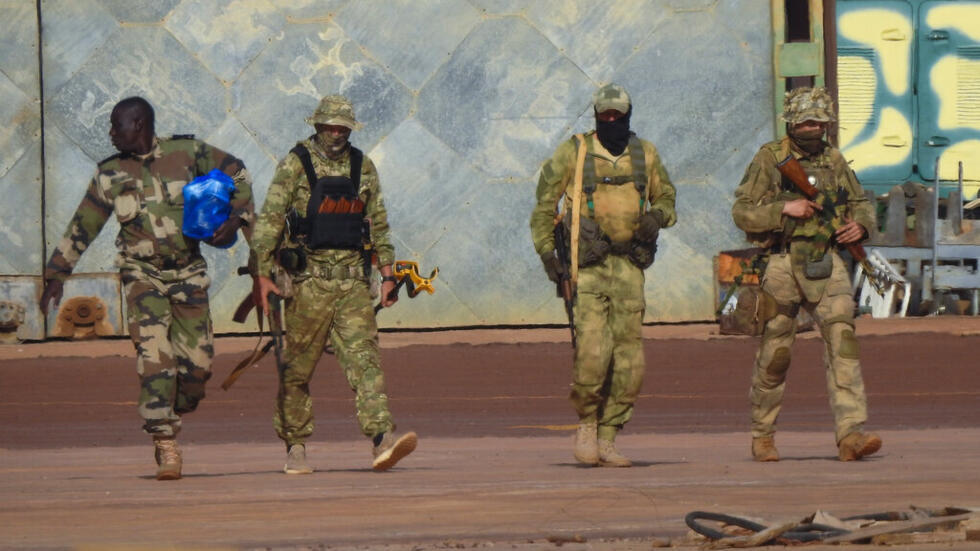
The documents describe how Russian operatives outlined “a scenario for military seizure of power” in Senegal, part of a broader strategy targeting around 30 countries through a covert influence structure referred to internally as “the Company.”
Wagner Legacy Reorganized Under Russian Intelligence
According to the investigation by journalists Léa Peruchon and Eloïse Layan, the network is a successor to the operations of Yevgeny Prigozhin, the late founder of the Wagner paramilitary group, who died in a plane crash in August 2023.
Far from collapsing after his death, the network reportedly reorganized under the supervision of Russia’s foreign intelligence service, the SVR, with expanded capacity and renewed strategic ambitions across Africa and beyond.
Internal financial records show that between January and October 2024 alone, nearly $7.3 million was allocated to influence operations—about $750,000 per month.
These funds were split between political intelligence activities, including strategic analysis, polling, and outreach to political figures, and media campaigns aimed at producing and disseminating favorable propaganda through local outlets.
Payments to publish content varied widely, reaching up to $10,000 for a single article in Libya, according to the documents.
Senegal Seen as Strategic Target After Democratic Transition
Although the documents do not detail whether the coup scenario in Senegal advanced beyond planning, their existence highlights the country’s perceived strategic importance.
Senegal had just undergone a historic democratic transition in 2024 with the election of reformist President Bassirou Diomaye Faye, whose victory followed months of political unrest, protests, and repression under his predecessor.
The transition, driven by a wave of popular support linked to opposition leader Ousmane Sonko, was widely praised internationally as a triumph of democratic resilience. However, investigators say Moscow may have viewed the volatile political environment as an opportunity for destabilization.
Unlike Mali, Burkina Faso, Niger, or the Central African Republic, where Wagner and its successors combined military presence with political and economic influence, Senegal had largely remained aligned with Western partners, maintaining close ties with France and preserving stable democratic institutions.
The documents suggest this alignment itself made Senegal a priority target within a broader geopolitical objective described in an internal strategy paper titled “Confederation of Independence.”
That plan aimed to create “a belt of regimes friendly to the Russian Federation” and weaken Western influence across Africa by exploiting anti-colonial sentiment.
Blueprint for Destabilization
According to the investigation, the network followed a structured approach in each target country, including public opinion surveys, mapping political actors, cultivating influential figures, infiltrating media ecosystems, and launching destabilization campaigns amplified by sympathetic or paid outlets.
In some countries, the activities allegedly extended beyond propaganda. The documents claim Russian operatives influenced the formation of regional alliances, drafted mining legislation, and fabricated documents to discredit political opponents.
Investigators identified at least 60 agents involved in the network, led by three senior figures based in Saint Petersburg: Sergei Mashkevich, described as the network’s chief strategist; Sergei Klyukin, who oversaw analysts covering multiple countries; and Artem Gorny, responsible for logistics and finances.
None responded to requests for comment.
The network reportedly operated through a consulting firm called StratConsult, registered in Saint Petersburg in March 2024. The company was dissolved in November 2025 shortly after portions of the documents became public, suggesting the operation may have been restructured under a different identity.
Timing Raises Political Sensitivities
The revelations come at a delicate time for Senegal, which is grappling with domestic tensions, including university unrest, economic concerns, and political divisions.
The idea that foreign operatives formally developed a military takeover scenario for Senegal, a country often cited as a model of democratic stability in West Africa, has sparked alarm among observers and security analysts.
Forbidden Stories said the report marks the beginning of a broader investigative series titled “Propaganda Machine,” with further disclosures expected in the coming weeks.
No immediate reaction from Senegalese authorities had been reported at the time of publication.