

Gambiaj.com – (Bwiam, West Coast Region) – A dispute has erupted between National Assembly Member for Foni Kansala Constituency, Almameh Gibba, and the Gambia Armed Forces (GAF) over the safety of a military checkpoint along the Trans-Gambia Highway in Bwiam Village, with the lawmaker warning that recent modifications have made the site more hazardous for civilians.
For nearly a decade, motorists and residents have raised concerns about the checkpoint, blaming it for accidents, loss of lives, restricted access to rice fields, and property damage.
Armed Forces Defend Security Role
In a recent press release, the GAF High Command defended the continued presence and positioning of the Vehicle Check Point (VCP), currently manned by troops of the ECOWAS Mission in The Gambia (ECOMIG), describing it as part of a broader national security architecture.
According to the military, checkpoints along critical corridors such as the Trans-Gambia Highway serve as early warning systems, enhance situational awareness, deter potential threats, and maintain operational control, particularly near major deployments outside the Greater Banjul Area.
The High Command emphasized that the establishment and location of military checkpoints nationwide are based on detailed security assessments and inter-agency coordination. These decisions, it said, take into account operational necessity, force protection, terrain and traffic analysis, visibility, response time, and civilian mobility patterns.
“The guiding principle remains the careful calibration of essential security objectives with the protection of civilian life and property,” the statement noted.
Lawmaker Gibba Says ‘Upgrades’ Increased Risk
However, Hon. Gibba strongly criticized the checkpoint’s current configuration, describing it as a long-standing burden on the Bwiam community.
“The prolonged silence of the authorities has been deeply concerning,” he said, citing fatalities and daily hardships faced by residents and travelers.
According to Hon. Gibba, tensions escalated after a high-level meeting on January 29 involving GAF Operations Commander Colonel Yerro, ECOMIG’s Lieutenant Colonel Kuluta Manneh, Senegalese commanders, local military officers, lawmakers, chiefs, and alkalolu.
The meeting reportedly agreed on measures to improve safety, including replacing wooden barricades with speed bumps, commonly known as “sleeping policemen,” to reduce accidents.
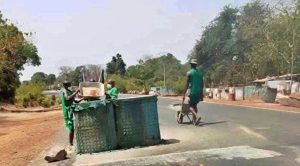
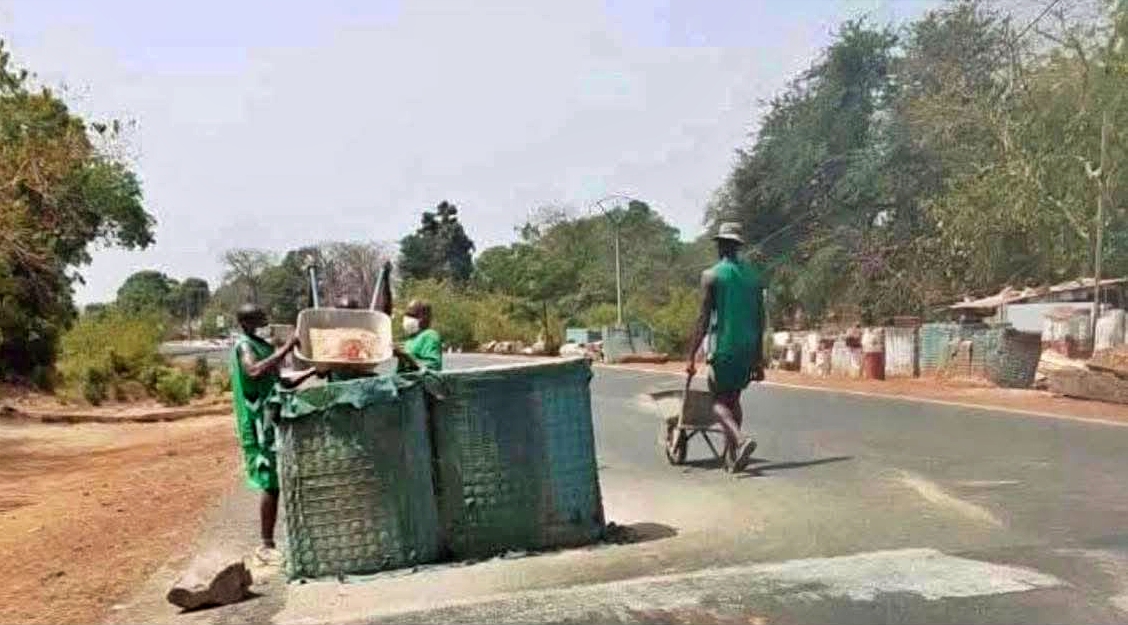
But Gibba said the situation has since worsened, pointing to the addition of sandbags placed on top of the speed bumps.
“This new configuration is, in many respects, even more dangerous than before,” he said. “Why introduce new structural elements without consultation, especially when prior agreements prioritized public safety?”
He described the sandbag fortifications as transforming the checkpoint into a “combat-ready military position,” raising concerns about transparency and stakeholder engagement.
Community Concerns Mount, Awaiting Military Response
Residents have long complained about the checkpoint’s impact on their livelihoods, including restricted access to farmland and safety risks for road users.
“We fought for these changes to save lives, not create new dangers,” Gibba said, adding that his constituents deserve “a security posture that is transparent, accountable, apolitical, and above all, protective of human life.”
The lawmaker also warned that he would expose individuals responsible for the changes if corrective action is not taken.
The Gambia Armed Forces had not publicly responded to Gibba’s latest remarks at the time of publication.
The checkpoint remains operational, with sandbag reinforcements in place, as residents and motorists await possible intervention to address mounting safety and trust concerns.