


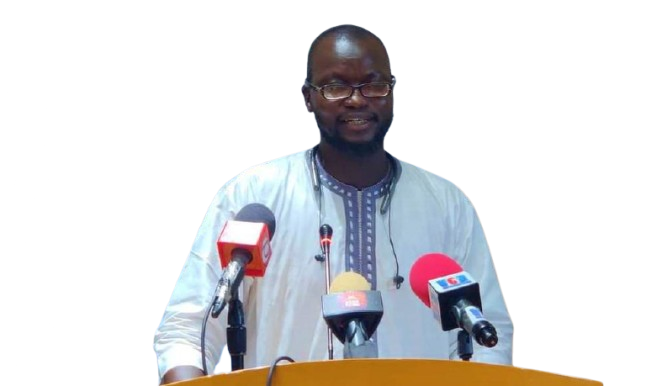
Gambiaj.com – (DAKAR, Senegal) – The conviction today of SEN TV television commentator Modou Fall and the controversial detention of fellow media figure Abdou Nguer is intensifying debate in Senegal over what critics describe as a growing pattern of judicial action against dissenting voices under the ruling PASTEF regime.
These cases, both tied to allegations of “spreading false news,” have raised questions among legal observers, media professionals, and opposition sympathisers about whether Senegal’s justice system is increasingly being used to regulate political speech and shield the government from criticism.
Modou Fall Convicted After Commentary on UCAD Protests
The Dakar court of flagrante delicto found Sen TV commentator Modou Fall guilty of disseminating false information, sentencing him to six months in prison, including one month behind bars, and imposing a fine of 200,000 CFA francs.
Fall’s conviction stemmed from remarks made during a televised program in which he suggested that authorities were attempting to attribute responsibility for violent protests at Université Cheikh Anta Diop de Dakar (UCAD) to opposition actors.
Following those comments, the public prosecutor initiated proceedings on his own authority, leading to Fall’s arrest and prosecution. Although the prosecutor had requested a fully custodial six-month sentence, the court imposed a partially suspended penalty.
The ruling nonetheless marked a significant escalation, reinforcing concerns among press freedom advocates that commentary questioning official narratives is increasingly being criminalized.
Abdou Nguer Case Deepens Judicial Controversy
The separate case of commentator Abdou Nguer has further amplified these anxieties.
Nguer was arrested and placed in pre-trial detention after sharply criticising a prosecutor’s statement regarding the death of student Abdoulaye Bâ during violent demonstrations at UCAD.
His trial, initially expected to proceed swiftly under Senegal’s flagrante delicto procedure—typically reserved for prompt adjudication, was instead postponed for a month by Judge Mamadou Diouf of the Dakar High Court.
Nguer’s legal team has described the delay as highly unusual.
Calling it “rare” and inconsistent with standard practice, his lawyers filed formal complaints with the Bar Association, the Court of Appeal, and the Supreme Court, alleging judicial overreach and bias.
They further accused the judge of violating procedural rights by declaring that the defense could not submit a request for provisional release, describing the move as a unilateral measure contravening both Senegalese criminal procedure and international human rights norms.
Pattern of “False News” Prosecutions Raises Broader Questions
Both cases hinge on Senegal’s criminal provisions against spreading false news, laws that critics argue are increasingly invoked in politically sensitive contexts.
Supporters of the government maintain that such prosecutions are necessary to combat misinformation and preserve public order, particularly during periods of unrest.
However, critics counter that the selective application of these laws risks transforming the judiciary into an instrument for disciplining dissent.
The fact that both commentators were targeted following criticism of official handling of politically charged events, specifically protests and the death of a student, has reinforced perceptions that the legal threshold for criminal liability may be shifting.
Tension Between Reformist Image and Governance Reality
The developments present a complex test for PASTEF, which rose to power promising democratic renewal, institutional reform, and a break from past practices associated with repression and political manipulation.
For many of its supporters, the party symbolized resistance to the perceived authoritarian tendencies of previous administrations.
Yet the prosecution of media commentators and critical voices is now prompting scrutiny over whether the new leadership risks reproducing similar dynamics.
Legal analysts warn that repeated reliance on criminal sanctions against speech, even controversial or contentious speech, could erode Senegal’s longstanding reputation as one of West Africa’s most open political systems.
Press Freedom and Democratic Credibility Eroded
Senegal has historically been regarded as a regional model for democratic stability and relatively robust press freedom.
But the recent cases signal a potentially decisive moment.
Whether these prosecutions represent isolated applications of existing law or the emergence of a broader pattern aimed at deterring criticism will likely shape both domestic political dynamics and Senegal’s international democratic standing.
For now, the conviction of Modou Fall and the ongoing detention of Abdou Nguer have become emblematic of a deepening confrontation between state authority and the right to dissent in Senegal’s evolving political landscape.