




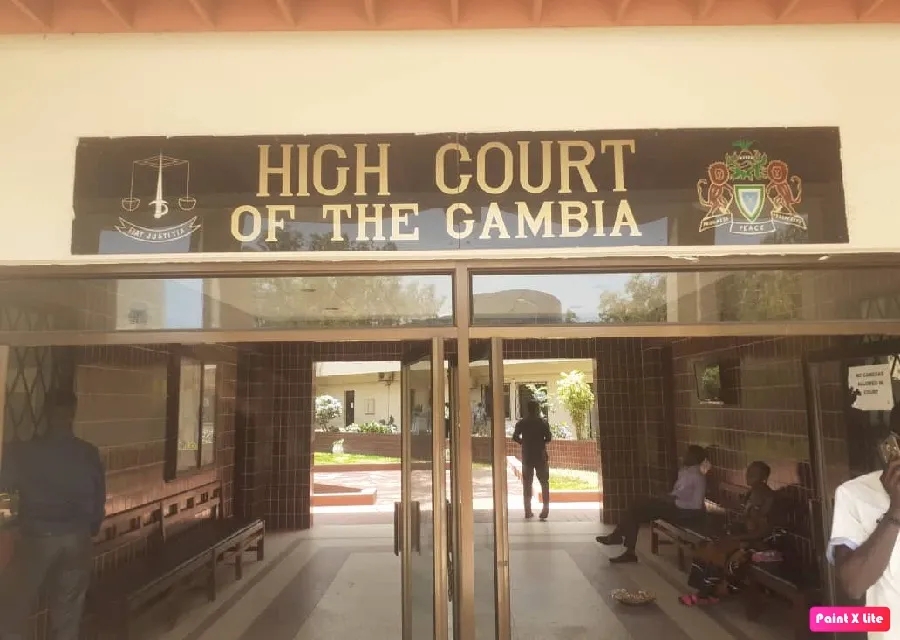

Gambiaj.com – (BANJUL, The Gambia) – The Chief Medical Director of Edward Francis Small Teaching Hospital, Dr. Mustapha Bittaye, has told the High Court that the Acute Kidney Injury (AKI) outbreak that killed dozens of children in 2022 was initially believed to be linked to flood-related illness and suspected paracetamol consumption, rather than immediately to contaminated imported cough syrups.
Dr. Bittaye, appearing as a defense witness in the ongoing civil suit brought by bereaved families, said doctors at the country’s main referral hospital first associated the kidney injuries with diarrheal diseases caused by severe flooding that affected The Gambia between June and October 2022.
He explained that the prevailing medical assessment at the time pointed to environmental and clinical factors.
“During that period, there was severe flooding,” Dr. Bittaye testified under cross-examination by Counsel Loubna Farage. “We initially believed the outbreak was connected to diarrhoea caused by contaminated floodwaters.”
He added that further clinical suspicion later emerged around the possible role of paracetamol in triggering the kidney injuries.
According to Dr. Bittaye, an expert identified as Professor Vivian raised concerns linking the condition to paracetamol consumption, reinforcing the hospital’s early medical theory about the cause of the AKI cases.
He told the court he was first notified of the deaths around July 2022, at a time when clinicians were still trying to determine the exact cause.
“There was clinical suspicion that paracetamol could be the main cause of the kidney injuries,” he said.
Dr. Bittaye confirmed that by the time the severity of the crisis became clear, 27 children had already died. He said the death toll later rose sharply, reaching 83 between October and November 2022.
The hospital chief acknowledged that the exact start date of the outbreak could not be determined and noted that AKI cases occur periodically, making it difficult to immediately identify the 2022 cases as part of a distinct and unusual pattern.
He further testified that only two autopsies were conducted out of approximately 70 child deaths, explaining that autopsies are typically reserved for cases where the cause of death remains uncertain and may not always produce conclusive results.
To determine the cause of the illness, he said samples were analysed locally and sent to laboratories in Senegal and Ghana, while drug samples were also tested abroad.
Although multiple medications were reviewed, Dr Bittaye noted that not all the drugs under investigation contained paracetamol, but they were still considered potentially relevant to the AKI cases.
The civil suit centers on allegations that contaminated pediatric cough syrups – including promethazine oral solution, Kofexmalin Baby cough syrup, Makoff Baby cough syrup, and Magrip N Cold syrup manufactured in India and imported by Atlantic Pharmaceutical Company – caused the fatal kidney injuries.
Dr. Bittaye also raised concerns about possible conflicts of interest within the Medicines Control Agency (MCA), noting that some staff members owned pharmacies. However, he said reforms have since been introduced to strengthen regulatory oversight.
He further told the court that authorities reached out to the affected families to offer condolences and support. He stressed that the names of any suspected parties were only made public after a statement was issued by President Adama Barrow.
He also acknowledged systemic challenges in the health sector at the time, including shortages of specialized personnel and medical equipment, which he said affected response capacity.
The case, in which families are seeking accountability over the deaths of their children, continues today with further cross-examination of Dr. Bittaye expected before the High Court.