






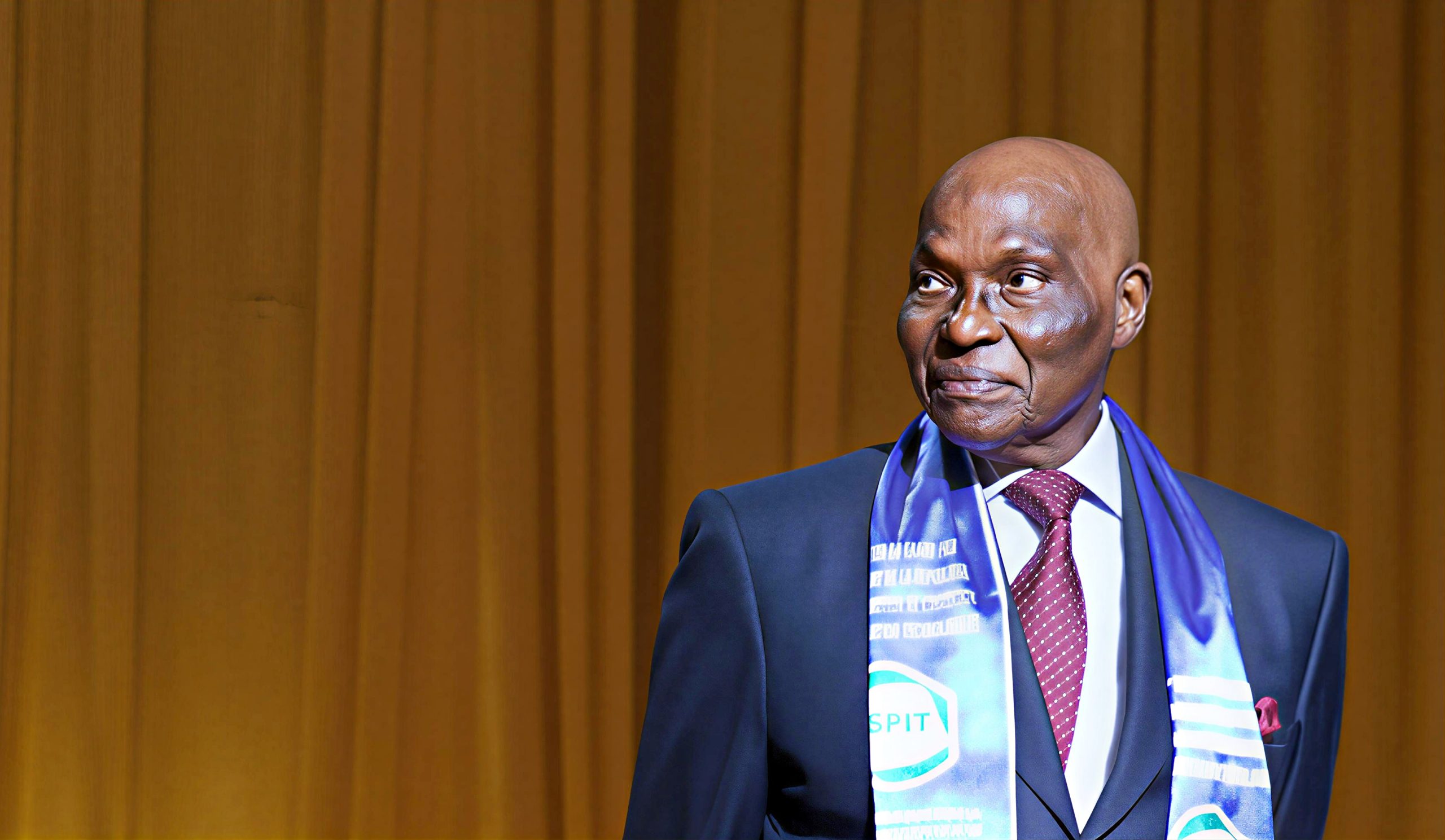
Gambiaj.com – (DAKAR, Senegal) – Senegalese political and intellectual circles are calling for the month of May 2026 to be officially declared “Abdoulaye Wade Month” as the country prepares to mark the centenary of the birth of former President Abdoulaye Wade, one of the most influential figures in Senegal’s contemporary history.
Born in 1926, Abdoulaye Wade is widely regarded as a central architect of Senegal’s democratic trajectory, combining the careers of scholar, opposition leader, statesman, and public intellectual.
Supporters of the proposal argue that such a commemoration would reflect Senegal’s attachment to collective memory, national heritage, and the transmission of democratic values to younger generations.
Before entering frontline politics, Wade built a distinguished academic and professional career. A lawyer by training, he obtained several university degrees in France and earned doctorates in law and economic sciences.
He later served as a university professor in Senegal and abroad, contributing to the intellectual formation of generations of students and establishing his reputation as a rigorous thinker.
Wade’s political career spanned more than four decades. He founded the Senegalese Democratic Party (PDS) in 1974, from which he emerged as the enduring face of the opposition.
He served as Minister of State on several occasions under President Abdou Diouf, notably between 1991 and 1992 and again from 1995 to 1997 under Prime Minister Habib Thiam.
After years marked by imprisonment, political isolation, and personal sacrifice, Wade led Senegal to its first democratic alternation of power in 2000, ending decades of Socialist Party rule.
His election as President, a position he held until 2012, is widely seen as a turning point that consolidated Senegal’s image as a stable democracy grounded in pluralism, free expression, and respect for the ballot box.
Beyond politics, Abdoulaye Wade is also remembered as a man of culture and letters. A prolific writer and committed intellectual, he authored numerous essays and books that enriched public debate and reflected a humanist vision of development.
Among his best-known works are A Destiny for Africa, The Economic Doctrine of Mouridism, and The Mathematics of Modern Economic Analysis, texts that underscore his long-standing engagement with African economic thought and strategic autonomy.
On the continental stage, Wade consistently positioned himself as an advocate for African dignity and self-confidence, calling for the continent to harness its human and intellectual capital and to assert a stronger voice in global affairs.
One of such is his contribution to the New Partnership for Africa’s Development (NEPAD), a merger of two plans for the economic regeneration of Africa notably, Abdoulaye Wade’s OMEGA Plan for Africa that was merged to the Millennium Partnership for the African Recovery Programme (MAP), led by former presidents Thabo Mbeki of South Africa, Olusegun Obasanjo of Nigeria, and Abdelaziz Bouteflika of Algeria.
Proponents of “Abdoulaye Wade Month” stress that the initiative would not be partisan but rather a republican act aimed at fostering national reflection and unity.
They envision a month-long program featuring international conferences on Wade’s life and work, debates on democracy and political change in Africa, educational activities in schools, university symposia, citizen forums, and archival exhibitions documenting his intellectual, political, and cultural legacy.
As Senegal looks ahead to 2026, the proposal has reignited broader discussions on how the nation commemorates its leading figures and preserves the memory of its democratic struggles for future generations.