


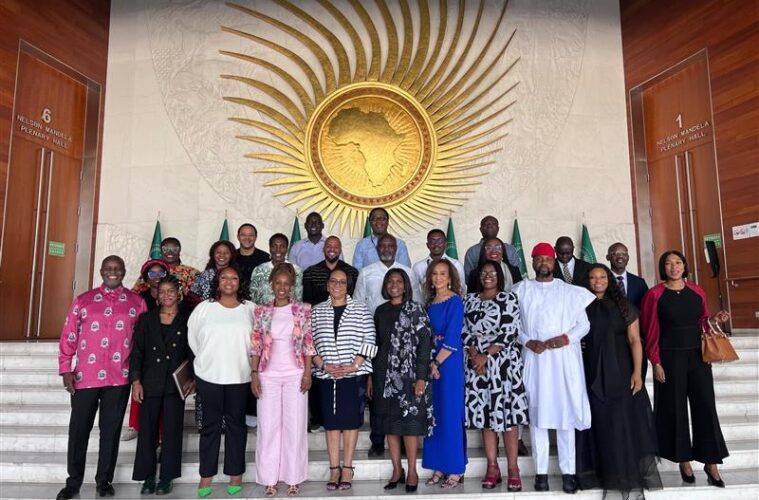
Gambiaj.com – (ADDIS ABABA, Ethiopia) – The 2025 African Women in Media (AWiM) Conference concluded in Addis Ababa with a resounding call for decisive action to confront gender-based violence (GBV), strengthen information integrity, and ensure that women’s voices are more fully represented across Africa’s media landscape.
Over two days, journalists, activists, media professionals, and gender experts convened to examine the deepening challenges women in media face, both online and offline, and to chart practical strategies for advancing safety, equality, and meaningful representation.
Noor Ahmad, Communications Manager at Media Monitoring Africa, said the gathering provided a rare, open space for women journalists to candidly discuss the threats they encounter. She stressed that conversations around information integrity and technology-facilitated GBV were particularly urgent.
“States need to start taking information integrity and technology-facilitated gender-based violence against female journalists more seriously. This should be reflected in the legislation they pass and, importantly, in the implementation of those laws.”
Citing what she described as an “epidemic” of violence in parts of the continent, Ahmad pointed to South Africa, noting that “one woman is murdered almost every 15 minutes.” She said political declarations must now translate into concrete, systemic action. She added that partnerships forged at AWiM 2025 offered hope for sustained regional collaboration after the conference.
Malaka Grant, co-founder of Adventures from the Bedrooms of African Women/Massy Media, said the event surpassed her expectations.
Grant’s presentation and screening of Adventures 2, an initiative focused on youth Sexual and Reproductive Health and Rights, stood out as a conference highlight. Using storytelling to reach young audiences, she said, offers an innovative route to education. She praised the event as “top-tier, 10 over 10,” but called for improved time management in future editions.
For Lindiwe P. Ngwenya, Programme Specialist at UN Women/African Union Commission, the conference arrived at a pivotal moment. She warned that progress on gender equality had slowed in many countries, undermining the broader women’s movement.
Media strategist Rachel Onamusi described the conference as “phenomenal,” praising the diversity of women present—from radio and television to blogs and digital platforms. “We are not only talking about our concerns as women in the media. We are discussing growth, the future, and what tomorrow should look like,” she said.
The conference closed with renewed commitment to the AWiM Kigali Declaration, which outlines obligations for media stakeholders to advance gender equality, end violence against women in the media, and promote responsible, gender-sensitive journalism.
Participants, particularly journalists, were encouraged to engage more deeply with the declaration and to reflect its principles in their reporting and newsroom practices.