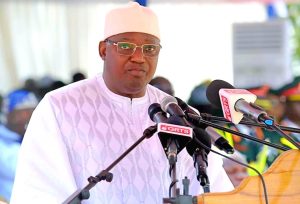


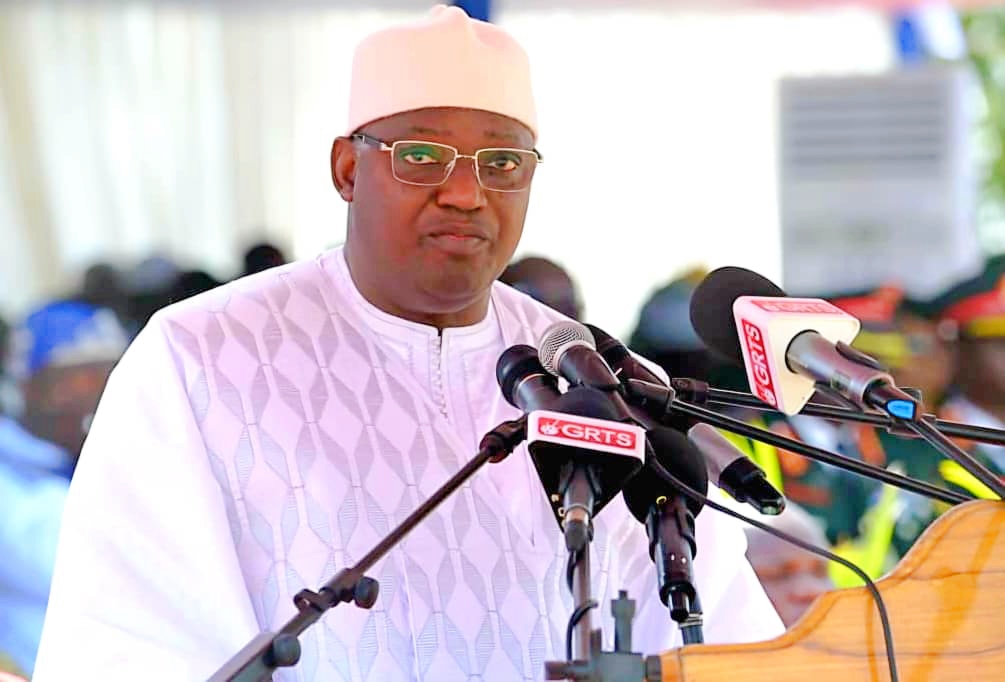
Gambiaj.com – (BANJUL, The Gambia) – President Adama Barrow has presented the government’s National Development Plan, known as YIRIWA, as a modern expression of independence and a roadmap to deliver tangible improvements in the lives of Gambians, 61 years after the country attained sovereignty from British colonial rule.
Speaking at the country’s 61st Independence Anniversary celebrations, President Barrow said YIRIWA, meaning “development,” is designed to translate political freedom into economic transformation, social inclusion, and shared prosperity.
He stressed that independence must go beyond symbolism to produce real benefits for citizens, describing YIRIWA as a Gambian-owned blueprint focused on strengthening institutions, expanding opportunity, and improving livelihoods.
“Independence is hollow if it does not deliver results,” President Barrow said. “Today, YIRIWA stands as a modern expression of that historic struggle: a Gambian-owned blueprint, driven by Gambian priorities and focused squarely on improving the lives and livelihoods of Gambians.”
From Symbolic Freedom to Economic Reality
According to the president, YIRIWA represents a shift from resilience alone to strategic planning, transforming hard work into productivity and collective effort into inclusive growth.
He said the plan prioritizes key sectors that directly affect people’s daily lives, including healthcare, energy, infrastructure, education, agriculture, and democratic governance.
Since 2017, he noted, investments under the YIRIWA framework have expanded health facilities and improved service delivery, with the aim of ensuring healthcare becomes a right rather than a privilege.
In the energy sector, the expansion of the national electricity grid and renewable energy projects, including solar investments, are expected to boost economic activity, reduce power shortages, and support national self-reliance.
“These investments reflect our commitment to energy independence, climate responsibility, and economic competitiveness,” he said.
Infrastructure and Agriculture to Drive Inclusion
President Barrow said infrastructure development, particularly roads linking rural communities to urban markets, is helping reduce isolation and create economic opportunities.
He added that agricultural modernization under YIRIWA is central to food security, employment, and poverty reduction, with farmers receiving improved inputs, equipment, and market access.
“At the heart of YIRIWA is our renewed drive for food self-sufficiency and rural transformation,” he said, emphasizing that a sovereign nation must be able to feed its people.
Investing in Youth and Human Capital
The president also highlighted education and youth empowerment as central pillars of the development plan, noting reforms such as the competency-based curriculum, skills development programs, and entrepreneurship support.
He said these initiatives are designed to equip young Gambians with the skills needed to drive economic growth and define independence through productivity and innovation.
“Our youth are not a challenge to be managed, but a resource to be unleashed,” he said.
Strengthening Democracy and Accountability
President Barrow further stated that YIRIWA is reinforcing democratic governance through stronger institutions, expanded civic space, and respect for the rule of law.
He warned that corruption and inefficiency undermine independence and pledged continued efforts to ensure accountability in public service.
A New Phase of Independence
Reflecting on the country’s journey since 1965, President Barrow said YIRIWA represents a new phase in which independence is measured not by historical achievement alone but by improved living standards and opportunity.
He said the plan is already helping to build “better schools, stronger institutions, reliable energy, productive farms, empowered youth, and inclusive growth that touches every community.”
“As we celebrate today, let us recommit ourselves to unity, hard work, and discipline,” he said. “Together, let us continue building a peaceful, prosperous, and resilient Gambia for present and future generations.”
The president’s remarks framed YIRIWA as the central vehicle for converting the promise of independence into practical progress for Gambians, more than six decades after the end of colonial rule.