

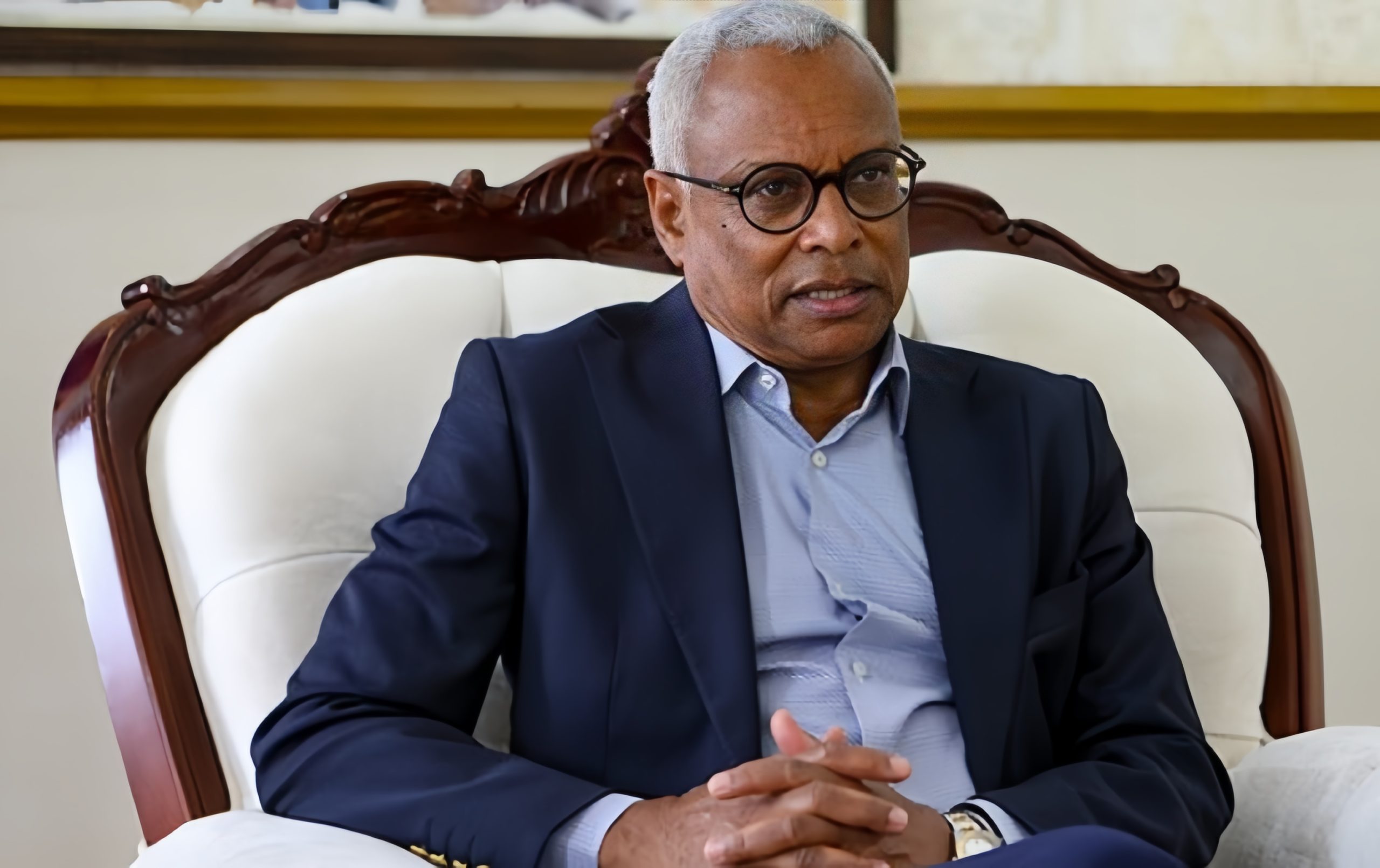
Gambiaj.com – (PRAIA, Cabo Verde) – Cape Verdean President José Maria Neves has announced that his country will not join a group of West African heads of state preparing to travel to Guinea-Bissau to help mediate the country’s deepening political crisis, citing historical sensitivities between the two nations.
Speaking to Radio Cabo Verde (RCV) on Monday, President Neves said the government reached the decision after “a more thorough assessment of the situation,” concluding that remaining outside the proposed mediation mission would allow Cape Verde to make a “broader contribution” through ECOWAS mechanisms.
“Some heads of state are scheduled to travel to Guinea-Bissau. After careful evaluation, we have decided to distance ourselves from the mediation commission, taking into account the historical relations between Cape Verde and Guinea-Bissau, but we wish them the best in overcoming this moment of political crisis,” Neves said.
The President emphasized the “sensitivity” of the situation, recalling the shared liberation struggle of both nations against Portuguese colonial rule and the close ties that have endured since independence.
“It is advisable that Cape Verde, at this stage, not be too involved in this issue so that it can make a broader contribution within the framework of ECOWAS,” he said. Neves is expected in Abuja on December 14 for the ECOWAS summit, where he intends to present Cape Verde’s views on the bloc’s first efforts to engage with Guinea-Bissau’s new authorities.
Neves stressed that Cape Verde does not intend to interfere in Guinea-Bissau’s internal affairs. “There was a coup, there is already a transitional president, and a new government appointed, and these are the facts we must work with,” he said, warning that public commentary from Praia could “complicate the negotiating framework.”
He expressed hope that the crisis would be resolved “peacefully, through negotiations between the parties” and reaffirmed Cape Verde’s readiness to support dialogue and help regional efforts aimed at restoring stability.
Guinea-Bissau plunged into crisis on November 26 when a group of military officers seized power, removed President Umaro Sissoco Embaló, who subsequently fled the country, and suspended the release of results from the November 23 general elections.
General Horta Inta-A has since been sworn in as transitional President for one year, and has appointed Ilídio Vieira Té, a former minister under Embaló, as Prime Minister and Finance Minister.
The elections, which were conducted peacefully, excluded the main opposition party, the African Party for the Independence of Guinea and Cape Verde (PAIGC), and its leader, Domingos Simões Pereira.
Pereira instead backed another opposition contender, Fernando Dias da Costa, who claimed to have won the first round. Pereira was later detained, an action the opposition denounces as part of a wider maneuver to block the publication of electoral results and cement military control.
The coup has drawn sharp condemnation from the international community. ECOWAS and the African Union have both suspended Guinea-Bissau until constitutional order is restored.