

Gambiaj.com – (BANJUL, The Gambia) – Military coups in Africa have long followed a familiar script. Those who seize power by force know their actions violate regional and international norms. Yet, under pressure from organizations such as ECOWAS and the African Union, they promise to return power to civilians – after claiming to have “cleaned up” or rebuilt institutions they accuse civilian leaders of destroying.
What follows is a travesty of transition process, a “coup laundering,” which is the gradual transformation of an illegal seizure of power into a supposedly legitimate civilian mandate.
The Three Stages of Coup Laundering
This whitewashing unfolds in three distinct phases.
First, an extended transition period. The junta negotiates a transition timetable with regional and international bodies. These timelines are often presented as necessary to stabilize the country and reform institutions. In practice, they are frequently exaggerated, stretching far beyond initial promises.
Second, the gradual erosion of the transition calendar.
Deadlines slip. Elections are postponed. “Provisional” timetables remain provisional, setback after setback. Transition periods of three or four years become common, allowing military rulers to entrench themselves in power while maintaining the façade of a temporary arrangement.
Third, the transformation of soldiers into civilian candidates.
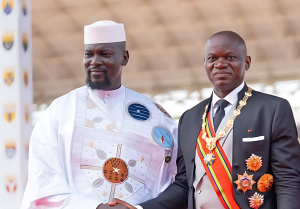
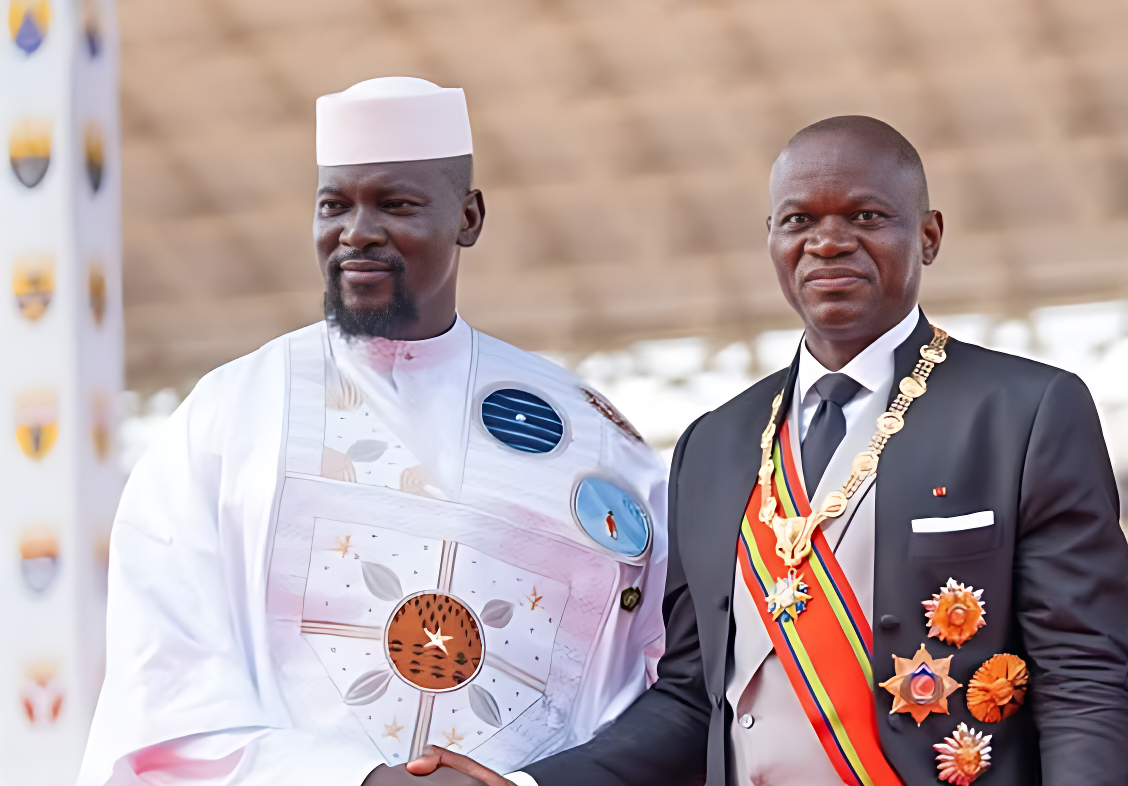
Midway through the transition, military leaders shed their uniforms for civilian attire—three-piece suits or traditional white boubous. They invoke “popular demand” to justify their candidacy, even when that demand has been carefully cultivated and orchestrated by the regime itself.
Finally, the electoral process is shaped to ensure their victory. Potential rivals are sidelined or excluded. State machinery is deployed to secure favorable outcomes.
The result is an election that confers formal legitimacy, despite serious flaws. Regional and international organizations often endorse these polls, effectively validating the transition from coup leader to elected president.
A Warning From Within the African Union
Angolan President João Lourenço, the outgoing chair of the African Union and himself a former soldier who rose to power through elections, recently issued a pointed warning. His remarks appeared aimed not only at those already in power through coups but also at those who might be tempted to follow the same path.
His message underscored a troubling reality: military rulers may believe that, after organizing controlled elections, they too can rejoin the continental fold – having successfully laundered their seizure of power.
This phenomenon has become a scourge. It blurs the line between constitutional order and military rule, making it increasingly difficult to deter future coups.
The African Union, and Elections That Legitimize Coups
The African Union’s role in observing elections in countries such as Gabon and Guinea has raised difficult questions. While reports acknowledged concerns, including restrictions on human rights and electoral freedoms, the final verdict nonetheless validated the polls as meeting acceptable standards.
In effect, these endorsements function as certificates of democratic conformity, granting legitimacy to regimes born from unconstitutional power grabs.
This contradiction is not new. Former Chadian President Idriss Déby Itno, who himself came to power through armed rebellion, once remarked with biting irony, “We always talk too much, but we do not act enough, and sometimes not at all.”
He made that observation at the African Union summit in January 2016. A decade later, the criticism still resonates.
Principles Without Enforcement
The African Union’s Peace and Security Council is mandated to enforce “zero tolerance for unconstitutional changes of government.” Yet its actions have often fallen short of this principle.
After President Laurenzo fumed against coup d’état laundering, there has been no decisive resolution to set clear rules against the democratic cover-up of coups. Its standby force remains largely theoretical, lacking the operational capacity to intervene effectively.
More troubling still, the Council’s posture has at times undermined regional efforts. In 2023, it declined to support ECOWAS’s threatened military intervention against Niger’s coup leader, Abdourahamane Tiani. Instead, it moved quickly to acknowledge the new reality in Niamey, disappointing ECOWAS and weakening a rare opportunity to establish a firm deterrent.
By doing so, it signaled, intentionally or not, that unconstitutional power could eventually be accommodated.
Crisis of Democratic Credibility and the Risk of Contagion
The consequences extend beyond individual countries. Coup regimes increasingly cooperate and present themselves as an alternative political bloc. Some promote visions of new alliances designed to replace what they describe as failed democracies aligned with Western interests.
Investigations, including those by Forbidden Stories, suggest that certain military regimes and their external partners are pursuing coordinated strategies to consolidate this model.
The danger is clear: once the “wolf” is allowed into the fold, others may follow.
The cover-up and laundering of coups represents more than a legal loophole. It undermines democratic norms, weakens regional institutions, and encourages future military takeovers.
Until regional bodies move beyond rhetoric and enforce their own principles, the cycle will likely continue: coups condemned in principle but accepted in practice, transformed, step by step, into legitimate power.