


Gambiaj.com – (Havana, Cuba) – The Cuban government has announced a series of emergency measures to confront a deepening energy crisis that has plunged large parts of the country into repeated power outages. The island has been struggling for years with widespread electricity cuts, largely due to ageing infrastructure and tightening U.S. sanctions.
President Miguel Díaz-Canel acknowledged the gravity of the situation this week, revealing that electricity production from diesel- and fuel-oil-powered generators had dropped to zero because of a lack of fuel.
His comments followed yet another major blackout on Thursday, February 5, which affected much of eastern Cuba and highlighted the fragility of the national power grid.
The crisis has intensified rapidly in recent months, particularly after the United States captured former Venezuelan president Nicolás Maduro, a key ally of Havana whose government had continued to supply oil to the island.
At the same time, Washington has stepped up pressure on Cuba, describing it as an “exceptional threat” to U.S. national security — a justification Cuban officials say is being used to further restrict fuel access.
Deputy Prime Minister Oscar Pérez-Oliva Fraga, speaking on state television on Friday, February 6, said the strategy was having a direct impact on the country’s ability to function.
He explained that the pressures are forcing the government to take difficult decisions aimed first at preserving essential services and daily life, while still attempting to maintain long-term development.
Emergency Measures and Daily Impact
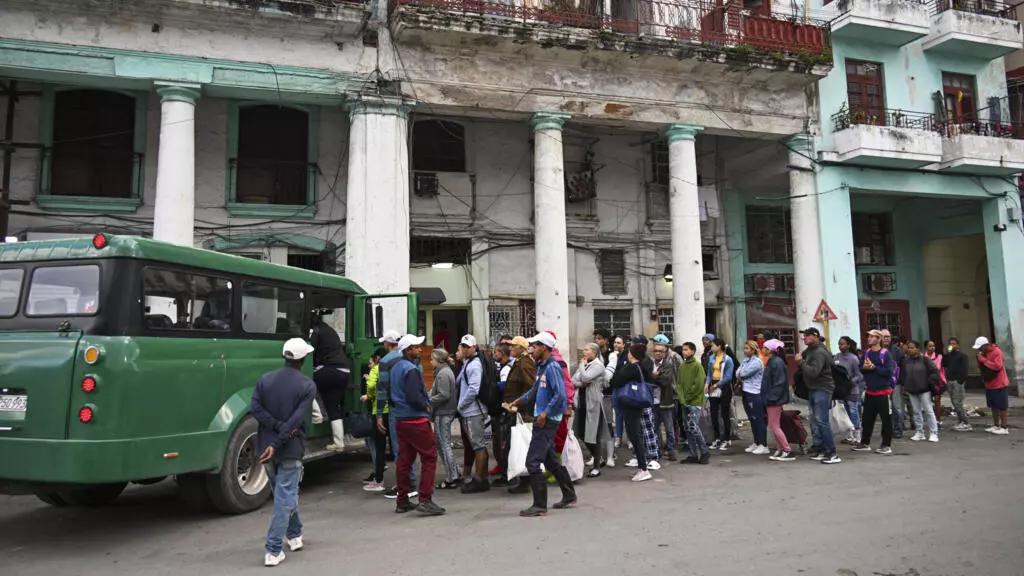
As part of the emergency response, the Cuban government has decided to significantly scale back public transport services, including buses and trains, due to fuel shortages. Several tourist facilities will also be temporarily closed in order to reduce energy consumption, while fuel sales will be limited nationwide.
Working hours across many state institutions will be reduced, and administrative activities will be concentrated between Monday and Thursday. According to the vice-prime minister, this restructuring is intended to improve efficiency in public service delivery while conserving scarce resources.
Authorities say the overall objective is to prioritize food production, electricity generation, and the protection of fundamental national activities.
Broader Context and Public Hardship
The worsening energy crisis has had a direct impact on everyday life for Cubans. Transportation disruptions have forced many residents to walk long distances to work, while hospitals and other essential services are increasingly reliant on backup systems.
The country’s electricity network, long weakened by underinvestment, has struggled to meet demand, leading to frequent and prolonged outages.
President Díaz-Canel warned earlier that Cubans should brace for “difficult times” ahead, calling for resilience and unity in the face of the crisis. He has repeatedly blamed U.S. sanctions for exacerbating shortages and constraining Cuba’s access to fuel and financial resources.
The situation was further complicated at the end of January when President Donald Trump signed an executive order allowing the United States to impose tariffs on countries that sell oil to Cuba.
Cuban authorities say the move has increased international reluctance to supply fuel to the island, deepening an already severe energy emergency.
As the government enforces these emergency measures, officials insist they are temporary but unavoidable, as Cuba seeks to stabilize electricity production and safeguard essential services amid mounting economic and geopolitical pressure.