

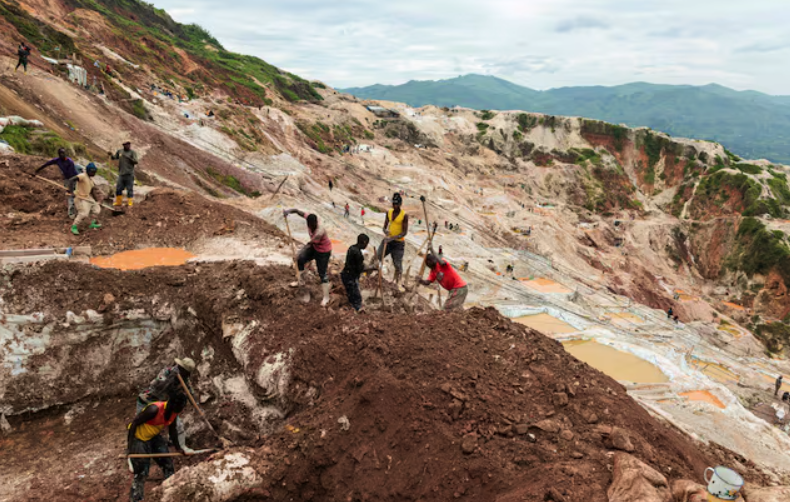
Gambiaj.com – (KINSHASA, DRC) – The Democratic Republic of Congo has included the rebel-controlled Rubaya coltan mine, one of the world’s richest sources of tantalum, on a shortlist of strategic assets it is offering to the United States under a new minerals cooperation framework, according to a government document seen by Reuters.
The move highlights Kinshasa’s efforts to attract American investment into its vast but conflict-affected mineral sector and strengthen ties with Washington amid growing global competition for critical resources.
Reuters reported that a senior Congolese official and a U.S. diplomat confirmed Rubaya’s inclusion in the list presented during a bilateral meeting in Washington on February 5 aimed at advancing a strategic minerals partnership agreed upon in December.
Strategic Metal in High Global Demand
Tantalum, extracted from coltan ore, is a highly sought-after heat-resistant metal used in semiconductors, aerospace components, mobile phones, and other advanced technologies.
According to the document, Congo estimates it would require between $50 million and $150 million to restart and expand production at Rubaya, with rapid cost recovery expected due to soaring global demand.
The Congolese government believes the mine could supply a “fully traceable, conflict-free” source of tantalum that meets U.S. procurement standards, Reuters said.
Located in North Kivu province, Rubaya accounts for about 15 percent of the world’s coltan production and contains several thousand metric tons of the ore, with tantalum concentrations of between 20 and 40 percent.
However, the mine remains under the control of the AFC/M23 rebel group, which the United Nations says generates at least $800,000 per month from taxes on coltan production and trade. Rwanda denies allegations that it backs the group.
Conflict Complicates Investment Plans
The decision to offer Rubaya, despite the government not controlling it, underscores the complex security situation in eastern Congo, where fighting between government forces and rebel groups continues.
A senior official from the AFC/M23 alliance told Reuters the group’s objective “is not the mines but the liberation of our people,” while criticizing the minerals partnership as flawed.
Reuters also reported that the rebels are not part of a fragile peace deal brokered in December by President Donald Trump between Congo and Rwanda, and clashes have continued despite the agreement.
Some analysts believe Kinshasa’s move could be aimed at encouraging stronger U.S. involvement in stabilising and potentially helping recover strategic mining areas.
Broader Push to Counter China’s Influence
The minerals partnership is part of Washington’s wider strategy to secure access to critical minerals and reduce reliance on China, which has long dominated Congo’s mining sector.
Under the agreement, U.S. companies will receive preferential access to selected mining and infrastructure projects.
Washington says the initiative is intended to promote transparent investment, job creation, and long-term stability in Congo.
Other assets offered to U.S. investors include the Manono lithium deposit, copper-cobalt projects, gold prospects, and key transport infrastructure such as Congo’s portion of the Lobito rail corridor.
Reuters reported that Congo has already signed initial supply agreements with U.S. and allied firms, although details of specific companies involved have not been disclosed.
The inclusion of Rubaya, despite its location in rebel-held territory, highlights both Congo’s immense mineral wealth and the ongoing political and security challenges surrounding control of its most valuable resources.