

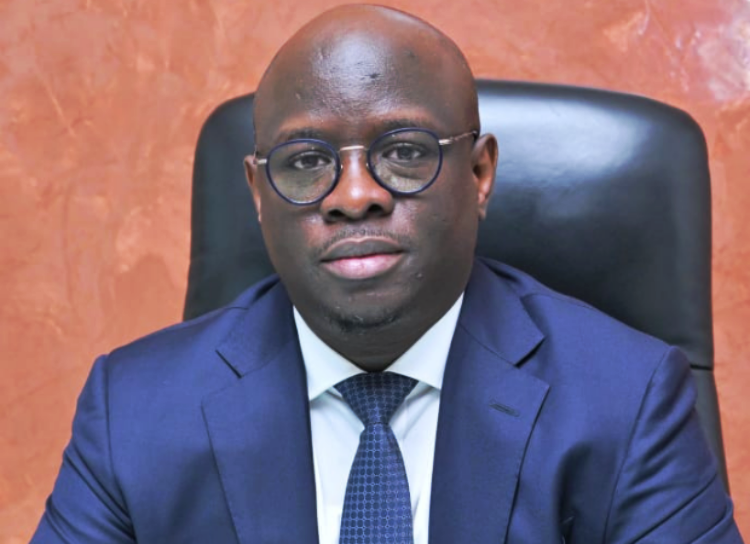

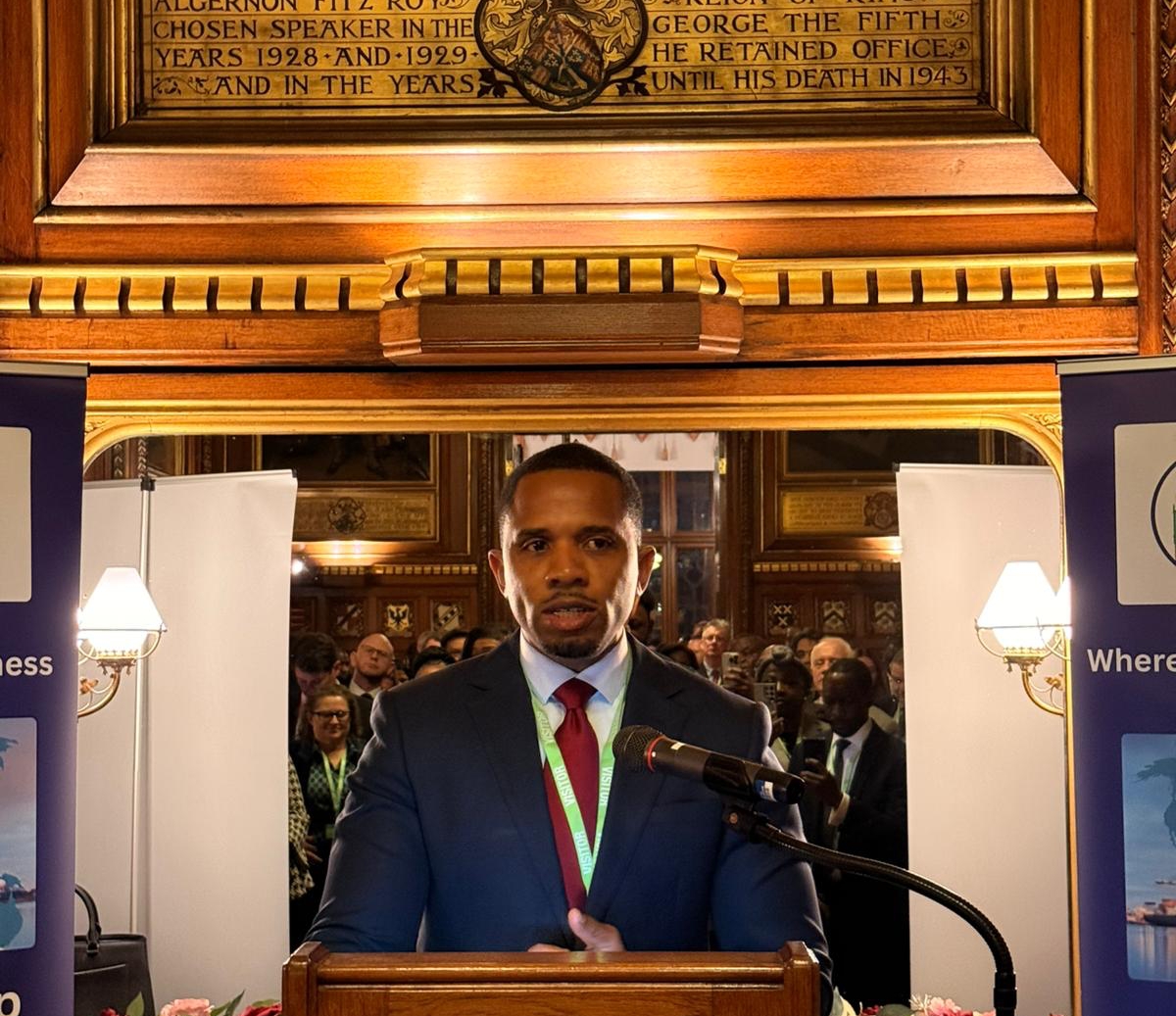
Gambiaj.com – (LONDON, United Kingdom) – In a high-level diplomatic move at the heart of British democracy, The Gambia’s Minister of Information, Media, and Broadcasting Services, Hon. Dr. Ismaila Ceesay, has called for a radical redefinition of the relationship between Banjul and London.
Addressing a distinguished gathering of lawmakers and business titans at the House of Commons on February 3, 2026, the minister declared that the era of aid dependency is over, making way for a future rooted in trade, investment, and mutual dignity.
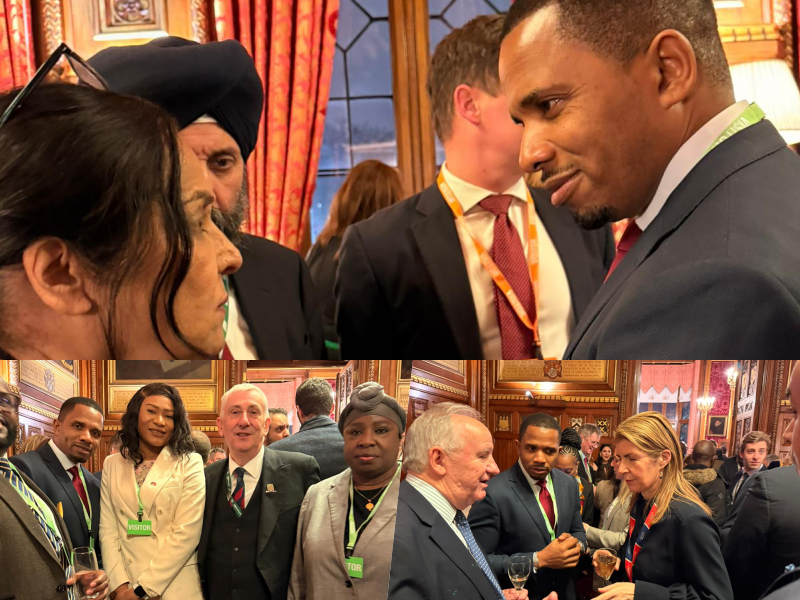
The engagement, hosted by the Westminster Africa Business Association, brought together an influential audience, including the Speaker of the House of Commons, Lindsay Hoyle, and the UK’s Shadow Foreign Secretary, Priti Patel.
The presence of such senior parliamentary figures underscored a burgeoning cross-party interest in strengthening ties with West Africa’s “Smiling Coast.”
A Foundation of Democratic Renewal
Minister Ceesay opened his address by contextualizing The Gambia’s current economic ambitions within its recent political transformation.
He reminded the audience that since 2017, under the leadership of President Adama Barrow, the nation has successfully transitioned from over two decades of authoritarianism to a period of robust democratic renewal.
Dr. Ceesay emphasized that this political stability is the bedrock of the country’s economic appeal. With strengthened civil liberties and a notably freer media landscape, he positioned The Gambia as one of the sub-region’s fastest-growing economies, now ready to pivot from a recipient of charity to a confident global partner.
Moving Beyond the Aid Mindset
The centerpiece of the minister’s message was a blunt assessment of current bilateral relations. Despite a shared history and the geographical advantage of being less than six hours apart by flight, Dr. Ceesay noted with regret that the United Kingdom is not currently among The Gambia’s leading trading partners.
“We seek a relationship with Britain built on dignity, mutual respect, trade, and investment,” the minister stated.
He urged British investors to see Africa not as a continent in need of rescue but as the “continent of the future,” rich with a youthful population and expanding markets. He framed the opportunity as a two-way street where British expertise and capital could merge with African resources to drive shared prosperity.
Infrastructure and Key Investment Frontiers
To back the “ready for business” rhetoric, Dr. Ceesay highlighted significant domestic strides in infrastructure. He pointed to the dramatic rise in national electricity access, climbing from 47% in 2017 to approximately 75% today, with the government now eyeing universal access.
This, coupled with aggressive road construction and investments in human capital through skills centers, forms the backbone of the government’s growth strategy.
The minister specifically invited the British business community to explore high-growth sectors. While tourism remains a traditional stronghold with deep historical links to the UK, he identified real estate, urban development, renewable energy, and large-scale agriculture as frontier sectors ripe for British involvement.
He also noted the untapped potential in fisheries and marine resources as part of the country’s diversified economic roadmap.
A New Vision for Partnership
The event concluded with a sense of renewed diplomatic momentum. By presenting a “New Gambia” that is open, stable, and strategically positioned, Dr. Ceesay effectively signaled to the international community that the country is no longer a passive actor on the global stage.
The presence of UK leaders like Priti Patel further validated the minister’s mission, reflecting a reciprocal desire in London to re-engage with African partners.
As the session closed, the message remained clear: The Gambia is offering a partnership based on economic parity, inviting those who believe in shared prosperity to join its journey of transformation.