


Gambiaj.com – (ABUJA, Nigeria) – The ECOWAS Community Court of Justice has sharply criticized several West African governments for persistently failing to enforce its rulings, warning that the region’s growing human rights deficits are being compounded by political instability, coups, and widespread insecurity.
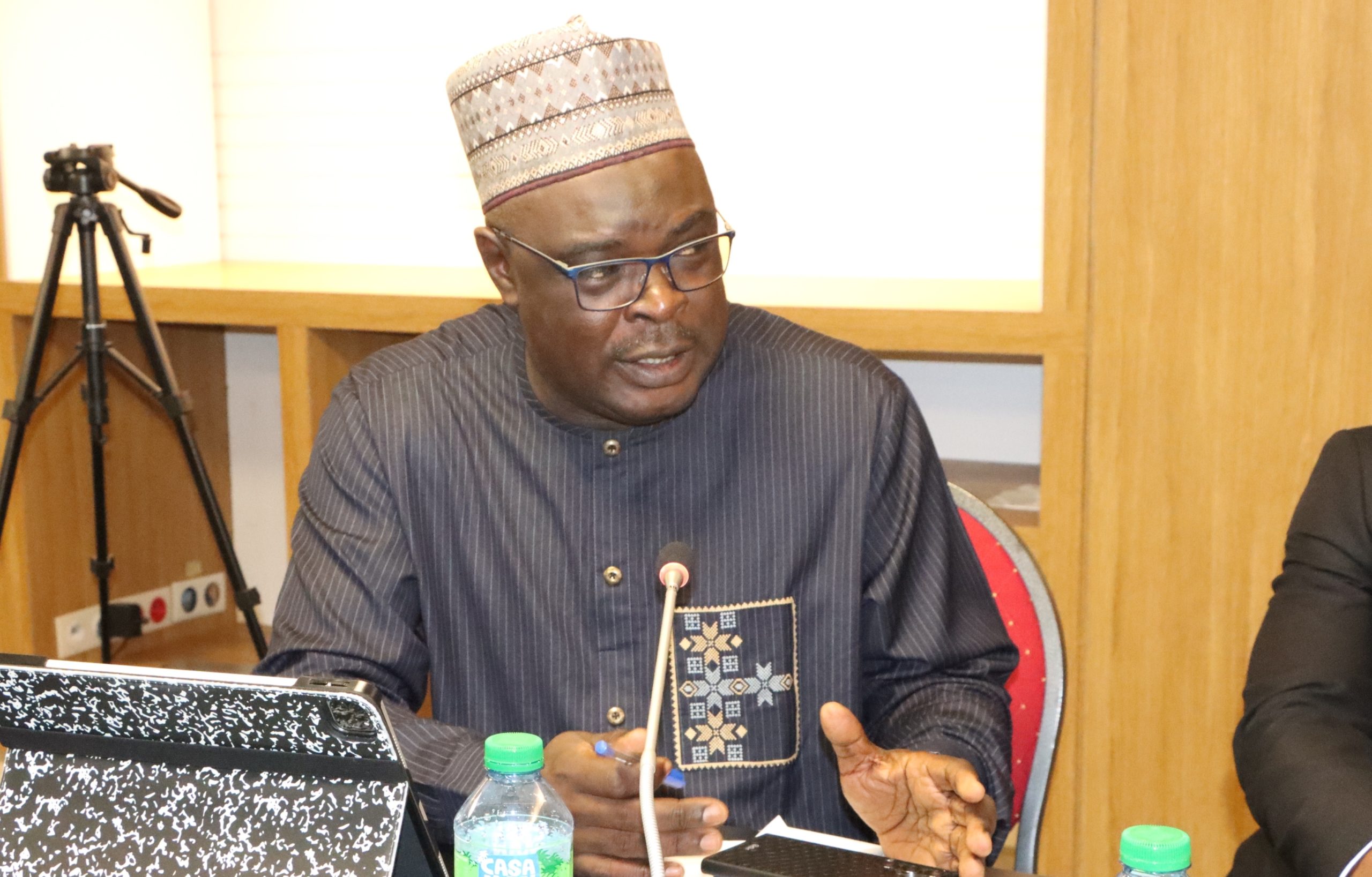
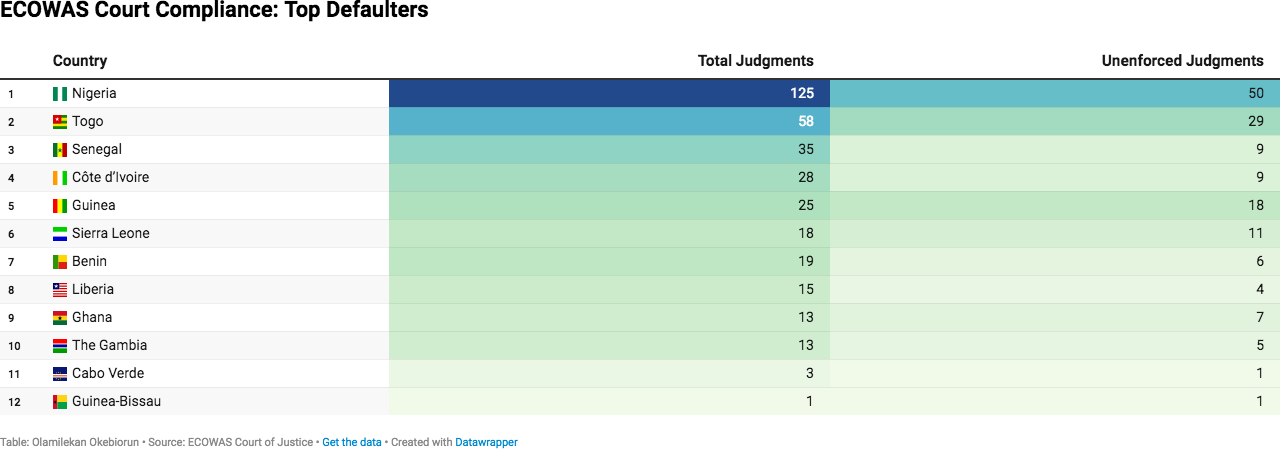
Speaking at Wednesday’s World Human Rights Day commemoration, the Court’s Deputy Chief Registrar, Gaye Sowe, revealed stark new enforcement data showing that Nigeria, Togo, and Senegal have amassed the largest backlogs of unenforced judgments, highlighting what he described as a “deep and sustained pattern of non-compliance” across the region.
According to Sowe, Nigeria remains the top non-compliant state, with 50 unenforced judgments out of 125 decisions delivered against it. Togo follows with 29 unenforced decisions out of 58, while Senegal has failed to implement nine of the 35 judgments issued by the regional court.
The Gambia, Côte d’Ivoire, Guinea, Sierra Leone, Benin, Liberia, and Ghana were also listed among countries with significant pending enforcement obligations.
Sowe emphasized that this failure erodes the authority of the Court at a time when its rulings are increasingly vital to protecting citizens’ rights in a region grappling with democratic backsliding. “As of today, the total number of cases filed before the ECOWAS Court of Justice stands at 775,” he noted.
“The Court currently has 136 pending cases. Out of the 419 judgments delivered involving non-AES countries, 192 are enforceable. By enforceable, we mean cases in which member states are required to take specific measures.”
He added that although 10 of the 12 ECOWAS member states have designated national authorities responsible for enforcing judgments, Benin and Cabo Verde still lack such mechanisms—further weakening the enforcement chain.
Court President Warns of Human Rights Setbacks
ECOWAS Court President Ricardo Gonçalves expressed concern that persistent non-compliance is undermining the Court’s progressive human rights jurisprudence. He noted that the Court has issued landmark rulings on freedom of expression, peaceful assembly, education, and environmental rights, but many of these decisions remain unimplemented.
“Without effective and total implementation of the Court’s judgments, the promise of human rights protection offered by the 2005 Supplementary Protocol becomes a mirage,” Gonçalves said.
He stressed that the Court’s role in holding states accountable for civil, political, economic, social, and cultural rights is only meaningful when governments respect and execute its decisions.
Political Turmoil Deepens Enforcement Crisis
Echoing these concerns, ECOWAS Commission President Alieu Touray warned that systemic instability across West Africa has further weakened compliance.
He noted that the region now faces “an average high-risk rating across member states,” fuelled by military takeovers, fragile political transitions, declining inclusivity, and surging threats from terrorist and criminal networks. “Events of the last few weeks have shown the imperative of serious introspection on the future of our democracy and the urgent need to invest in the security of our community,” Touray said, referencing recent crises in Guinea-Bissau, Benin, and Guinea.
Touray also highlighted a worsening humanitarian crisis, with 7.6 million people forcibly displaced across West Africa—over 6.5 million of whom are internally displaced, primarily in Nigeria, Burkina Faso, Niger, and Mali.
Calls for Stronger Enforcement Mechanisms
Both Gonçalves and Sowe urged member states to uphold their legal obligations by fully enforcing ECOWAS Court decisions, strengthening national enforcement authorities, and cooperating more closely with regional and domestic human rights institutions. They stressed that without decisive corrective action, the regional human rights system risks further deterioration.
The revelations come as ECOWAS faces mounting scrutiny over its ability to maintain regional stability and uphold democratic norms amid unprecedented political upheaval.