

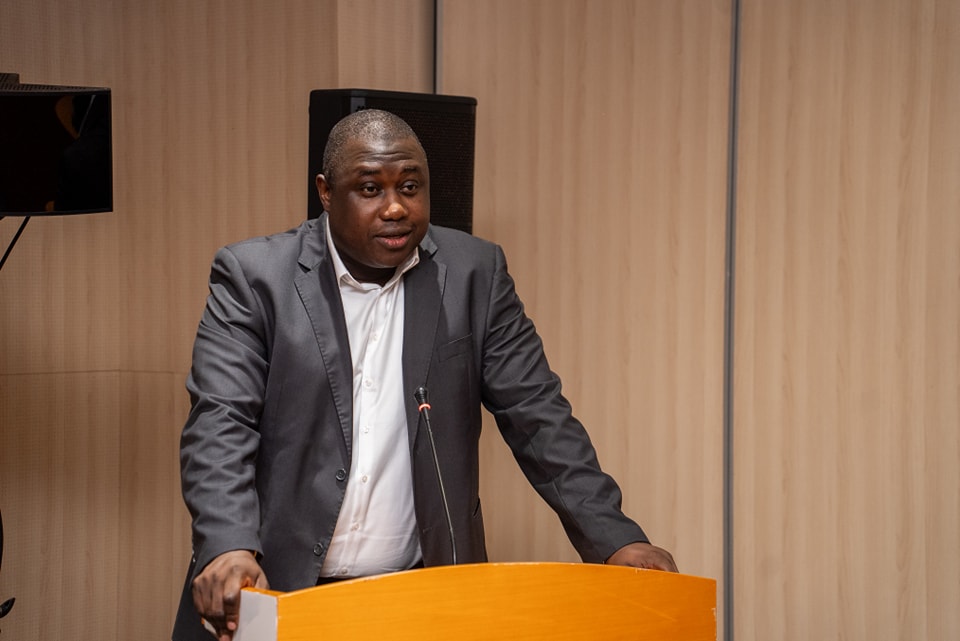
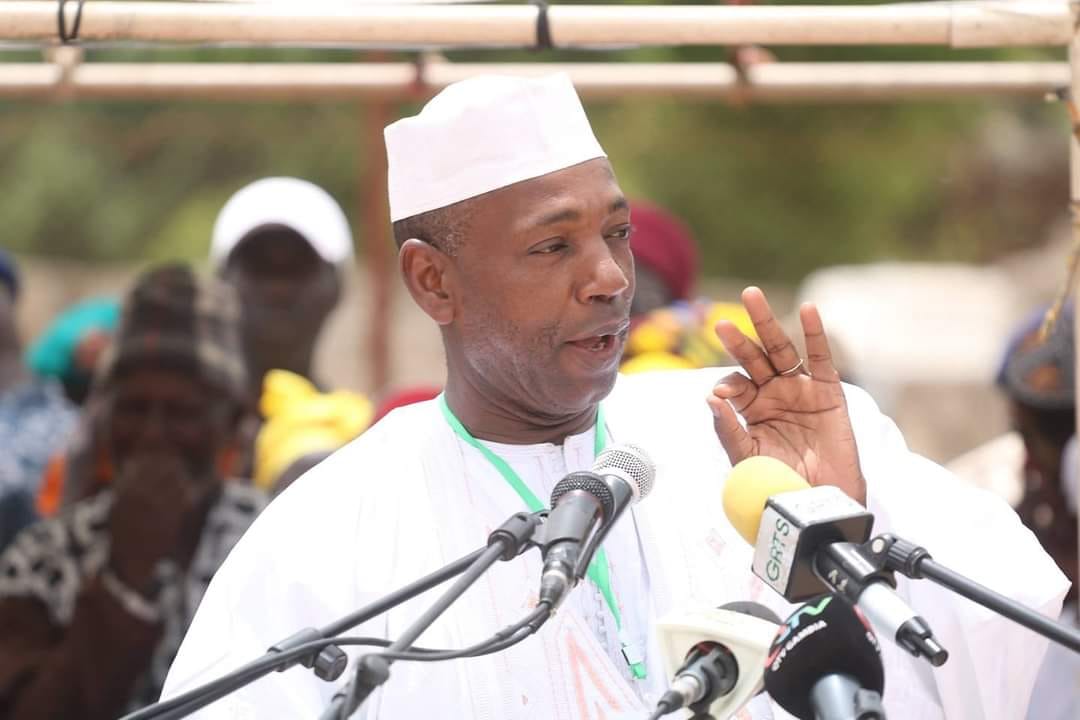
Gambiaj.com – (BANJUL, The Gambia) – Hamat Bah’s unusually blunt remarks at the National Reconciliation Party (NRP) rally in Sanjal mark more than a routine display of political bravado. They amount to a carefully calibrated public signal, directed as much at President Adama Barrow’s National People’s Party (NPP) as at the broader ruling coalition, that loyalty does not equate to subservience as The Gambia edges toward the December polls.
For years, Bah has been one of President Barrow’s most reliable political allies, anchoring the NRP firmly within successive coalition arrangements.
That history is precisely what gives weight to his warning that he “would not allow his people to be disrespected by any group in the alliance.” Coming from a longtime insider rather than a disgruntled fringe actor, the statement punctures the image of seamless unity the NPP’s Grand Alliance has sought to project.
At one level, Bah’s comments are a demand for respect, explicitly framed as recognition of the NRP as an autonomous political entity rather than a mere appendage of the ruling party.
His insistence that cooperation must be mutual, and that disrespect will be confronted suggests unease with how power and visibility are currently distributed within the alliance.
The subtext is difficult to ignore: as the NPP consolidates state power ahead of the elections, smaller parties fear being politically eclipsed, mobilised for votes but marginalized in decision-making.
More striking, however, is Bah’s reassertion of his long-standing presidential ambition, which he traced back to 1996 and declared “solid, firm, and unshakeable.” By stating that he would never mortgage that ambition “not even to Adama Barrow,” Bah drew a clear line between personal loyalty to the president and the NRP’s strategic independence.
This duality, professed loyalty coupled with a refusal to dissolve into the NPP, captures the delicate balancing act facing coalition partners as the polls approach.
Equally significant is Bah’s announcement that the NRP will now “do its own things,” including regular nationwide rallies, echoing its posture in earlier electoral cycles.
This is not an exit from the coalition, but it is a repositioning within it. The first NRP rally since partnering with the NPP was therefore symbolic: a reminder to supporters, rivals, and allies alike that the party retains its own grassroots machinery and political identity.
The implications for internal coalition dynamics are profound. Bah’s outburst may well articulate sentiments quietly shared by other so-called satellite parties within the Grand Alliance.
Many benefit from proximity to power, but all risk being subsumed by the dominant NPP brand. By speaking publicly, Bah may be testing the waters, both to strengthen his bargaining position and to give voice to frustrations others have so far managed privately.
For President Barrow and the NPP, the message is a cautionary one. Coalition politics thrives on constant reassurance, especially as elections near and competition for relevance intensifies. Dismissing Bah’s remarks as mere rhetoric would be a miscalculation.
They underscore that unity cannot be sustained by electoral arithmetic alone; it must be underpinned by visible respect, inclusion, and acknowledgment of partners’ ambitions.
As December approaches, Hamat Bah’s words serve as an early tremor within the ruling alliance. They do not herald an imminent rupture, but they do signal that the era of unquestioned acquiescence by junior partners may be ending.
Whether the NPP responds with accommodation or complacency will help determine not only the coalition’s cohesion but also the tone of the coming campaign.