







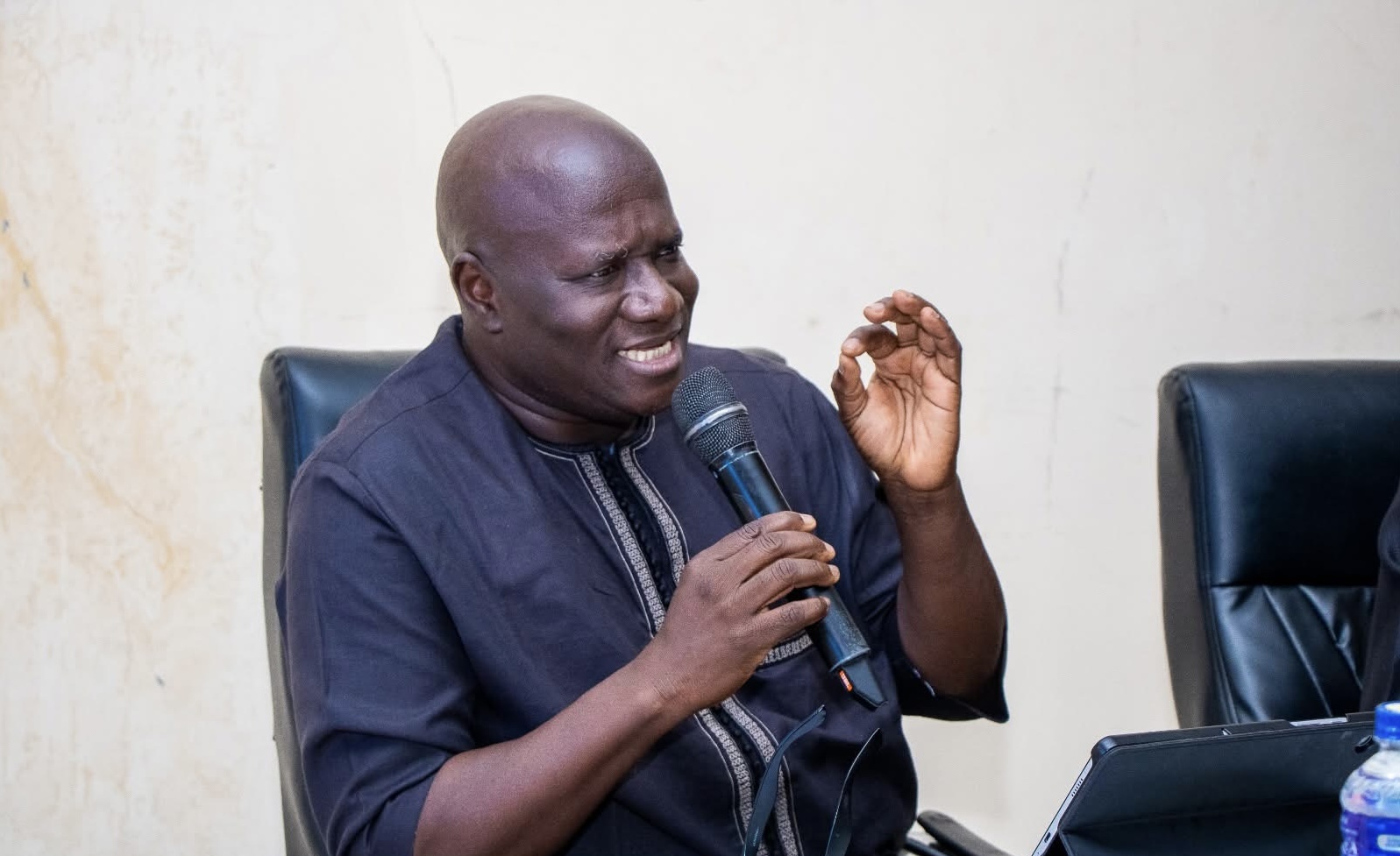
Gambiaj.com – (BANJUL, The Gambia) – The Edward Francis Small Centre for Rights and Justice, a civil society organization, expresses its profound grief and condolences to the families of the youths who lost their lives in the recent Backway tragedy on the coast of Jinack and echoes that Gambian youths risking their lives on the irregular migration journey is a result of “limited prospects” in the country.
“It is important to recognize that both the unskilled, undereducated, poorly paid, and underprivileged, as well as highly educated, skilled, and relatively privileged Gambians, seek to leave the country, albeit through different routes. What unites them is not mindset or attitude, but the dire socioeconomic conditions and limited prospects at home,” Madi Jobarteh, Executive Director and Founder of EFSCRJ, told journalists.
Mr. Jobarteh believes that the Backway journey did not emerge in isolation; rather, it arose as a response to deep deprivation, limited opportunities, and persistent hardship within the country.
Mr. Jobarteh further told journalists that the persistent occurrence of these dangerous and deadly journeys reflects a deep and long-standing malaise afflicting Gambian society.
He said while EFSCRJ considers the Backway to be unsafe, dangerous, and unacceptable, it therefore urges young people to refrain from undertaking it. Citing that they cannot ignore the structural conditions that have sustained this phenomenon for decades.
“Migration is a human right. However, when migration by any means becomes a widespread preoccupation driven by desperation and the search for greener pastures, it raises serious socioeconomic and governance questions that require honest, direct, and sustained national conversations,” he said.
EFSCRJ emphasizes that while it raises serious concerns about both regular and irregular migration, particularly the loss of life and the accelerating brain drain, it is also an established and undeniable fact that migrants play a critical role in sustaining the Gambian economy.
Mr. Jobarteh said remittances sent by Gambians in the diaspora account for more than 30% of the country’s Gross Domestic Product (GDP). He believes these remittances support households, finance education and healthcare, sustain small businesses, and cushion families against economic shocks.
Mr. Jobarteh said this reality exposes a fundamental structural contradiction: while the state benefits immensely from migration-generated income, it has failed to create comparable opportunities at home that would allow citizens to live with dignity without risking their lives or being forced to leave the country.
The EF Small Centre also acknowledges that the vast majority of Gambian youth remain in the country, working diligently as carpenters, fisherfolk, taxi drivers, market vendors, plumbers, engineers, farmers, artisans, and professionals across multiple sectors.
“Yet, even among those who are working, frustration persists due to low incomes, rising living costs, limited social mobility, and weak public services. Alarmingly, we have observed that workers from the formal sector, including civil servants, security officers, and private-sector employees, are also abandoning their jobs to embark on the Backway, underscoring the depth of the national crisis,”he said.
Mr. Jobarteh said his organization notes that as long as viable socioeconomic conditions and effective governance remain absent, both regular and irregular migration will continue, leading to loss of life, depletion of human capital, and severe national loss. He said in all scenarios, The Gambia loses immensely.
Mr. Jobarteh calls on the government, its development partners, civil society organizations, and the private sector to jointly design and implement robust, sustainable, innovative, and effective measures that expand employment opportunities, improve incomes, ensure access to quality goods and services, and promote shared prosperity.
Mr. Jobarteh said sixty years after independence, national development remains largely ad hoc, disjointed, and weak.
He said in many instances, relevant policies either do not exist or are poorly implemented, resulting in minimal impact.
“Public institutions continue to underperform, delivering inefficient and low-quality services without accountability. Budgetary allocations to the youth sector remain disproportionately low, leaving key institutions such as the National Youth Service Scheme (NYSS), National Youth Council (NYC), President’s International Award (PIA), National Enterprise Development Initiative (NEDI), and others chronically underfunded, centralized around the Greater Banjul Area, and largely absent from rural and provincial communities,” he said.
Mr. Jobarteh believes that across sectors critical to youth development, education, skills training, sports, tourism, performing arts, entrepreneurship, and technology, there is a glaring absence of national infrastructure to sustain continuous programming and long-term interventions.
He said this reality is reflected in the Government’s 2025 Labour Survey, which indicates that 41% of Gambian youth are not in education, employment, or training (NEET), highlighting the severe inadequacy of opportunities and resources available to young people.
Mr. Jobarteh said EFSCRJ is firmly of the view that the lasting solution to the Backway lies in strong, coordinated, and sustained government intervention that deliberately links education and skills training to the real economy.
He said this requires genuine political will to formulate the right policies and ensure their efficient, accountable, and committed implementation.
“We further recommend the establishment of a national commercial or development finance institution capable of providing accessible, low-interest capital to qualified youth entrepreneurs. In addition, we call for increased funding, expansion, decentralization, and operational strengthening of youth development institutions, including the NYSS, PIA, and related bodies,” he said.
Mr. Jobarteh believes that the Gambia possesses immense potential and opportunities to create an enabling environment for youth development and shared prosperity. According to him, the challenge lies in the failure of successive governments to accurately diagnose the problem and respond with coherent, comprehensive, and effective solutions.