





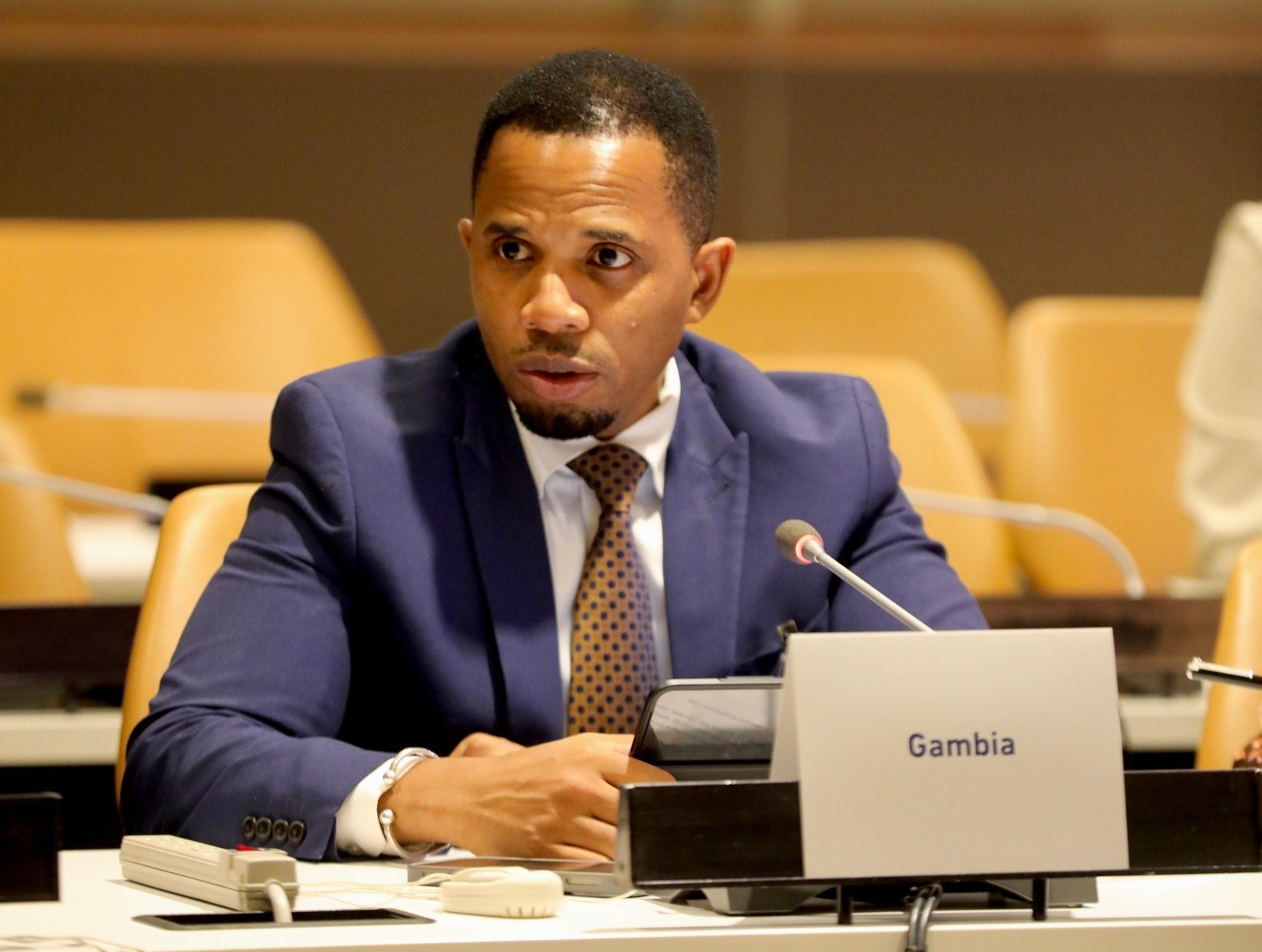


Gambiaj.com – (PARIS, France) – A fresh release of documents linked to the Jeffrey Epstein case has reignited debate over accountability, potential criminal liability, and the treatment of victims, with prominent human rights lawyer Reed Brody accusing the U.S. Justice Department of failing to pursue documented allegations.
Speaking to France 24, Brody, a former New York State Assistant Attorney General, said the newly released files expose a troubling pattern in which serious allegations were recorded by authorities but never investigated.
According to him, the documents include FBI presentations naming prominent individuals and prosecution memos detailing specific alleged encounters, yet the Justice Department has insisted there will be no further investigations.
“These documents expose a real accountability gap,” Brody said, questioning why complaints were documented but not pursued, why complete FBI files remain unreleased, and why alleged perpetrators’ names are redacted while victims are exposed.
He argued that much of the responsibility lies with the Justice Department, which he described as compromised by conflicts of interest.
Brody was particularly critical of Attorney General Pam Bondi and Deputy Attorney General Todd Blanche, noting that both previously served as personal lawyers to President Donald Trump. He said this undermines the long-standing norm of Justice Department independence established after the Watergate era. “For the last year, the Justice Department has been functioning as Donald Trump’s private law firm,” he alleged.
Referring to developments surrounding the Epstein files last year, Brody recalled that as controversy grew and calls mounted for testimony from Ghislaine Maxwell, Deputy Attorney General Blanche visited her in prison and later approved her transfer to a less restrictive federal facility.
He also cited other cases he said reflected selective enforcement, including investigations of Trump’s political adversaries such as New York Attorney General Letitia James and former FBI Director James Comey.
Against this backdrop, Brody said he is not confident that federal authorities will pursue new investigations linked to Epstein. However, he stressed that this does not mean the matter is closed.
Victims Missing From the Debate
Brody said the voices of Epstein’s victims remain largely absent from the public debate, despite repeated references in the files to teenage girls, some as young as 14 or 15, who reported alleged abuse to authorities and were ignored. He noted that even during the 2007 secret non-prosecution agreement that spared Epstein the most serious federal charges, victims were not informed.
Despite this history, Brody outlined several possible paths forward. He said Congress could compel the release of all remaining files, pointing out that the Justice Department initially said six million documents existed, while only three million have been released so far.
He added that around 200,000 pages are heavily redacted and that lawmakers could seek judicial intervention to enforce disclosure under existing law.
Brody also highlighted the role of state prosecutors. In New York, where Epstein lived, there is no statute of limitations for serious sexual crimes such as rape and predatory sexual assault against a child. He said survivors who were under 18 at the time of the alleged abuse can also bring civil lawsuits until the age of 55.
“For the Justice Department, this may be the end of the story,” Brody said. “But for survivors—and for many lawmakers—it is not.”
Political Pressure and Unreleased Files
On the likelihood of congressional action, Brody said pressure is mounting from both sides of the aisle, including within Republican ranks.
He noted that Epstein occupies a symbolic place in segments of the MAGA and QAnon-adjacent worldview, where President Donald Trump was once portrayed as the figure who would expose a hidden elite conspiracy. Trump had promised during his campaign to release all Epstein-related files.
Brody said a bipartisan law mandating disclosure was passed almost unanimously after Trump faced growing political pressure. As a result, he believes lawmakers and the public will not accept millions of missing documents and extensive redactions as the final word.
The files have also revived scrutiny of Epstein’s relationships with powerful figures, including President Donald Trump and former President Bill Clinton.
Brody recalled that Epstein had publicly praised Trump and that the files contain allegations and references previously reported during the 2016 election campaign. Trump has denied any wrongdoing, and no charges have been filed against him.
Brody stressed that, aside from Epstein himself, only one other individual has ever been prosecuted in connection with the broader network. “To believe that all of this happened and that the FBI and the Justice Department have no evidence against anyone else—people don’t believe that, and I don’t believe it,” he said.
As for the three million unreleased documents, Brody said the Justice Department has provided no explanation for what they contain or why they remain withheld. “Unfortunately, today, nobody believes the Justice Department,” he said, adding that recent high-profile cases have further eroded public trust.
With questions mounting over missing files, redactions, and prosecutorial decisions, Brody concluded that the Epstein case remains far from resolved, despite official assertions to the contrary.