


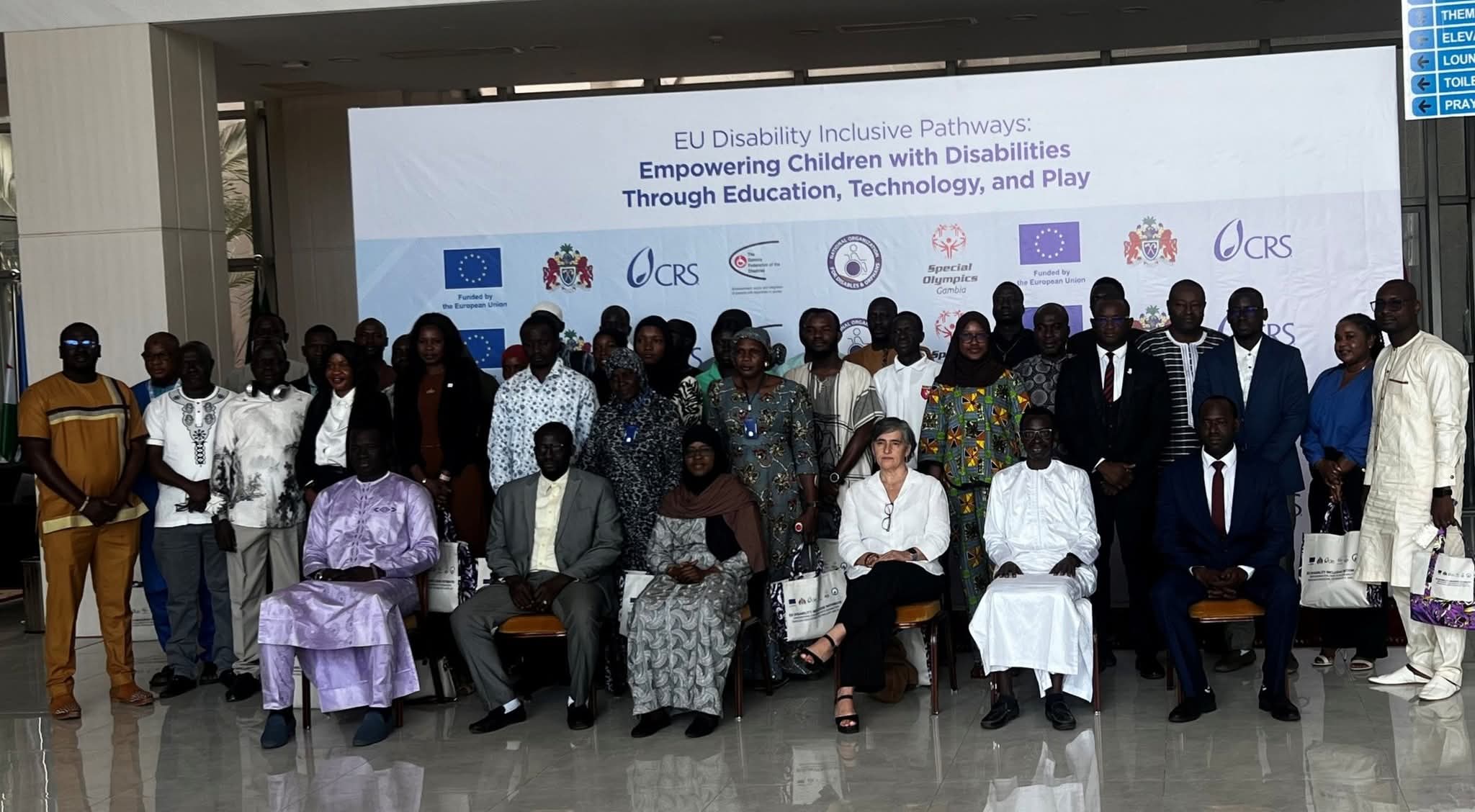
Gambiaj.com – (BANJUL, The Gambia) – The European Union (EU), in partnership with Catholic Relief Services (CRS) and the Gambia Federation of the Disabled (GFD), has launched a 30-month initiative aimed at improving access to inclusive education for children with disabilities across The Gambia.
The project, titled Disability Inclusive Pathways: Empowering Children with Disabilities through Education, Technology and Play, was officially unveiled in the presence of senior government officials, development partners, and organisations of persons with disabilities.
Speaking on behalf of CRS, Country Manager Dr. Amulai Touray said the initiative reflects the organisation’s long-standing commitment to inclusive education and child rights, stressing that every child, regardless of ability, deserves access to quality education and a safe environment to thrive.
“At CRS, we firmly believe that every child, regardless of ability, has the right to quality education, the opportunity to grow, and a safe space where they can reach their full potential,” he said.
CRS acknowledged the European Union’s financial and strategic support, noting that the project is the product of a strong partnership and shared vision for disability inclusion. Dr. Touray disclosed that CRS is contributing a 15 percent cost share alongside EU funding and expressed appreciation to the EU Ambassador to The Gambia, Her Excellency Immaculada Roca i Cortés, for the bloc’s continued support to the country.
According to CRS, the project was developed through consultations with the Ministry of Basic and Secondary Education, the Ministry of Gender, and other stakeholders to ensure alignment with national development priorities.
A 2024 gender assessment conducted by CRS and its partners revealed persistent barriers facing children with disabilities, including stigma, limited access to assistive devices, inadequate school infrastructure, and insufficient teacher capacity. The assessment further highlighted that girls with disabilities face compounded discrimination due to the intersection of gender and disability.
Since implementation began, the project has trained 60 teachers in inclusive development and 30 school administrators, while also supporting the National Rehabilitation Centre and improving accessibility in 12 mainstream schools. Community engagement has been prioritised through a nationwide awareness caravan that reached 33 communities between October and December. In Gambisara, Upper River Region, a community elder confirmed that 117 children with disabilities were registered following the outreach.
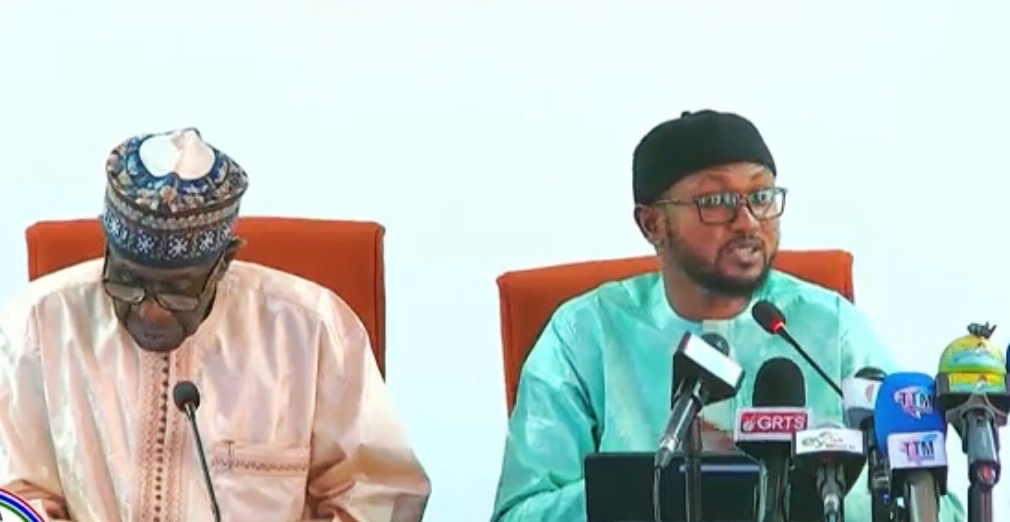
Chairman of the Gambia Federation of the Disabled, His Worship Mohamed Krubally, described the initiative as a major milestone in advancing inclusion for persons with disabilities. He said the project aligns with the UN Convention on the Rights of Persons with Disabilities and The Gambia’s Persons with Disabilities Act of 2021.
“As long as we exist, we must be included in society and in all development processes,” he said.
Minister of Basic and Secondary Education, Dr. Habibatou Drammeh, said the initiative reinforces the government’s commitment to inclusive education under the 2016–2030 National Education Policy. She revealed that the project has already delivered accessible infrastructure, 133 assistive technologies, and training for more than 100 teachers and administrators. In addition, 60 health workers, community leaders, and itinerant teachers have been trained to strengthen early identification and support for children with disabilities.
While welcoming the progress, Dr. Drammeh acknowledged persistent challenges, including infrastructure constraints and gaps in data on learners with disabilities.
“The journey toward full inclusion is ongoing,” she said.
The launch ceremony brought together representatives from government ministries, the European Union, UNICEF, the National Human Rights Commission, organisations of persons with disabilities, and other development partners.