




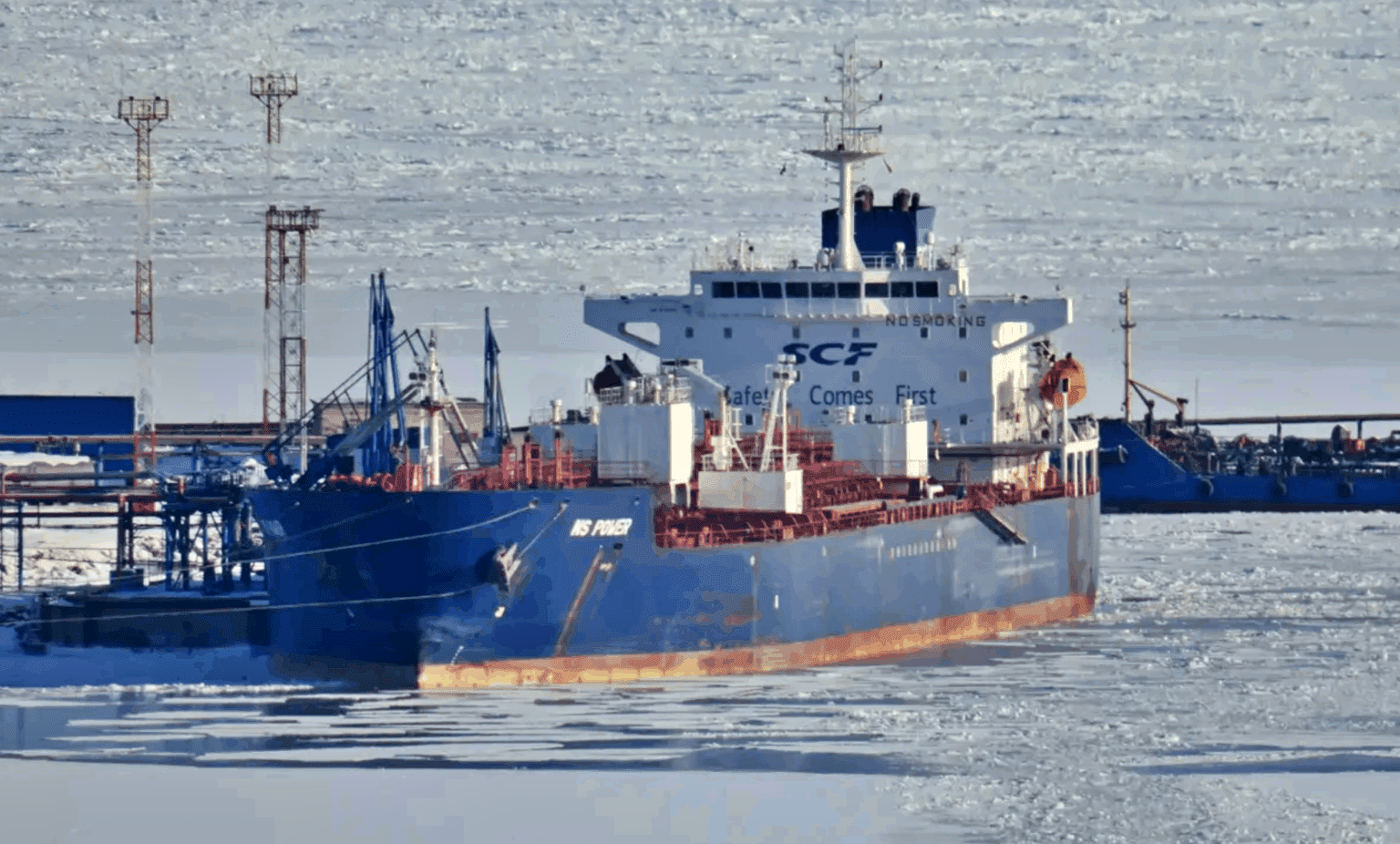
Gambiaj.com – (BANJUL, The Gambia) – Hyperion, a sanctioned shadow fleet tanker, is moving toward the English Channel after crossing into the Bay of Biscay, underscoring how flag-of-convenience registries, including The Gambia’s, have played a facilitative role in keeping illicit oil shipments moving under the radar.
Hyperion is one of a small number of Venezuela-linked tankers to complete an Atlantic crossing in recent weeks, even as U.S. and allied forces intensify interdictions.
Central to its ability to operate in the shadows was its prior registration under the Gambian flag, which analysts describe as nominal and lightly regulated, before the vessel switched to the Russian registry in late December while in the Caribbean.
Shipping data show that Hyperion reflagged from The Gambia to Russia on December 24 while berthed in Cartagena, Colombia, a move maritime experts say required a port call and would not have been possible at sea.
The Gambian flag, widely used by shadow fleet operators, allowed the tanker to operate with minimal scrutiny as it completed high-risk voyages linking sanctioned oil networks.
The tanker is notable for establishing a direct operational bridge between Russia’s Arctic shipping routes and Venezuela’s sanctioned oil trade.
In December, Hyperion loaded naphtha in Murmansk, a key Russian Arctic port, and delivered it to Venezuela’s Amuay terminal.
That journey connected two of the world’s most geopolitically sensitive oil regions and highlighted how flag-of-convenience registries can provide cover for complex sanctions evasion.
Following the Venezuela delivery, the vessel sailed to Colombia, where it not only changed flag but also shifted ownership to New Fleet Ltd., a St. Petersburg-based company.
Analysts view the transition from a Gambian registration to a Russian one as part of a broader strategy by shadow fleet operators to move from permissive third-country flags to direct Russian protection amid stepped-up Western enforcement.
Since reflagging, Hyperion has transited the Atlantic, zig-zagging off Madeira before entering the Bay of Biscay on January 20.
The vessel is now signaling Russia’s Ust-Luga oil port as its destination. Its continued movement comes as the United States has seized multiple sanctioned tankers in recent weeks, including the Veronica, and as the UK and NATO allies step up monitoring of shadow fleet traffic through the English Channel.
Germany’s recent denial of entry to a so-called “zombie tanker” in the Baltic Sea further illustrates the tightening environment facing vessels that rely on opaque ownership and documentation. Whether Hyperion will be permitted to proceed into the Baltic remains unclear, particularly given that it is sanctioned by U.S., UK and EU authorities.
For analysts, the case casts an uncomfortable spotlight on the role of flag states such as The Gambia, whose registries have been used to provide legal cover for sanctioned vessels before they shift to more overt geopolitical protection.
If left unaddressed, experts warn that such registries will remain a critical enabler of the shadow fleet, allowing illicit oil trade to persist even as enforcement efforts escalate.