



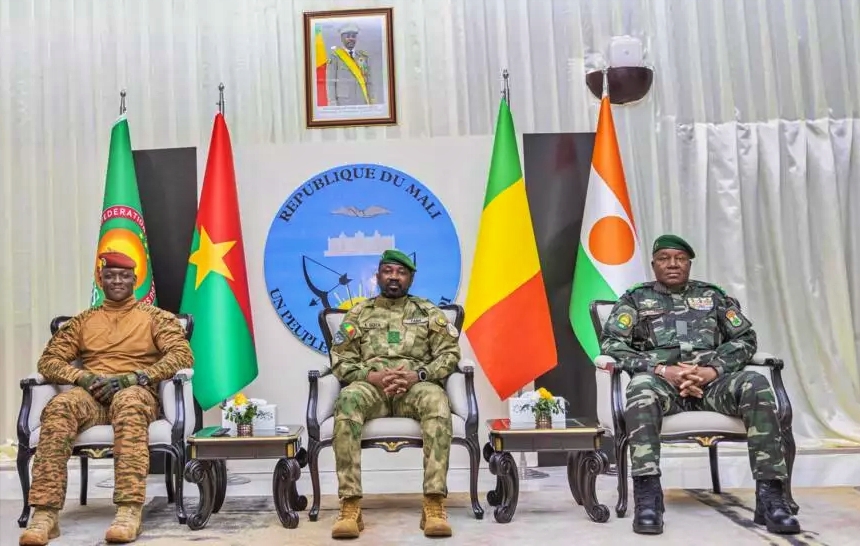

Gambiaj.com – (BAMAKO, Mali) – Five years after the military coup in Mali and subsequent takeovers in Burkina Faso and Niger, a critical assessment by the pan-African publication Jeune Afrique has cast doubt on whether the ruling juntas have fulfilled the promises that brought them to power.
According to the report, soldiers in all three countries justified their coups on the grounds of urgent security needs, arguing that civilian governments had failed to defeat jihadist insurgencies.
Military leaders presented themselves as the only actors capable of waging a “total war,” free from diplomatic constraints, defense agreements with Western partners, and human rights considerations.
However, the publication concludes that the results have fallen far short of expectations. Instead of improving security, the situation has worsened across the three countries.
The report highlights what it describes as an excessive militarization of counter-insurgency strategies, widespread repression of civilians suspected of collaborating with jihadists, and the extensive use of foreign auxiliaries and local militias.
This approach, it argues, has left populations trapped between jihadist violence and military operations, with insecurity intensifying rather than receding.
Economic Sovereignty or New Dependence
Economically, the juntas had pledged to break with what they called neo-colonial dependence and reclaim control over national resources. They promised to reduce reliance on Western powers, abandon the CFA franc, and build economies that served their populations.
Yet, the report suggests that these ambitions have not translated into genuine economic independence. Instead, countries such as Russia, China, and Turkey have filled the vacuum left by Western partners, securing new agreements that may not necessarily benefit local populations.
“The proclaimed economic sovereignty appears to be nothing more than a change of patron,” the publication notes.
Delayed Transitions and Political Restrictions
Politically, the juntas had promised brief transitions before restoring civilian rule. But according to the assessment, those commitments remain largely unfulfilled.
The report describes a shrinking political space marked by restrictions on dissent, weakened democratic debate, and the absence of mechanisms to hold military leaders accountable.
Because they derive their authority from force rather than elections, the juntas do not face electoral consequences, the publication argues, adding that their legitimacy relies primarily on military power and state messaging.
In its conclusion, the magazine warns that history may judge these regimes harshly, arguing that the military leaders risk betraying the hopes they initially inspired when they seized power promising security, sovereignty, and reform.