


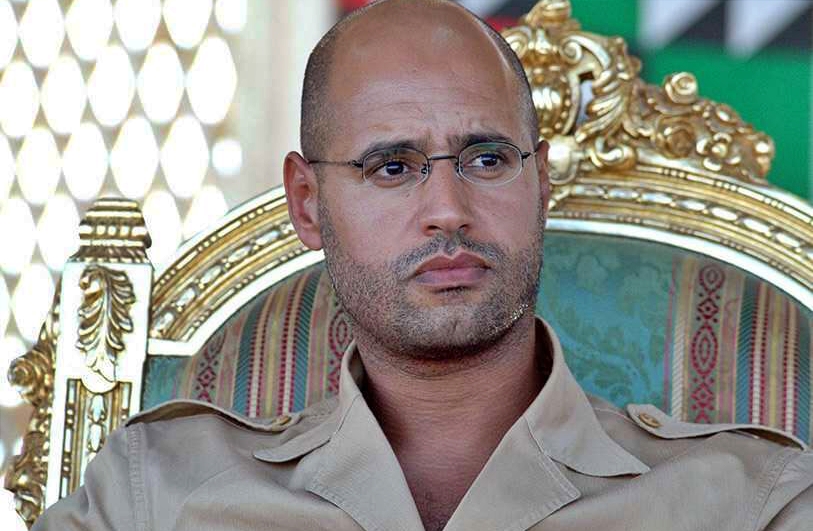
Gambiaj.com – (TRIPOLI, Libya) – Libya’s Saif al-Islam Gaddafi, once the heir apparent to his father Muammar Gaddafi and later a deeply polarizing political figure, has been killed, sources close to the family, his lawyer Khaled el-Zaydi, and Libyan media reported on Tuesday. Details surrounding the circumstances of his death were not immediately clear.
Saif al-Islam’s death marks the end of one of the most dramatic personal and political trajectories in modern Libyan history, from Western-educated reformer-in-waiting to wartime hardliner, long-term captive, and, eventually, a controversial presidential aspirant whose return helped derail Libya’s last serious attempt at national elections.
Despite holding no formal office, Saif al-Islam was for years regarded as the most powerful figure in the oil-rich North African country after his father, who ruled Libya for more than four decades.
Educated at the London School of Economics and fluent in English, he cultivated close ties with Western governments and intellectual circles, presenting himself as the acceptable, reform-minded face of the Gaddafi regime.
From Western-Facing Reformer to Regime Enforcer
He played a central role in shaping state policy and mediating sensitive diplomatic missions, including negotiations that led to Libya abandoning its weapons of mass destruction program and compensation agreements for families of victims of the 1988 bombing of Pan Am Flight 103 over Lockerbie, Scotland.
Determined to end Libya’s international isolation, he publicly championed constitutional reform and respect for human rights.
That image collapsed with the outbreak of the 2011 uprising against his father’s rule. Choosing family and clan loyalties over his reformist reputation, Saif al-Islam emerged as a key figure in the regime’s brutal response to the rebellion.
In fiery televised speeches, he denounced protesters as “rats” and warned that rivers of blood would flow if the government were challenged.
“We fight here in Libya, we die here in Libya,” he told Reuters at the time, vowing that the regime would fight “to the last man and woman and bullet.”
Capture, Detention, and War Crimes Convictions
After rebels seized Tripoli, Saif al-Islam attempted to flee to neighbouring Niger disguised as a Bedouin tribesman but was captured by the Abu Bakr al-Sadiq Brigade militia and flown to the western town of Zintan, about a month after his father was hunted down and killed by rebels.
“I’m staying here. They’ll empty their guns into me the second I go out there,” he was heard saying in an audio recording as armed men surrounded the aircraft that brought him into captivity.
He spent the next six years detained in Zintan, living far from the privileged life he once enjoyed, marked by luxury, exotic pets, and access to European high society.
Human Rights Watch later said he did not allege torture but raised concerns about prolonged solitary confinement.
In 2015, a court in Tripoli sentenced him to death by firing squad for war crimes. He was also wanted by the International Criminal Court, which issued an arrest warrant for murder and persecution.
Political Comeback and a Derailed Election
Released by his captors in 2017 under an amnesty law, Saif al-Islam spent years in hiding to avoid assassination but gradually re-established contact with political figures and supporters inside and outside Libya.
In 2021, he re-emerged publicly in the southern city of Sabha to register as a candidate in Libya’s long-delayed presidential elections, seeking to tap into nostalgia for the relative stability that existed before the 2011 NATO-backed uprising.
His candidacy proved deeply divisive. Many Libyans rejected his return, while powerful armed groups opposed his participation. Disqualified due to his 2015 conviction, his blocked appeal became a flashpoint that contributed to the collapse of the election process and Libya’s return to political stalemate.
Reflecting on his strategy in a 2021 interview with The New York Times Magazine, Saif al-Islam acknowledged the sensitivity of his comeback. “You need to come back slowly, slowly,” he said. “You need to play with their minds a little.”
His reported death closes a chapter that continued to cast a long shadow over Libya’s fractured political landscape, more than a decade after the fall of the Gaddafi regime.