


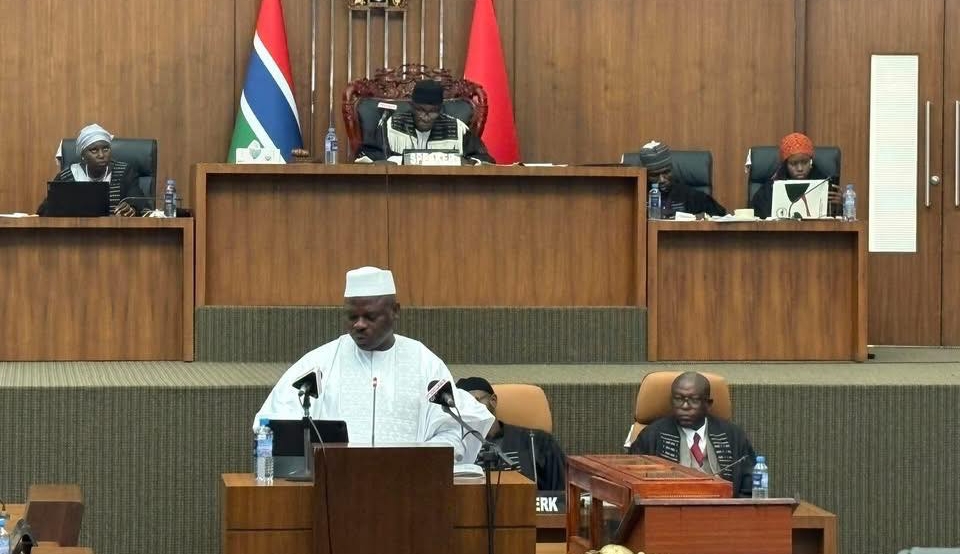
Gambiaj.com – (Banjul, The Gambia) – Minister of Finance and Economic Affairs Seedy K.M. Keita on Friday presented the 2026 Appropriation Bill, outlining an ambitious spending plan aimed at strengthening macroeconomic stability, accelerating structural reforms, and improving the well-being of Gambians.
Addressing the National Assembly, Minister Keita said the Gambian economy “continues to gain momentum,” with real GDP growth for 2025 projected at 5.9%, despite global economic headwinds driven by fragmentation and protectionism.
He said the 2026 budget seeks to narrow the country’s fiscal deficit to 0.1% of GDP while driving inclusive growth through targeted investments in health, education, agriculture, and infrastructure.
D52.4 Billion Budget Prioritizes Social Sectors
The minister announced that D52.4 billion in total expenditure has been projected for 2026.
“Human capital development and inclusive growth stand at the heart of this budget,” Keita declared. “A significant allocation of D18.6 billion, which is 35.3% of the total budget, is dedicated to Health, Education, and Agriculture.”
Keita reaffirmed the government’s commitment to public financial management reforms, including the expansion of program-based budgeting and the operationalization of institutions such as the Anti-Corruption Commission.
2026 Outlook: Consolidation, Stability, and Reform
In his projections for next year, Keita said The Gambia will rely on strengthened macroeconomic stability, accelerated structural reforms under the National Development Plan (NDP), and strategic investments in key productive sectors.
He highlighted that the 2026 targeted fiscal deficit, 0.3% for the Government Local Fund (GLF) and 1% for all funds, represents the lowest level in a decade.
“This consolidation path strikes a delicate balance between still-high debt vulnerabilities and the broader goal of inclusive growth and poverty alleviation,” he said.
Keita announced the rollout of the first Domestic Resource Mobilization Strategy in 2026, which will guide medium-term revenue policy and deepen efforts to broaden the tax base. He also revealed plans to manage contingent liabilities from state-owned enterprises and public-private partnerships.
To improve accountability, the government will introduce a mandatory baseline costing requirement for all Ministries, Departments, and Agencies (MDAs), ensuring realistic budgeting and better control of expenditure growth.
“The government is also compiling a comprehensive arrears list,” Keita said, adding that liquidation of arrears would begin in 2026 and continue into the medium term.
He underscored the administration’s commitment to reducing rural-urban disparities through ongoing infrastructure projects launched by President Adama Barrow.
UDP Boycott Sparks Outrage
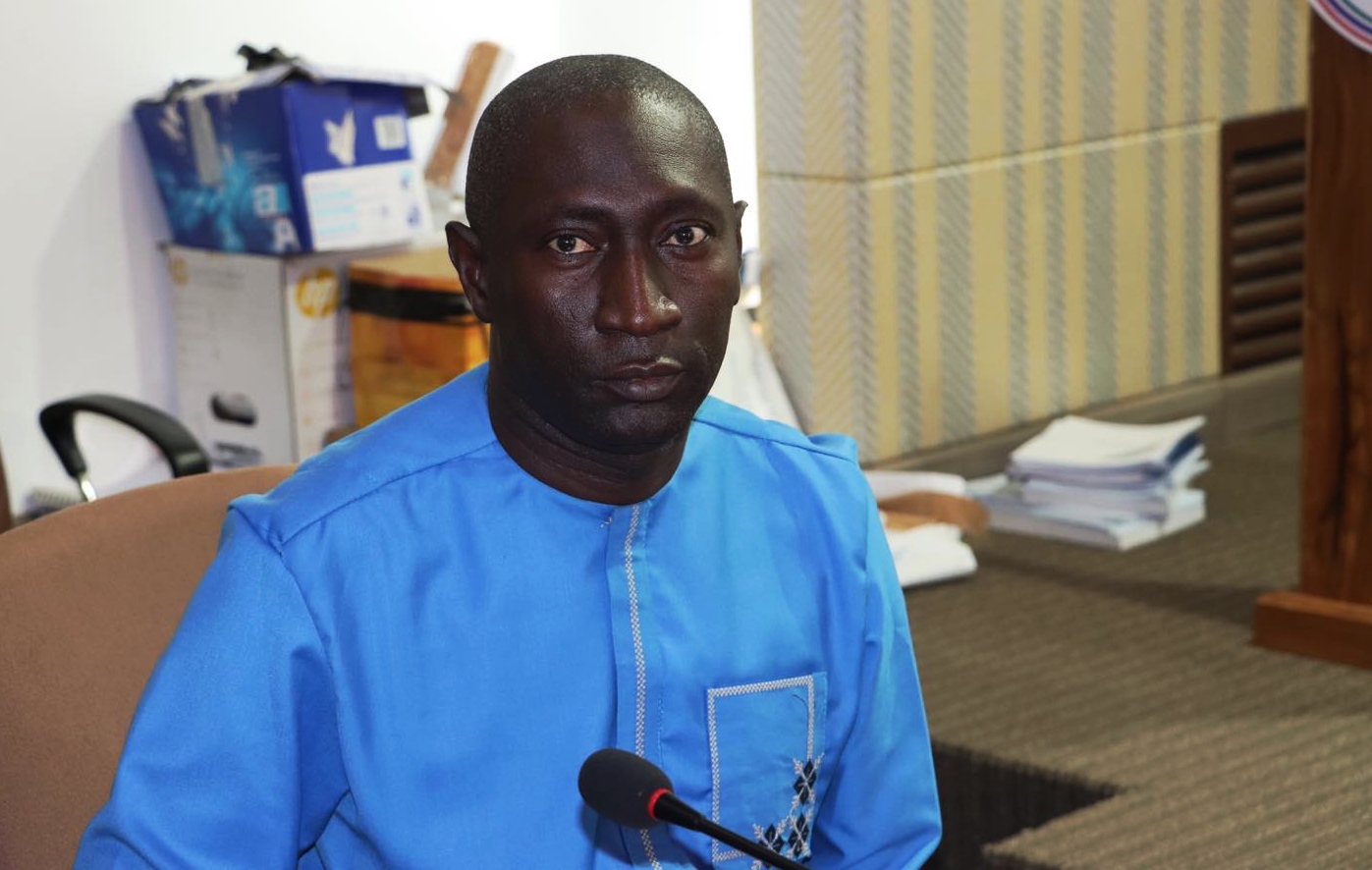
The budget session was overshadowed by the absence of United Democratic Party (UDP) lawmakers, who boycotted the presentation in protest over the arrest of senior party figure and lawyer Borry S. Touray, charged with incitement to violence.
Hon. Gibbi Mballow, NAM for Lower Fulladu West, condemned the boycott, describing it as “misguided” and “unnecessary.”
“The budget speech is very important and should be treated as such,” Mballow said. “Boycotting because one of your members made remarks not aligned with the law is simply not done. This shows they are prioritizing one individual over the national interest.”
Speaker of the National Assembly Fabakary Tombong Jatta rebuked the absentee MPs, stressing that any reason for nonattendance must be formally communicated.
“Members of Parliament are answerable to their constituents, not to individuals or political institutions,” the Speaker emphasized.
With the Appropriation Bill now tabled, NAMs will begin debate and scrutiny before voting on its adoption.
In closing his presentation, Minister Keita expressed gratitude to President Barrow, development partners, and the National Assembly for their “continued scrutiny and collaboration” in advancing the country’s development agenda.