



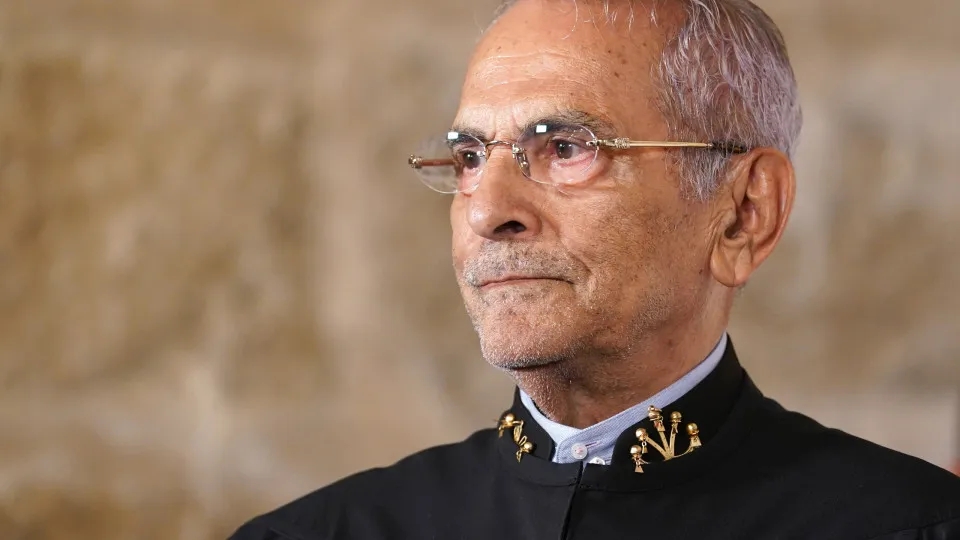
Gambiaj.com – (BISSAU, Guinea-Bissau) – The transitional government of Guinea-Bissau on Thursday issued a strongly worded rebuttal to comments by the President of Timor-Leste, José Ramos-Horta, former Mozambican president Filipe Nyusi; and Portuguese Member of the European Parliament (MEP) Marta Temido, accusing them of making hasty, disrespectful, and diplomatically imprudent judgments about the country’s unfolding political crisis.
In a statement shared on social media, the Minister of Social Communication of the transitional government, Aduramane Turé, launched an unusually personal attack on Ramos-Horta, describing him as a public figure who had “betrayed the moral responsibility” associated with his image as a symbol of peace.
Ramos-Horta Accused of Disrespecting Guinea-Bissau’s History
Turé recalled the historical solidarity between Guinea-Bissau and Timor-Leste during the Indonesian occupation, stressing that Guinea-Bissau’s diplomacy and armed forces played a central role in supporting the Timorese struggle.
He accused Ramos-Horta of ignoring this history and of treating the Guinean military, and by extension the Guinean people, in a “frivolous and disrespectful” manner.
The minister was responding to comments Ramos-Horta made to Portuguese news agency Lusa on Wednesday, in which the Timorese president said it was impossible to remain indifferent to what he described as the arrogance of a military faction preventing Guinea-Bissau from returning to constitutional normalcy.
Ramos-Horta also stated that it was “obvious” that President Umaro Sissoco Embaló had lost the November 23 election.
Turé further suggested that Ramos-Horta should instead question former Mozambican President Filipe Nyusi, who headed the African Union’s electoral observation mission.
Nyusi had said on December 4 that the election had produced a winner and that the results should be announced, remarks Bissau says crossed the boundaries of diplomatic prudence.
European Parliament Criticism Rejected
The Guinean government also sharply criticized Portuguese MEP Marta Temido, accusing her of calling for sanctions while disregarding Guinea-Bissau’s sovereignty. Turé said Temido had “offended the dignity of the Guinean people” and forgotten the long-standing ties of friendship and cooperation between Guinea-Bissau and Portugal.
Temido had told the European Parliament that Guinea-Bissau was facing a “breakdown of the rule of law” and a “campaign of terror.”
On Thursday, the European Parliament adopted a resolution condemning what it described as an unconstitutional change of power in Guinea-Bissau and urged the European Council to consider restrictive measures against those responsible for the coup and alleged human rights violations.
Turé insisted that the National Electoral Commission’s mandate is limited to preparing, supervising, and declaring election results, adding that Guinea-Bissau “does not need hasty judgments, threats, or moral lessons from anyone.”
The diplomatic tensions come as Timor-Leste assumed the rotating presidency of the Community of Portuguese Language Countries (CPLP) earlier this week, a position that had been withdrawn from Guinea-Bissau following a summit of heads of state and government. Guinea-Bissau has also been suspended from ECOWAS and the African Union.
Opposition figures and several international actors maintain that the recent coup was staged by President Embaló after an alleged electoral defeat, in order to prevent the publication of results.
Several political figures linked to opposition candidate Fernando Dias have been detained, including Domingos Simões Pereira, leader of the African Party for the Independence of Guinea and Cape Verde (PAIGC). Dias himself has taken refuge in the Nigerian embassy in Bissau.