


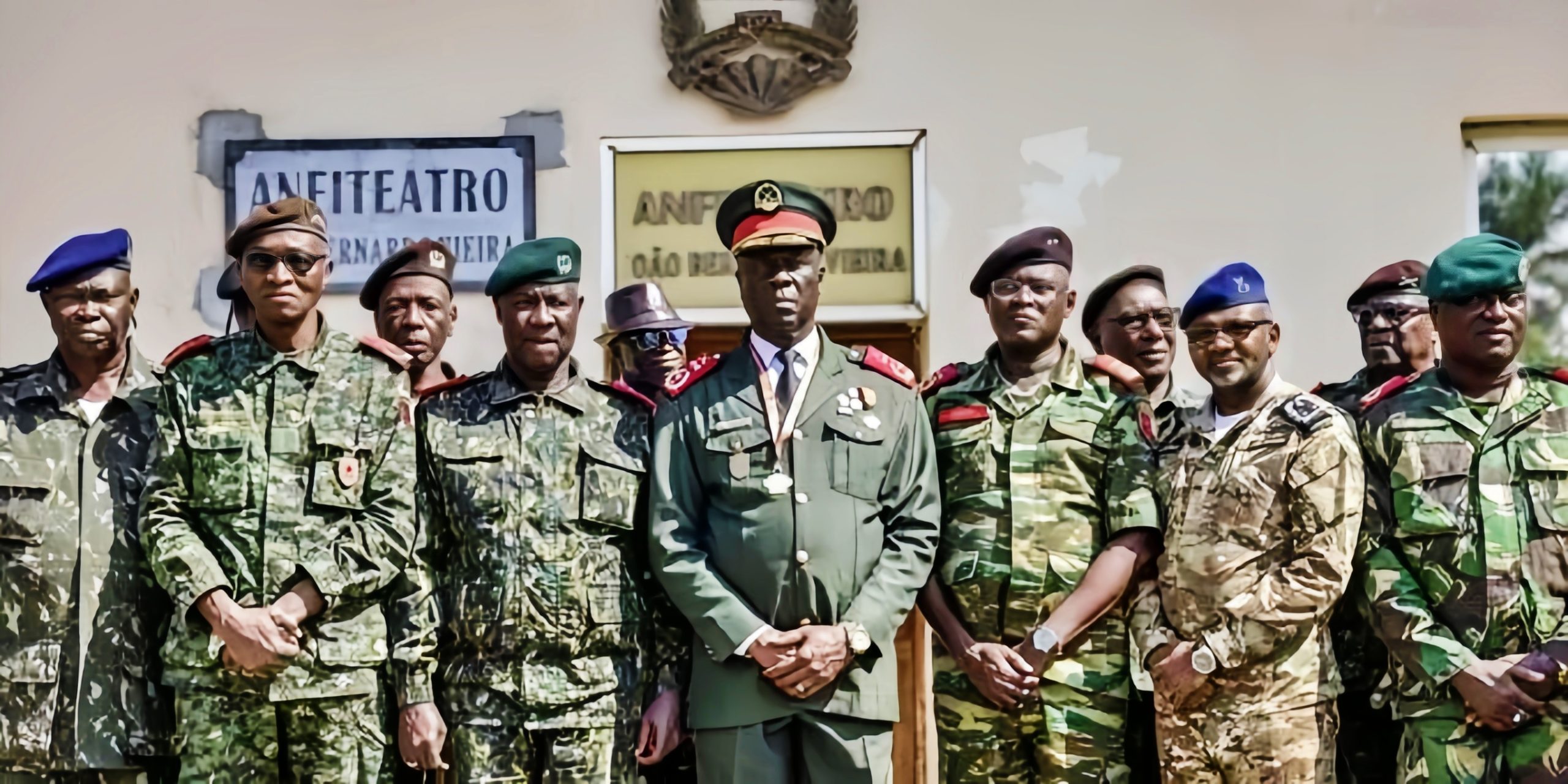
Gambiaj.com – (BISSAU, Guinea-Bissau) – Guinea-Bissau’s military authorities have dissolved the Superior Council of the Public Prosecutor’s Office and adopted a Transitional Political Charter, asserting that the move is necessary to restore constitutional order after what they described as a “constitutional rupture” on November 26, 2025.
In a statement issued on Thursday, December 4, the High Military Command for the Restoration of National Security and Public Order (ACM) said the new charter will serve as the primary legal framework guiding the transition back to “institutional and democratic normality.”
Dissolution of Prosecutors’ Council
The ACM said the dissolution of the Superior Council of the Public Prosecutor’s Office is intended to remove institutional obstacles that it claims hinder the restoration of public order. The military leadership argued that the existing prosecutorial structure was too rigid and bureaucratic for the needs of the transitional period.
“The urgency to restore public order and national security is incompatible with the institutional and structural obstacles within the Public Prosecutor’s Office,” the statement said, noting that a more “flexible, simplified, and dynamic” prosecutorial system is required to protect the state’s fundamental values.
While dissolving the council, the ACM insisted that the independence and autonomy of the Public Prosecutor’s Office would be preserved. It added that some rules governing the institution’s organization and functioning would be revoked or suspended for the duration of the transition.
Judicial Structure Remains Intact
The junta stressed that the changes do not affect the judiciary as a whole. It said Chapter VII of the Constitution, which regulates judicial power, remains untouched, preserving the broader organization and operation of courts and judicial bodies.
According to the ACM, this clarification was necessary to properly define the scope of its earlier Communiqué No. 1.
The statement also emphasized that the Public Prosecutor’s Office continues to play a “relevant role” in safeguarding national security, maintaining public order, defending democratic legality, and protecting the public interest.
Concerns Over Electoral Process
Turning to Guinea-Bissau’s electoral challenges, the ACM said the country has endured repeated political crises over four decades, many stemming from unconstitutional disruptions.
The junta criticized past transitions for focusing solely on rapid elections, which it described as a misguided belief in elections as “the panacea” for deep-rooted political problems.
It lamented that both national and international resources had been squandered over the years, while essential reforms were neglected by political actors and foreign partners.
Referring to events surrounding the latest electoral dispute, the military command said tensions had escalated to a point where the country risked “an ethnic civil war,” leaving the Armed Forces with “no choice” but to intervene and seize power.
National Transition Council Created
As part of the restructuring, the ACM announced the creation of a National Transition Council. This body will coordinate political actions during the transition, prepare key governance instruments, and oversee the activities of the transitional authorities.
All powers and responsibilities of the new council are defined in the Transitional Political Charter, which has now been formally adopted and made public.
The ACM maintained that the measures are aimed at ensuring a responsible transition that will lay the groundwork for lasting political stability and institutional reforms in Guinea-Bissau.