



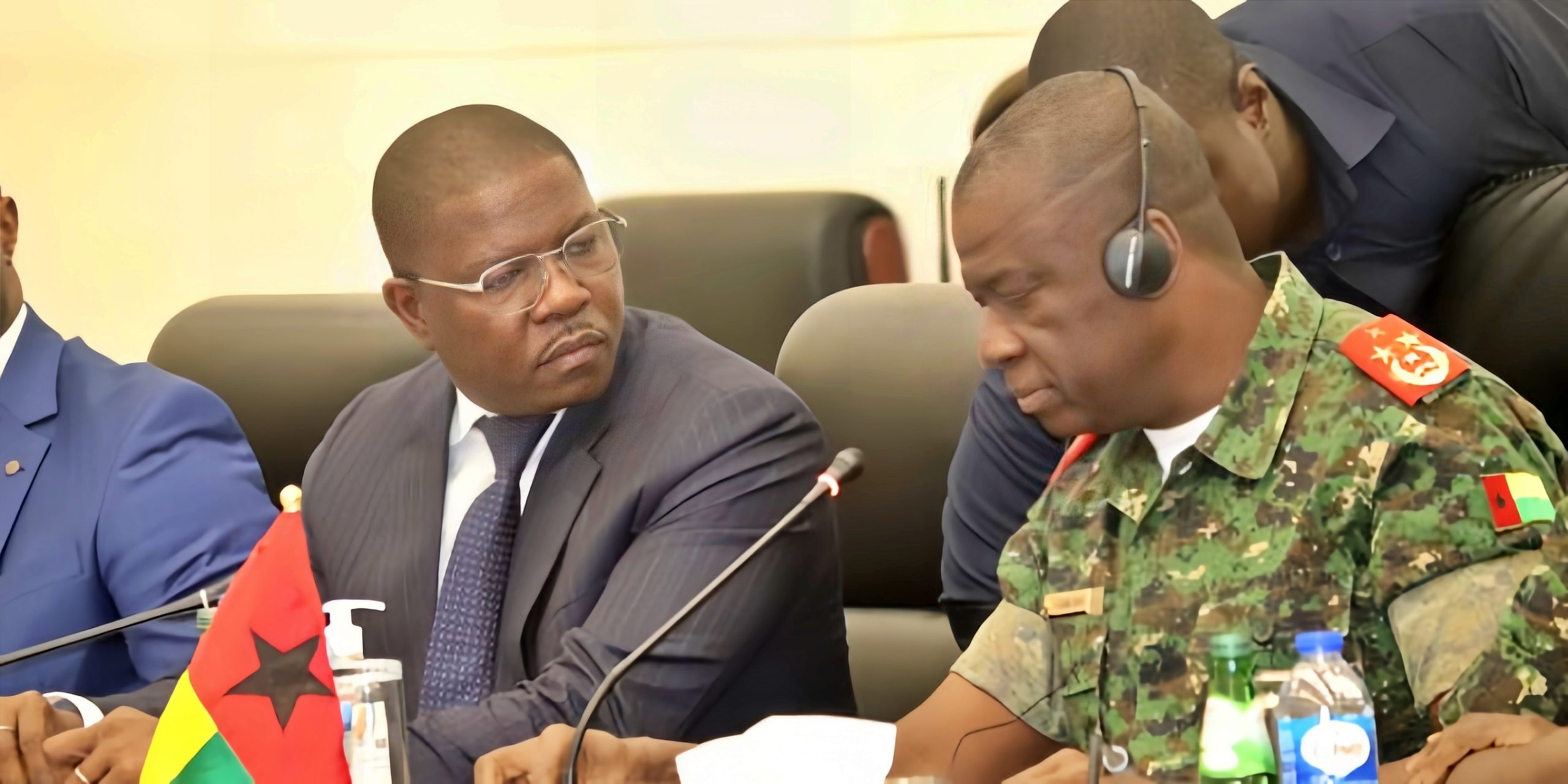
Gambiaj.com – (BISSAU, Guinea-Bissau) – Guinea-Bissau’s High Military Command on Monday released the country’s new Political Transition Charter, a sweeping document that reshapes the governance structure for the duration of the transition period and prohibits both the President of the Transitional Republic and the Transitional Prime Minister from running in the presidential and legislative elections that will conclude the transition.
The 11-page charter, adopted on November 27 and made public on December 8, designates the High Military Command as the supreme political authority during the transition.
According to the text, reviewed by The Gambia Journal, the Command will oversee political guidance and maintain a permanent secretariat under the authority of the transitional president.
High Military Command and National Transitional Council Take Center Stage
The Political Transition Charter also establishes the National Transitional Council (CNT) as the highest legislative and oversight body responsible for scrutinizing the activities of transitional institutions and advising on crucial domestic and foreign policy decisions.
Open to all legally registered political parties, the charter states that disagreements over its interpretation will be reviewed by the CNT, while disputes arising from its application will be settled by the Supreme Court of Justice.
In cases where the president of the Transitional Republic is absent, incapacitated, or dies, the president of the CNT will assume the interim leadership.
The transition period is set for 12 months, ending with the inauguration of an elected president and a newly constituted legislature.
Transitional Government to Oversee Administration, Elections
The Transitional Government, composed of the prime minister, ministers, and secretaries of state, is confirmed as the country’s highest executive body and will remain in place until a constitutional government emerges from legislative elections.
Its functions include managing public administration, directing national policy across all sectors, organizing presidential and legislative elections in line with the charter, handling international agreements, appointing civil and military officials, and preparing key national plans such as the General State Budget and the National Development Plan.
The government remains politically accountable to the President of the Transitional Republic but is subject to oversight from the CNT. It may be dissolved by the transitional president on the recommendation of the prime minister and after consultations with the CNT.
Charter Prevails Over Existing Constitution During Transition
The charter explicitly states that in cases of conflict between its provisions and the relevant sections of the current Constitution, the Transitional Political Charter will take precedence. It will remain in effect from the date of its signature, with original copies deposited at the Supreme Court of Justice.
The CNT will comprise 65 members. 10 appointed by the Transitional President, 15 representing the High Military Command, 20 representing political parties, and 12 from civil society, including women, youth, farmers, and persons with reduced mobility.
The Council’s mandate expires with the swearing-in of elected members of the National People’s Assembly.
Its key responsibilities include drafting constitutional reforms, establishing a Constitutional Court, revising electoral laws, amending the Political Parties Framework Law, and electing new leadership for the National Elections Commission (CNE).
During its inaugural session, the CNT will elect its leadership, including a president, two vice presidents, and two secretaries.
Open for Political Adhesion
Authorities emphasized that the Political Transition Charter is open for endorsement by all legally constituted political parties. It is signed in four original Portuguese copies, all deemed equally authentic.
Until transitional organs are fully established, the High Military Command will retain authority to take necessary measures to safeguard public order and protect citizens’ rights.
The sweeping reforms outlined in the charter mark a significant restructuring of Guinea-Bissau’s political framework, laying the groundwork for what authorities describe as a controlled but inclusive transition aimed at restoring constitutional order.