


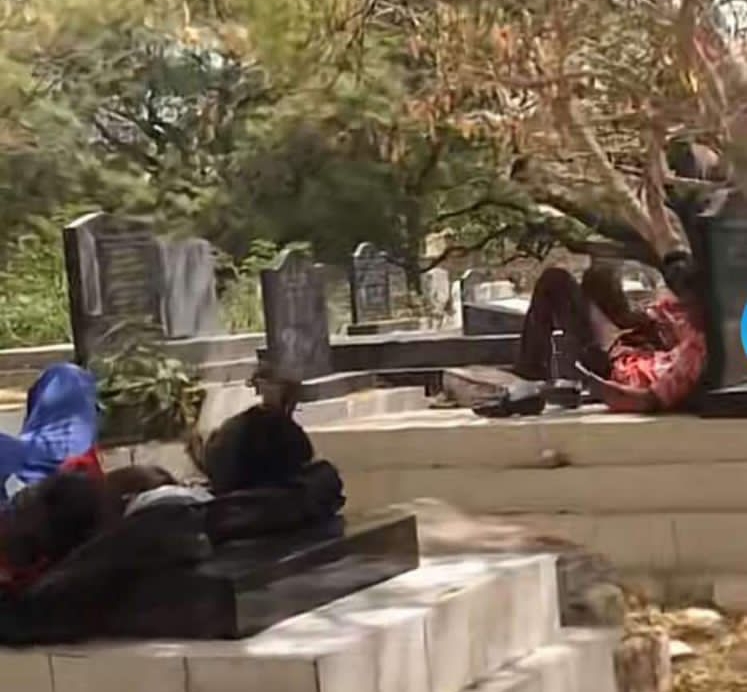
Gambiaj.com – (BANJUL, The Gambia) – In the heart of Banjul, just steps away from the rhythm of daily life, lies one of the city’s quietest sanctuaries: the Christian cemetery. Shaded by old trees and steeped in memory, it is a place where generations of families have laid loved ones to rest. But in recent weeks, that stillness has been interrupted, not by vandalism or crime, but by something subtler: students using the graveyard as a casual hangout spot.
It is this quiet shift in behavior that has prompted Malang Malcom Daffeh, a local Muslim youth leader known for his environmental and social advocacy, to speak out.
Standing not in outrage but in appeal, Daffeh’s message is simple: sacred spaces deserve dignity.
“I find this very disrespectful,” he said in a statement to the community. Yet he was careful to frame his concern beyond religious lines. “This isn’t about pointing fingers at any one group. Students from different schools around the cemetery are doing it. Graveyards are sacred spaces for the resting place of the dead. They deserve dignity, no matter who we are.”
When Everyday Life Meets Hallowed Ground
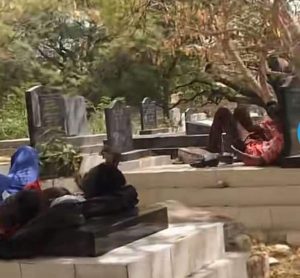
The cemetery’s proximity to several schools has blurred boundaries. During breaks or free periods, students have been seen lounging and, at times, lying down among the graves. What may seem to some like harmless idleness strikes others as a troubling erosion of communal respect.
In a densely woven city like Banjul, where space is limited and public areas are few, overlaps between daily activity and sacred terrain can happen. But Daffeh argues that cultural awareness must draw the line where reverence begins.
“Even though I am Muslim, this is about basic human respect,” he emphasized.
His words resonate in a country where interfaith harmony is a defining characteristic. The Gambia’s Muslim majority and Christian minority have long coexisted with mutual regard, sharing celebrations, mourning together in times of loss, and protecting one another’s places of worship. In that context, the issue is not doctrinal. It is moral and communal.
A Call for Education, Not Condemnation
Rather than directing blame at students, Daffeh has appealed to school administrators, parents, and community leaders to intervene constructively.
“I kindly urge you to address this and help educate our students,” he said.
He suggests practical, low-cost solutions: awareness sessions in schools, guided discussions about cultural heritage, and reminders about the significance of burial grounds. Such efforts, he believes, could cultivate habits of reverence that extend far beyond one cemetery.
For many Gambians, respect for the dead is inseparable from respect for the living. Graveyards are not merely parcels of land; they are repositories of family history, identity, and collective memory. To treat them casually risks dulling a cultural instinct that has long defined the nation’s social fabric.
Waiting for Institutional Response
As of now, local education authorities and religious leaders have not issued formal responses. Yet in close-knit communities like Banjul’s, change often begins with a single voice.
Daffeh’s appeal reflects a broader civic ethic, one that prioritizes dialogue over confrontation. His approach underscores a fundamental truth: community standards are sustained not only by law enforcement or policy but also by everyday reminders of shared values.
For residents living near the cemetery, the hope is that the space can regain its intended tranquility, a sanctuary for reflection and remembrance rather than recreation.
In a city where history rests just beneath the surface, Daffeh’s gentle intervention may prove to be more than a local complaint. It may serve as a timely reminder that dignity, once neglected, requires collective effort to restore.
And in Banjul, that effort begins with simply remembering where we stand.

One Response
This is definitely not acceptable.