


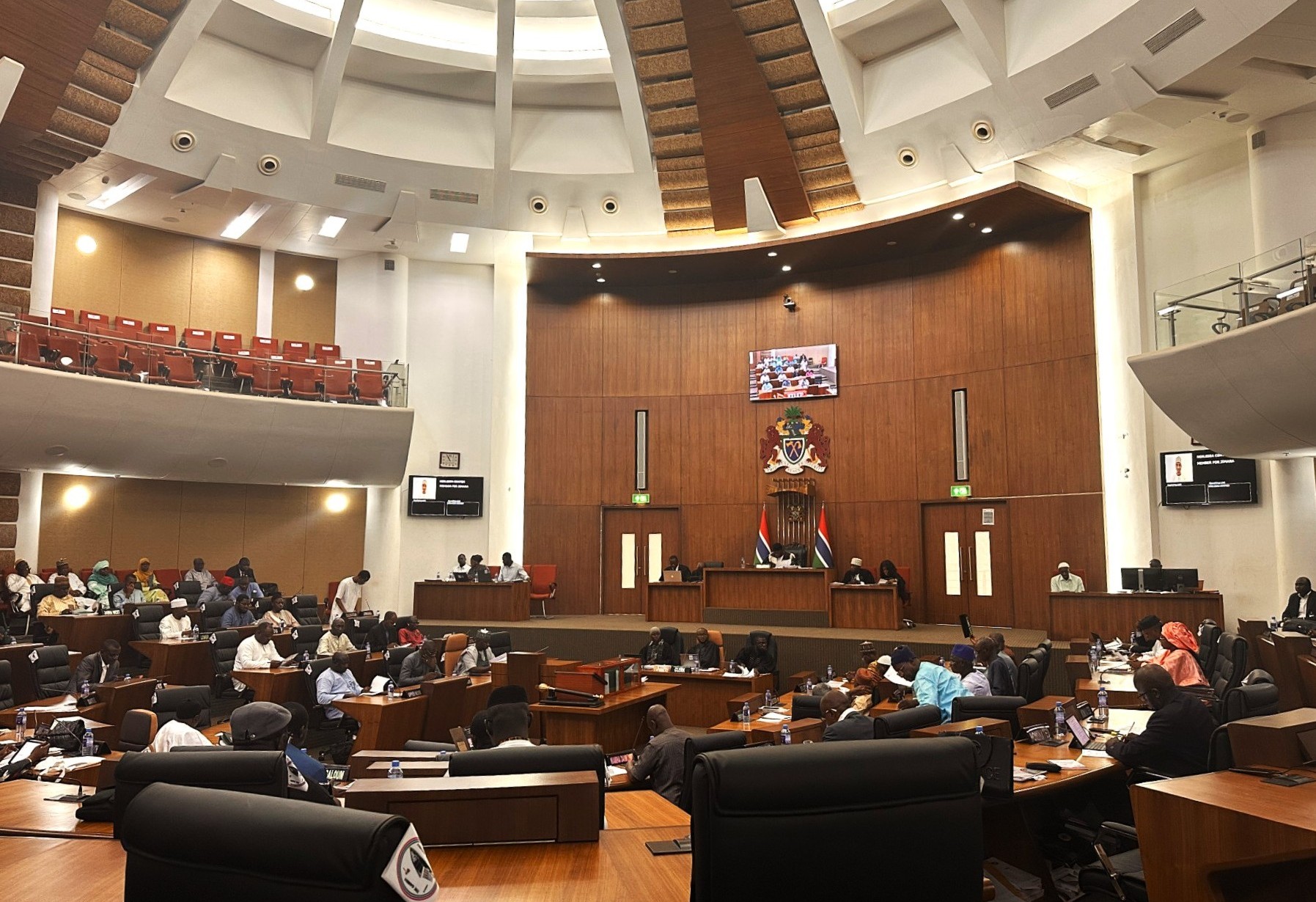



Gambiaj.com – (BANJUL, The Gambia) – The National Assembly of The Gambia on Monday began deliberations on the GIEPA Amendment bill 2025, a proposed law designed to modernize the country’s investment architecture, attract responsible investors, and expand employment opportunities nationwide.
Presenting the bill before lawmakers, Trade Minister Mod K. Ceesay said the legislation seeks to strengthen the mandate and operational efficiency of the Gambia Investment and Export Promotion Agency (GIEPA).
He explained that the reform would streamline investment procedures and establish a predictable, transparent regulatory regime that benefits both domestic and foreign investors.
“We want to create an environment where Gambians and investors alike can succeed,” Minister Ceesay told members, underscoring the government’s intention to foster inclusive growth while safeguarding national interests.
A central component of the amendment is the overhaul of the Special Investment Certificate (SIC) framework. Lawmakers acknowledged that inconsistent application of the SIC system in the past resulted in revenue leakages and limited benefits for local enterprises.
The proposed revisions aim to introduce clearer eligibility criteria, stronger oversight mechanisms, and enhanced accountability to ensure that incentives are granted to high-impact, sustainable investments.
During the debate, members stressed the urgency of positioning Gambian businesses to capitalize on opportunities under the African Continental Free Trade Area (AfCFTA).
They argued that without targeted support—particularly in access to finance, technical training, and export readiness—local entrepreneurs may struggle to compete in regional markets.
The National Assembly Member for Sannehmentereng warned that youth-led enterprises, in particular, require structured guidance and incentives to scale up production and enter cross-border trade. “Young business owners need the right support to take Gambian products to regional markets,” he said, cautioning that inadequate institutional backing could stifle emerging ventures before they mature.
Beyond investment facilitation, the bill incorporates provisions addressing sustainable development standards, corporate social responsibility obligations, and youth employment targets.
Legislators broadly agreed that a modernized investment regime must balance competitiveness with social and environmental safeguards.
At the conclusion of the sitting, the bill was referred to the Assembly Business Committee for further scrutiny and possible amendments before it returns to the plenary for consideration at the committee and third reading stages.
If enacted, members said the GIEPA Amendment bill 2025 could represent a pivotal shift in The Gambia’s economic strategy, tightening governance around incentives, boosting investor confidence, and expanding the country’s footprint in regional and international trade.