

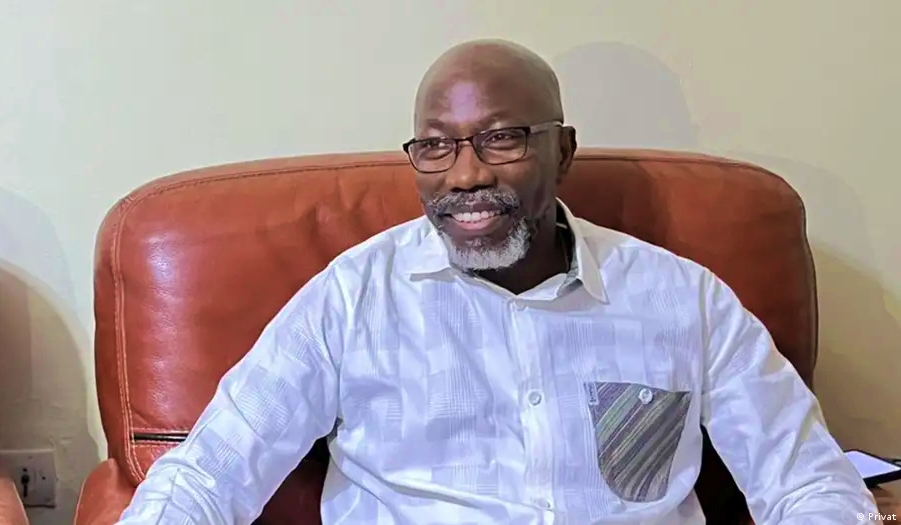

Gambiaj.com – (CONAKRY, Guinea) – A newly published book by former Guinean minister Tibou Kamara is offering fresh insight into the complex power dynamics and internal rivalries that preceded and followed the September 2021 coup d’état that ousted President Alpha Condé.
Titled Le coup d’état contre Alpha Condé and released less than a week ago by Éditions Yigui, the book draws on Kamara’s proximity to the former administration and presents a detailed account of the final days of Condé’s presidency, the calculations within the military, and the tense maneuvers that shaped the transfer of power.
Growing Suspicion and Rivalries Within the Security Apparatus
In one of the excerpts highlighted by early readers, Kamara suggests that Professor Alpha Condé, reflecting on events in hindsight, might have acted differently had he anticipated how rapidly trust within his security apparatus would unravel.
According to the author, suspicions of coup plotting were widespread within the regime well before the takeover, with several senior officers viewed as potential threats.
Among them was General Namory Traoré, who, Kamara writes, was widely suspected within the corridors of power of harboring presidential ambitions. While Condé appeared to maintain confidence in him, the president was not entirely indifferent to the rumors.
Kamara notes that Condé opted for caution, wary that acting too hastily in an atmosphere of denunciations and mutual suspicion could harm innocent officers or deepen instability.
Following the coup, testimonies cited in the book indicate that General Traoré, rather than mobilizing to defend the regime, withdrew to Camp Samory Touré, where he commanded significant military resources, including heavy weaponry.
From there, he reportedly sought to position himself as a decisive actor in the unfolding power struggle.
Colonel Mamadi Doumbouya, the leader of the Special Forces and the architect of the coup, was forced to navigate this delicate situation. Kamara recounts that Doumbouya initially relied on diplomacy, dispatching emissaries—among them General Mathurin Bangoura—to secure Traoré’s allegiance and avoid armed confrontation.
These efforts failed to sway an officer described as determined to “play the leading roles” and convinced that his rank and pedigree destined him for the presidency.
According to the book, it was only after Doumbouya demonstrated firmness and the readiness to use force that Traoré backed down. “Force stopped force,” Kamara writes, describing a nerve-wracking standoff resolved without a single shot fired but decisive in consolidating Doumbouya’s authority.
The episode ended with what the author calls the shattered dream of an officer who believed his moment had come, overlooking the rise of a new generation intent on overturning established hierarchies within the army and society.
Resistance, Consolidation, and the Aftermath of the Coup
The book also sheds light on resistance faced by the coup plotters from other military units. Colonel Abdoulaye Keïta, known as “Commando Fakhè” and then commander of the BATA unit, reportedly deployed his forces across several strategic arteries in the suburbs of Conakry, including positions near the international airport and the national broadcaster, RTG.
As he moved toward the city center to assess the situation, his convoy came under fire, killing his driver and a bodyguard. Isolated and ordered to cooperate to save his life, Keïta eventually surrendered after President Condé had already been arrested.
Despite later integrating into the new power structure—first as Inspector General of the Armed Forces and subsequently as Chief of Staff of the Army—Kamara notes that Keïta continues to carry the burden of his initial opposition to the coup.
This early resistance, the author argues, remains a source of lingering suspicion within the inner circle of the junta.
Kamara’s account also touches on the fate of key figures since the coup. Alpha Condé now lives in exile, while General Namory Traoré has since been appointed Guinea’s ambassador to Morocco. Their diverging trajectories, the author suggests, illustrate the unpredictable and often ironic turns of political life.
Beyond military maneuvers, the book raises questions about the role of civilians and journalists in the days leading up to the coup.
Kamara alleges that some journalists who warned Condé of an imminent putsch were simultaneously relaying information to the Special Forces, believing the attempt would fail. He also points to the unexplained inaccessibility of then Defense Minister Mohamed Diané in the weeks preceding the takeover.
Through these revelations, Le coup d’état contre Alpha Condé positions Tibou Kamara as both a witness and a participant in a pivotal chapter of Guinea’s recent history, offering a narrative that blends personal testimony with broader reflections on power, loyalty, ambition, and the fragile boundary between order and upheaval.