







Gambiaj.com – (NAIROBI, Kenya) – On the edge of Nairobi’s industrial zone, engineer Tadesse Tessema is pursuing what could become a landmark moment for East Africa’s automotive industry: the creation of a fully fledged Kenyan electric vehicle, designed, fabricated, and largely manufactured in Kenya.
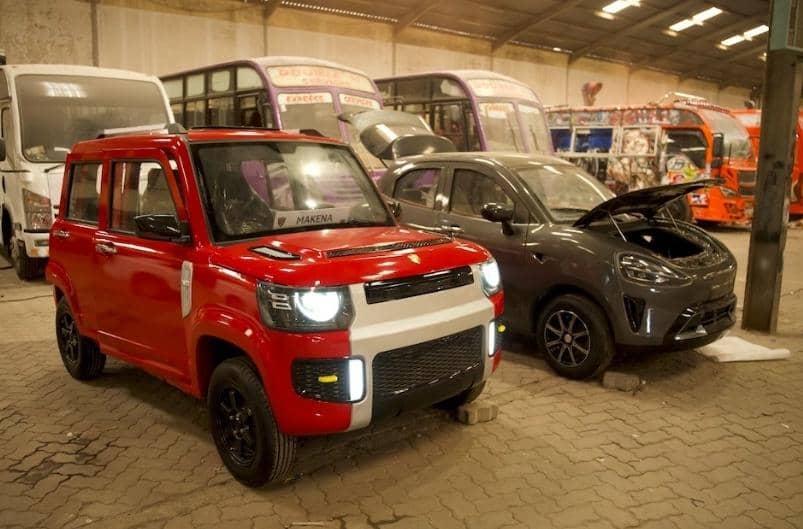
Tessema’s company, TAD Motors, is already producing five vehicle brands from a modest workshop, including the locally fabricated TAD AMANI, using steel sourced in Kenya and batteries and electronic components imported from China.
The effort goes beyond the “bolt-and-screw” assembly plants that dominate much of Africa’s auto sector, where imported kits are simply put together for global brands.
Born in Ethiopia and now a Dutch citizen, Tessema is a power electronics specialist who built Ethiopia’s first car assembly plant nearly two decades ago.
After spending 15 years developing supplier networks in China, he says Kenya now feels like home. This time, his ambition is not to import Chinese vehicles but to transfer Chinese electric vehicle manufacturing know-how to African soil.
Building an original Kenyan brand
At the center of Tessema’s vision is an original Kenyan brand built from the ground up. His flagship compact electric car, branded TAD, takes its name from the first three letters of his own name.
Rather than buying ready-made vehicles, he approached China as a system architect, carefully selecting body suppliers, electronics, seats, glass, interior trims, and fiberglass components, much like a technology company assembles a smartphone.
Affordability is a core principle of the project. Tessema aims to price new electric vehicles at roughly the cost of a used imported car, or only slightly higher, while offering lower running costs and greater reliability. His goal is to provide African drivers with a realistic alternative to the aging second-hand vehicles that dominate the continent’s roads.
A Kenyan supply chain
For Tessema, branding alone is not enough. He wants a Kenyan electric vehicle that is genuinely built in Kenya, using Kenyan skills and, increasingly, Kenyan parts. His target is to manufacture up to 90 percent of each vehicle locally by the end of 2026, starting with body components and eventually moving into battery production, the most expensive and complex element of an EV.
“Bringing batteries from outside is a huge expense,” he argues. “If you want to be affordable, you have to produce most of the parts here.”
A growing number of local suppliers have already joined the project, challenging long-held assumptions in an economy that still relies heavily on imports for even basic goods. Yet while the technical challenges are significant, Tessema believes financing remains the biggest obstacle.
He contrasts the support he received from a Dutch government grant to build Ethiopia’s first car plant in 2005 with the reluctance of many African banks to fund innovation. Too often, he says, financial institutions prefer to finance imports rather than ideas, leaving local innovators under-resourced.
Training the EV workforce
Inside TAD Motors’ workshop, models such as the TAD MAKENA and AMANI sit among tools and metal frames as young technicians work on prototype chassis. Training is taking place both informally on the shop floor and through structured programs abroad.
Teams of Kenyan workers have already spent months in China, learning directly from manufacturers at the heart of the global EV supply chain.
Tessema accepts that some trained staff will eventually move on but insists the expertise will remain in the country. His longer-term plan is to establish a dedicated electric vehicle training school to ensure a steady pipeline of skilled workers for the industry.
Power, policy, and scale
Energy costs remain a major concern. Electricity in Kenya is expensive, and charging batteries from the national grid can undermine the cost advantages of electric vehicles.
To address this, Tessema plans to develop solar- and biogas-powered charging hubs, particularly for motorcycle taxis that provide livelihoods for millions of Kenyans.
By reducing reliance on grid power, he hopes to make electric mobility cheaper for everyday users while also cutting emissions.
Tessema advocates for a proof-based approach to policy change, as demonstrated by his experience with a car plant in Ethiopia that overcame double taxation by presenting a working product.
He predicts that Kenya could produce its first fully Kenyan electric vehicle by 2027, with plans to expand into commercial electric vehicles.
His long-term vision includes taking the company public to allow Kenyan stakeholders to benefit from value creation. Based in Nairobi with a team of young engineers, Tessema aims to establish a sustainable Kenyan electric vehicle ecosystem that competes in the global market.