


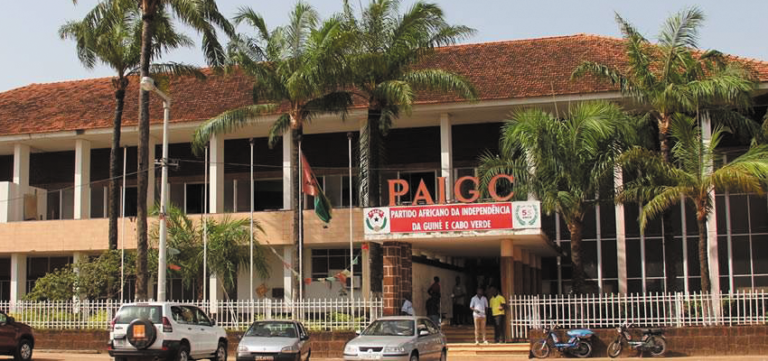
Gambiaj.com – (BISSAU, Guinea-Bissau) – A deepening internal rift within the African Party for the Independence of Guinea and Cape Verde (PAIGC) is threatening to further weaken the historic party at a critical juncture for Guinea-Bissau, reviving fears that long-running divisions could once again leave the opposition ineffective in the face of an entrenched political-military establishment.
The latest flare-up pits the party’s National Secretariat against a self-styled “Reflection Group” of PAIGC leaders and activists, led by Aladje Seco Sanó, who are openly challenging the current leadership and calling for party veterans to take charge of a transition process to what they describe as “save the party from us.”
In a strongly worded statement dated February 5 and accessed by The Gambia Journal, the Reflection Group rejected accusations that it is driven by personal ambition or colluding with the regime in power since 2019. Instead, it argues that its sole motivation is to restore the PAIGC as “the beacon of democracy and social justice” in Guinean political life.
“Our action is guided by conviction, not ambition,” the group said, accusing the current leadership of incompetence, lack of strategic vision, and allowing the party, forged through “blood, sweat, and tears,” to become “helpless, powerless, and abandoned.”
Invoking the legacy of independence leader Amílcar Cabral, the group added pointedly: “Not everyone belongs to the party. Today, we clearly see that political choices stem from incompetence and a lack of strategic vision.”
Accusations of Collusion and Division
The party’s National Secretariat, however, has responded forcefully. In a statement issued on February 4, it accused the Reflection Group of carrying out “systematic acts of hostility” against the PAIGC, allegedly in the service of interests unrelated to the party and in collusion with the political order installed since 2019.
According to the Secretariat, the group’s objective is to weaken the party from within and seize control of its leadership, warning that its proposals are “unfounded and alarmist” and conceal “obscure intentions to divide the party.”
The PAIGC also rejected claims by the Reflection Group that senior party figures, including vice presidents, were in “brutal confinement,” and dismissed calls for a transitional leadership and direct dialogue with the military command as contrary to party statutes.
In a February 3 statement, the party insisted it remains functional and properly led, despite severe restrictions imposed by the current political-military context, including the closure of its headquarters and a ban on political demonstrations.
A Party Weakened at Crucial Moments
The public exchange comes against the backdrop of recent political setbacks that continue to haunt the PAIGC. During the last elections, former president Umaro Sissoco Embaló succeeded in keeping the party fragmented, marginalized, and largely absent from the electoral battlefield, a failure many within the party still attribute to internal disarray and leadership paralysis.
More recently, senior PAIGC leaders were detained by the military junta and only released following diplomatic pressure and intervention by ECOWAS and Senegal, underscoring both the party’s vulnerability and its reliance on external actors at moments of crisis.
The Reflection Group argues that these episodes illustrate a leadership incapable of defending the party or confronting the current reality. It accuses top figures in the Presidium and Permanent Commission of remaining in “deafening silence,” hidden, in exile, or afraid to act, while party members face arrests, beatings, raids on headquarters, and violent repression.
The National Secretariat, in turn, counters that some members of the Reflection Group showed “silence or conformity” during these abuses and are now exploiting the situation to advance destabilizing agendas.
Challenges Ahead
As Guinea-Bissau remains under a tense political-military climate, the PAIGC’s internal struggle risks compounding the party’s difficulties at a moment when unity, clarity of leadership, and strategic coherence are essential.
With elections on the horizon and democratic space constrained, a divided PAIGC may once again struggle to position itself as a credible alternative to entrenched power.
The call by the Reflection Group for veterans to lead a transition could resonate with disillusioned militants, but it also threatens to harden factional lines if not managed through inclusive dialogue.
For a party that once embodied national liberation and democratic hope, the immediate challenge is stark: resolve its internal conflict or risk repeating a familiar pattern, fragmentation at decisive moments, political irrelevance at the polls, and continued vulnerability under military pressure.
Whether the PAIGC can bridge this widening divide may determine not only its own future but also the prospects for a revitalized opposition in Guinea-Bissau’s fragile democracy.