



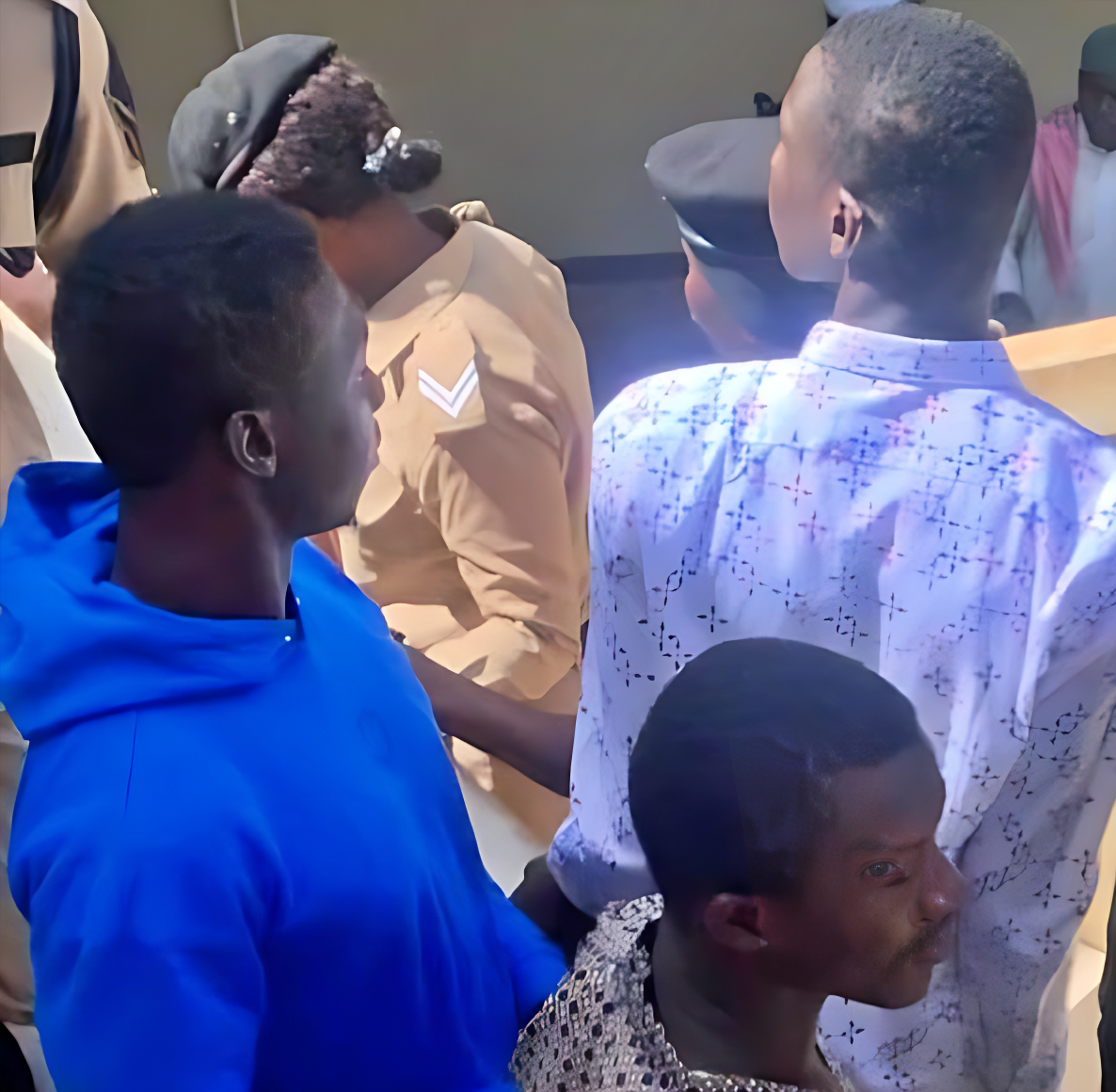
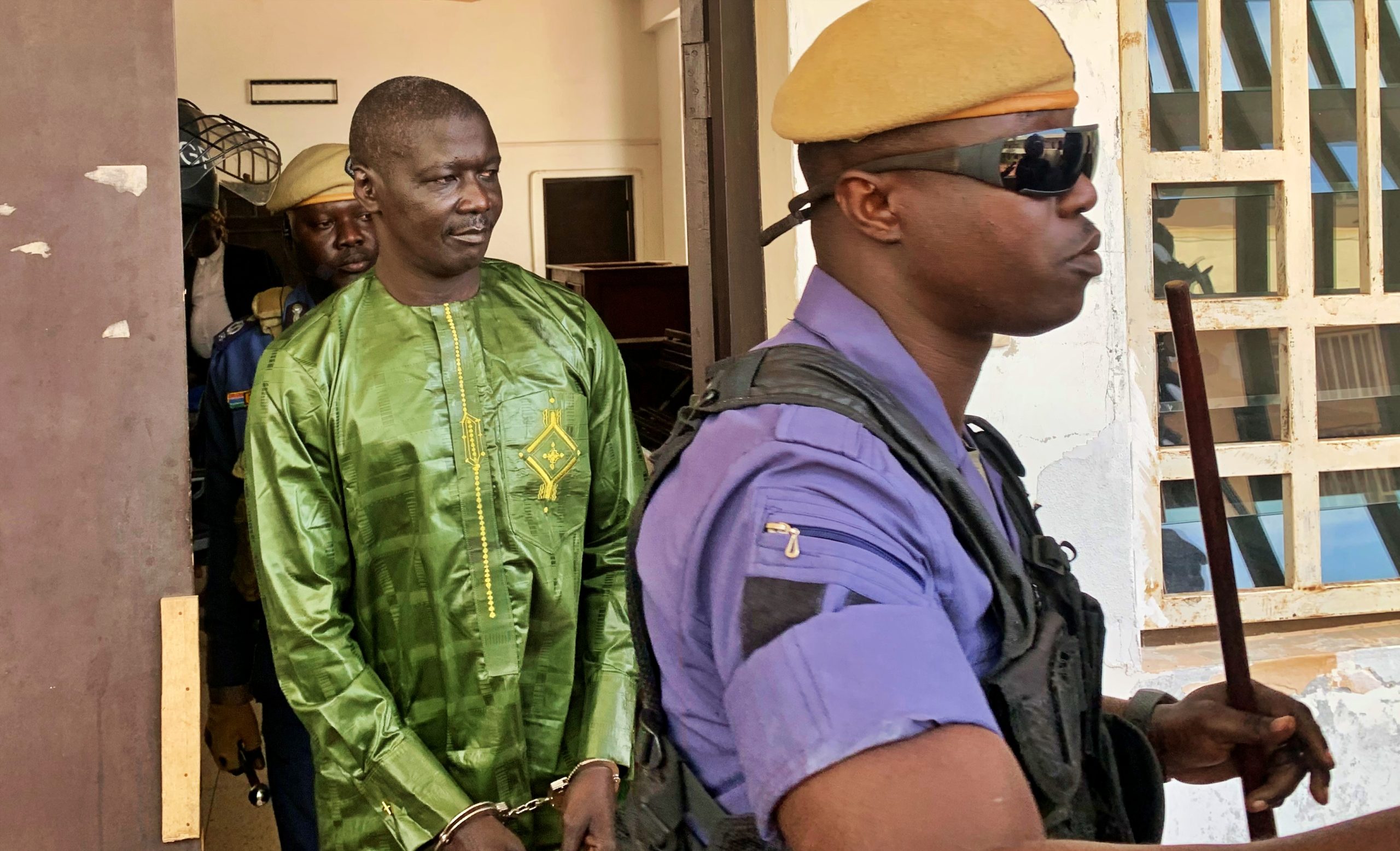
Gambiaj.com – (BANJUL, The Gambia) – Lieutenant Colonel Sanna Manjang, a former Gambian soldier and alleged member of the notorious “Junglers” unit created under former President Yahya Jammeh, has pleaded not guilty to two counts of murder after the High Court ruled that the indictment against him is competent.
Manjang entered his plea before the High Court following a ruling by the presiding judge, Hon. Justice Sidi K. Jobarteh, dismissing a preliminary objection raised by his counsel, Sheriff Kumba Jobe, which challenged the legality of the murder charges brought against his client.
Defence Raises Preliminary Objection
When the case was called, Justice Jobarteh informed the court that the matter was scheduled for plea taking. However, Counsel Jobe raised a preliminary objection, questioning the competence and legality of the bill of indictment filed by the State Law Office on 12 January 2026.
“My Lady, we are objecting to the competence of the information filed by the prosecution, which has impaired the jurisdiction of this court to entertain, proceed with, and determine the charges against the accused person,” Counsel Jobe told the court.
He argued that the two murder charges were brought under Section 187 of the Criminal Code, Cap 10, Volume III, Revised Laws of The Gambia 2009, which he contended is a non-existent law. Counsel Jobe submitted that the Criminal Code had been repealed by the National Assembly through Section 344 of the Criminal Offences Act, 2025.
According to him, once a law is repealed, it ceases to exist and is erased from the statute books. He argued that a repealed law cannot be revived or relied upon to ground criminal charges.
Counsel Jobe cited several authorities in support of his argument, including Onagoruwa v. I.G.P. (1991) 7 NWLR (Pt. 193) 593 and Madumere v. Onuoha (1999) 8 NWLR (Pt. 615) 422, which held that the repeal of a statute obliterates it as though it had never been enacted, except in respect of proceedings concluded while it was in force.
He maintained that since the Criminal Code is no longer recognized under Section 7 of the 1997 Constitution, no person could lawfully be charged under it. He therefore urged the court to strike out the indictment as null and void for want of jurisdiction.
State’s Response
In response, the Deputy Director of Public Prosecutions, Counsel E.R. Dougan, submitted that the alleged offenses were committed in 2006, when the Criminal Code was in force.
Counsel Jobe briefly interjected, arguing that the State Counsel was giving evidence from the bar. However, Counsel Dougan continued, maintaining that the prosecution was right to charge the accused under the Criminal Code, as the new Criminal Offences Act could not apply retrospectively.
She urged the court to dismiss the objection and proceed with the plea taking.
Court’s Ruling
In her ruling, Justice Jobarteh stated that the central issue for determination was whether the repeal of the Criminal Code by Section 344 of the Criminal Offences Act, 2025, rendered the present charges incompetent.
While acknowledging that the Criminal Code had indeed been repealed, the judge held that the effect of repeal must be understood in light of settled principles of statutory interpretation.
She referred to the savings clause under Section 2(1)(c) of the Criminal Offences Act, 2025, which preserves liability and trial for acts committed before the commencement of the Act.
“Acts committed before the commencement of the Criminal Offences Act 2025 are saved and remain governed by the previous law,” Justice Jobarteh ruled, adding that criminal liability attaches at the time an offence is committed, not at the time of trial.
She further held that applying the new act retrospectively would violate constitutional guarantees of a fair trial. Consequently, the court dismissed the preliminary objection and ruled that the charges were competent.
Plea Taking and Charges
Following the ruling, Counsel Jobe informed the court that he had only been served with the bill of indictment the previous day at about 3:00 p.m. and requested time to consult with his client. The State did not object, but the court declined to adjourn the matter, granting instead a 20-minute stand-down for consultation.
When the two counts were read, Sanna Manjang pleaded not guilty to both charges.
In Count One, Manjang is charged with the murder of Kajali Jammeh, also known as “Le Cock,” alleged to have occurred in 2006 at Kanilai in the West Coast Region, where he is accused of cutting the deceased’s neck with a knife.
In Count Two, he is charged with the murder of Samba Wurry, also alleged to have occurred in 2006 at Kanilai, where he is accused of stabbing the deceased in the chest with a knife.
Following the plea, the State applied for an adjournment to enable it to call its first witness. The case was adjourned to 9 February 2026.