




Gambiaj.com – (DAKAR, Senegal) – Senegal’s Directorate of File Automation (DAF), the state body responsible for managing biometric data, national identity cards, and passports, has been hit by a cyberattack that has disrupted operations for at least five days, leading to the temporary suspension of all production.
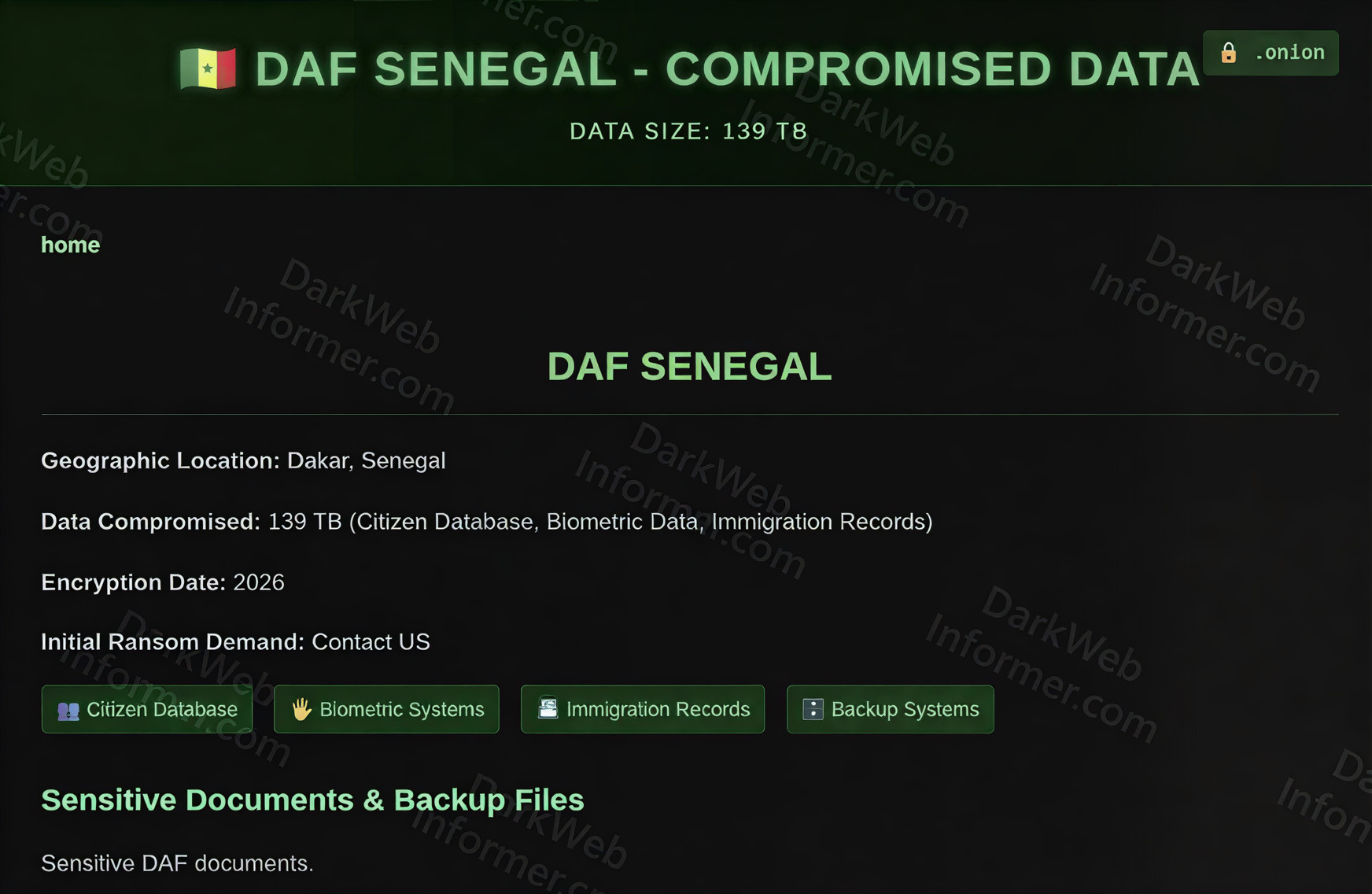
The attack was claimed by a hacker group calling itself “The Green Blood Group,” which alleges it has exfiltrated 139 terabytes of data from the institution.
DAF is a highly sensitive technical agency tasked with securing and modernizing Senegal’s core administrative documents.
In a message posted on the dark web, the cybercriminals announced that they had added “two new victims to their dark portal,” identifying the Directorate of File Automation (DAF) and the company Ecobat. The post, accompanied by a screenshot labelled “Ransomware Alert,” explicitly listed both entities among the group’s targets.
Sources familiar with the matter said the Malaysian partners linked to the national identification system had been informed of the breach and had committed to deploying a technical team to Senegal.
In the meantime, DAF technicians are said to be working to restore systems, with an official press release expected in the coming hours.
Recurrence of a Spectacular Breach Targeting Confidential Data
The cyberattack comes amid an ongoing standoff between the Senegalese state and Iris Corporation, the Malaysian firm awarded the contract to produce the country’s digital National Identification Cards (CNI). The dispute centers on unpaid invoices.
According to sources, once the breach was detected, Iris Corporation requested that DAF shut down all systems while it prepared to dispatch its technical team to Dakar.
That request has raised questions about a possible link between the commercial dispute and the cyberattack, although no official confirmation has been made. Authorities have so far not publicly attributed responsibility or detailed the scope of any data compromise.
The incident is the latest in a series of cyber breaches targeting strategic institutions in Senegal. Only months ago, the General Directorate of Taxes and Domains was also hit by a cyberattack, highlighting growing vulnerabilities in the country’s most sensitive data systems and intensifying calls for stronger national cybersecurity measures.