







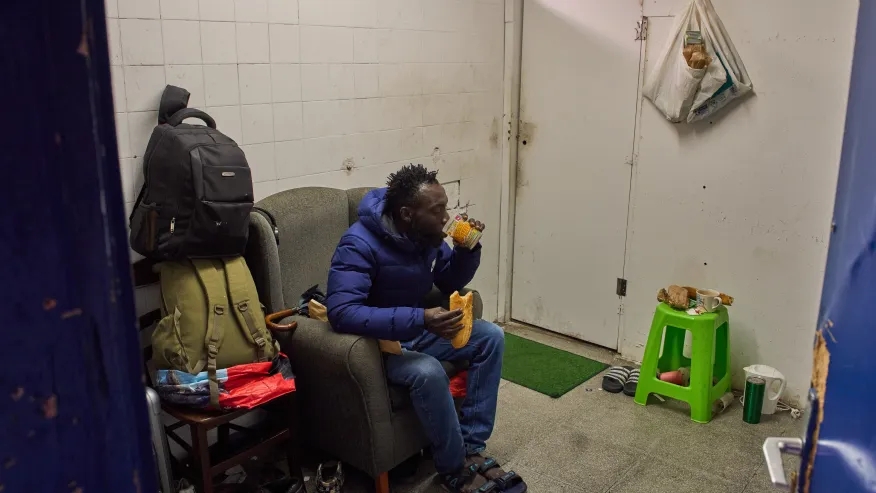
Gambiaj.com – (MADRID, Spain) – Spain’s decision to grant temporary legal status to hundreds of thousands of undocumented migrants is being closely watched in The Gambia, where many families have relatives living and working in Europe under precarious conditions.
The Spanish government announced on Tuesday that it will regularize the status of migrants living and working in the country without authorization, potentially benefiting between 500,000 and 800,000 people.
The extraordinary measure will be implemented through an expedited decree amending immigration laws, allowing eligible migrants to obtain up to one year of legal residency and work permits.
For Gambians residing in Spain—many of whom are employed in agriculture, tourism, construction, and domestic services—the announcement has sparked renewed optimism.
Spain has long been a key destination for Gambian migrants, particularly young men who arrived during waves of irregular migration across the Atlantic route or through North Africa.
Spanish Minister of Migration Elma Saiz said the government was acting to “dignify and recognize people who are already in our country” and contributing to the economy.
Eligible applicants must have arrived in Spain before December 31, 2025, prove they have lived in the country for at least five months, and show they have no criminal record. Applications are expected to open from April to the end of June.
The move sharply contrasts with tightening immigration policies elsewhere in Europe and the United States, where hardline enforcement approaches—championed by President Donald Trump—have shaped a more restrictive global climate.
Spanish Prime Minister Pedro Sánchez’s government, by contrast, has consistently argued that legal migration is essential to sustaining Spain’s aging workforce and growing economy.
Migrant rights organizations, Catholic groups, and labor advocates have welcomed the decision. Many note that undocumented migrants, including Gambians, played critical roles during the COVID-19 pandemic while lacking basic legal protections.
“It is not just a humanitarian decision; it is an economic one,” said migration policy analyst Anna Terrón Cusi, who noted that previous regularization programs in Spain helped formalize jobs and strengthen the labor market. Spain has carried out similar amnesties six times between 1986 and 2005.
In The Gambia, where remittances form a major pillar of the economy, the policy shift could have far-reaching implications. Legal status would allow Gambian migrants to work openly, earn more stable incomes, and send money home more securely, while reducing the constant fear of arrest or deportation.
However, Spain’s opposition parties have criticized the move. Conservative and far-right leaders accused the government of encouraging irregular migration, with anti-immigration rhetoric echoing sentiments gaining ground across parts of Europe.
Despite the backlash, Saiz insisted Spain would remain, in her words, a “beacon” against the rising tide of anti-immigrant politics.
For many Gambian families with loved ones living in uncertainty abroad, Spain’s decision represents more than a policy change—it is a rare moment of relief and possibility in an increasingly hostile global migration landscape.