


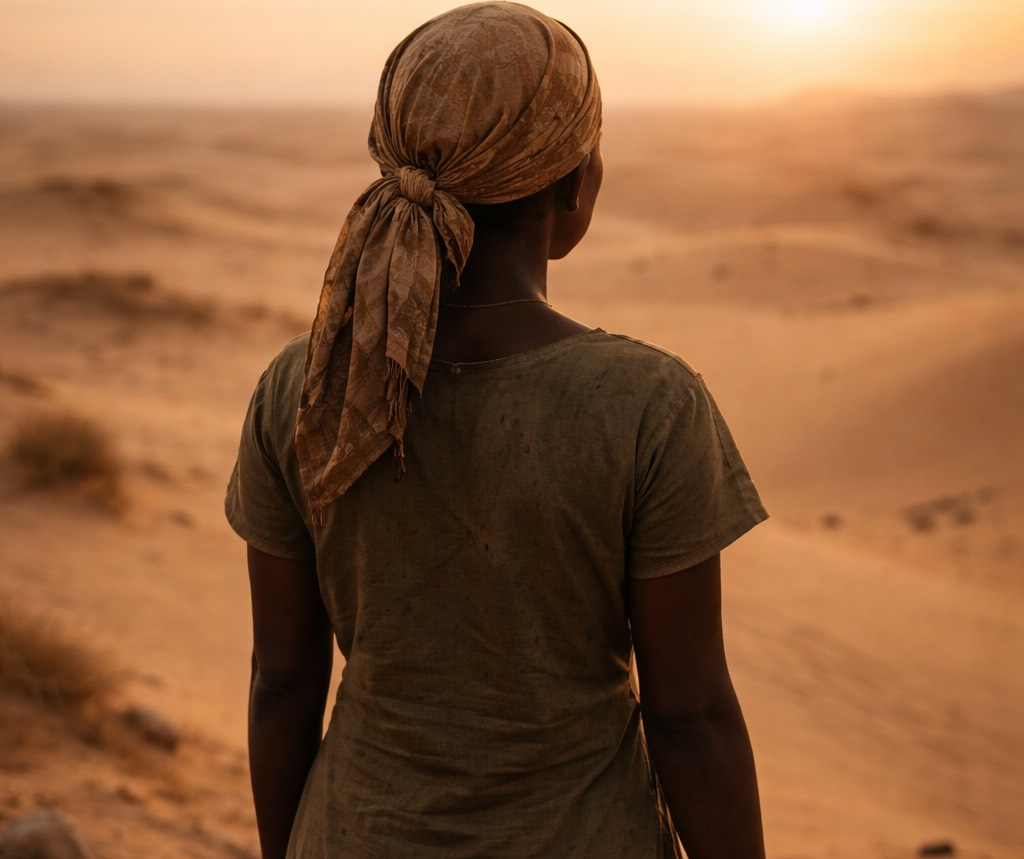
Gambiaj.com – (BANJUL, The Gambia) – A 37-year-old Gambian woman says she is considering attempting irregular migration again—commonly referred to as the “back way”—despite having survived extreme danger and hardship on a previous journey to Europe.
Identified as Awa to protect her identity, she described the Central Mediterranean route as one of the most perilous migration paths from West Africa to Europe. The journey typically begins in the Sahara Desert, passes through North Africa, and ends with a sea crossing into Europe.
According to Awa, the desert crossing was chaotic and terrifying. Migrants moved for hours without clear direction or any assurance of safety. At one point, armed rebels intercepted the group and opened fire, forcing people to scatter in panic.
“I ran until my body could no longer carry me,” she recalled.
She said survival often came at a brutal cost.
“Sometimes safety meant being beaten,” Awa said. “Sometimes it meant being raped. Sometimes it was just not being killed.”
There were moments when she lost all hope. Weak, dehydrated, and exhausted, she handed her family’s phone number to fellow Gambians travelling with her, asking them to inform her relatives if she did not survive.
The journey continued in overcrowded trucks designed to transport goods. Migrants were hidden beneath cargo, pressed tightly together, and instructed to remain silent while passing through checkpoints.
“There were over a hundred of us in one vehicle,” she said.
After reaching Algeria, Awa said the danger did not end. Migrants were frequently arrested and detained. She said she was detained several times and later escaped, spending months hiding behind trucks and inside vehicles to avoid security forces.
“For months, I was always hiding,” she said.
Eventually, Awa returned to The Gambia. But home offered little relief. She resumed petty trading, work she has done since childhood, but at 37, she says the income is no longer enough to support her family. Her father has died, her mother is elderly, and none of her siblings are currently in school.
“There is nothing left for me here,” she said. “Promises don’t feed anyone.”
Despite everything she endured, Awa says she is considering migrating again if she can save enough money.
“If I get the money, I will go again—even if it means dying at sea,” she said.
For her, the choice feels stark. Staying in The Gambia means watching opportunities disappear; leaving, even through danger, offers at least a chance.
“Here, we are dying slowly,” she said. “There, at least there is a possibility.”
Awa stressed that her experience—and those of many others—should not be misunderstood as a willingness to suffer.
“We don’t enjoy this,” she said. “We are just running away from a life that has already given up on us.”
Irregular migration remains a major challenge in The Gambia. Analysts and civil society organizations link continued migration attempts to unemployment, rising living costs, and limited economic opportunities.
The Central Mediterranean route, which involves crossing the Sahara Desert and travelling through North Africa, is widely regarded as one of the world’s most dangerous migration corridors due to extreme weather, violence, human trafficking, and migrant detention.
The Gambian government, in partnership with international organizations such as the International Organization for Migration (IOM), operates voluntary return and reintegration programs aimed at supporting returnees. However, some returnees say assistance is delayed or insufficient to meet long-term needs.
For Awa, the decision remains painfully clear.
“Staying means watching life close in,” she said. “Leaving means at least a chance.”

One Response
I am a Dutch entrepreneur here in The Gambia. I know how it is in The Gambia and in Europe. Please, Europe does not need Gambian people without a good university education.
Are you still going to try to go to Europe and pay 60,000 to 70,000 dalasi for it? Then these are the options you will have to deal with:
1) You will not survive the journey.
2) You are arrested in another African country.
3) When you reach Europe, you are held in a camp for years.
4) Are you escaping from the camp? Then a woman becomes a prostitute and a man a drug dealer.
5) Eventually you go to jail or get shot dead by gangsters.
Conclusion: You pay 60,000 to 70,000 to go to hell!!!!!
Don’t go to Europe! Make something of your life here in The Gambia!