




Gambiaj.com – (Banjul, The Gambia) – The Gambia recorded an above-average cereal harvest in 2025, driven by favorable rainfall, expanded planting, and sustained government support to farmers, according to the latest Food Security Snapshot released by the FAO’s Global Information and Early Warning System (GIEWS).
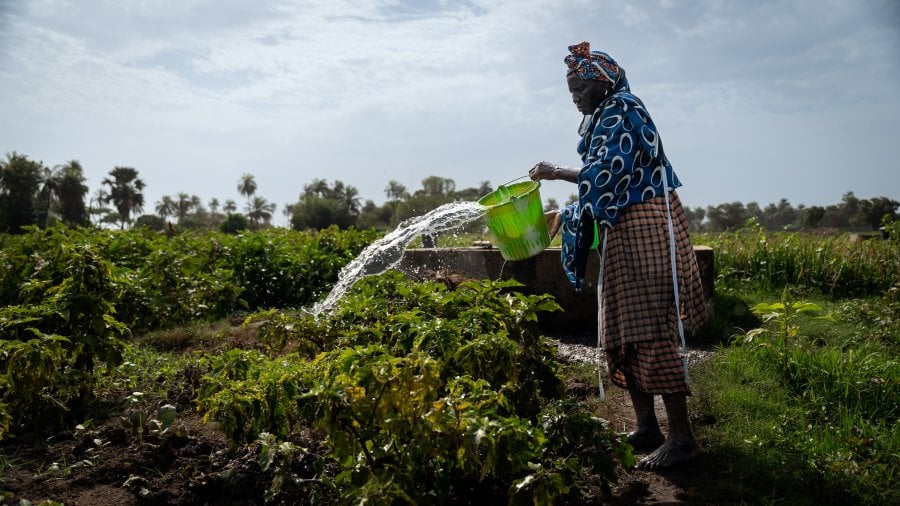
The report estimates total cereal production for 2025 at about 135,000 tonnes, representing a 20 percent increase compared to the average of the previous five years.
Harvesting activities were completed in December 2025 following a rainy season that began positively in late June, with average to above-average precipitation supporting planting and early crop development.
Although a dry spell in late July affected crops in some localized areas, improved rainfall between August and early October boosted yields across most regions. Heavy rains in August and September caused flooding in certain areas, delaying harvesting operations and leading to minor crop losses, the report noted.
Government interventions, including the distribution of improved seeds, subsidized fertilizers, and access to plowing machinery, played a significant role in increasing yields and expanding cultivated land. Rising food prices also encouraged households to increase production for their own consumption.
Despite the strong production performance, cereal prices remained elevated. In October 2025, the national average price of imported rice, the country’s most consumed staple, was near its level a year earlier, while locally produced rice was about 10 percent more expensive.
Similar price increases were recorded for local maize, while millet and sorghum prices remained broadly stable compared to the previous year.
The report attributes the elevated prices mainly to the weakness of the local currency, which pushed up fuel and transport costs across the country.
Meanwhile, food insecurity remains a major concern. An estimated 244,000 people, about 10 percent of the analysed population, were classified as acutely food insecure during the June to August 2025 lean season.
This includes more than 7,600 people facing emergency-level food insecurity (Cadre Harmonisé Phase 4). Particular concern was raised for approximately 10,700 people whose livelihoods were disrupted by flooding during the year.
Updated food security estimates for the March to May 2026 period, along with projections for the June to August 2026 lean season, are expected to be released in March 2026.