




Gambiaj.com – (WASHINGTON, D.C.) – The administration of President Donald Trump is considering a dramatic escalation in its pressure campaign against Cuba, including the possibility of imposing a total blockade on oil imports to the island, according to three people familiar with the internal discussions.
The proposal, still under review, is being pushed by critics of the Cuban government within the administration and is backed by Secretary of State Marco Rubio, two of the sources said. While no final decision has been made, the measure could form part of a broader set of options presented to President Trump aimed at forcing the collapse of Cuba’s communist government.
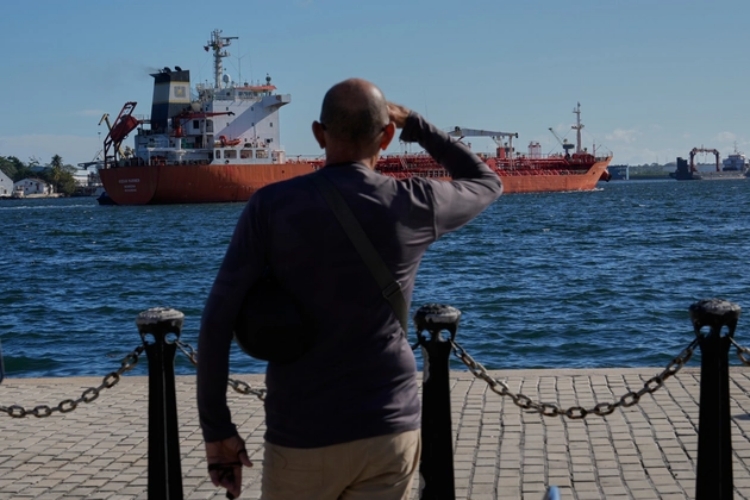
Blocking all crude oil shipments would go beyond President Trump’s recent announcement that the United States would halt Cuba’s imports of oil from Venezuela, long Havana’s primary supplier.
U.S. actions targeting sanctioned Venezuelan shipments have already sharply reduced the flow of crude to Cuba, worsening the island’s economic and energy crisis.
“There is a view inside the administration that energy is the chokehold to kill the regime,” said one person familiar with the deliberations, speaking on condition of anonymity because the discussions are ongoing and sensitive. According to this source, senior officials believe the fall of Cuba’s communist leadership could occur as early as 2026.
The proposal has, however, sparked debate within the administration. All three sources said some officials question whether a full oil blockade is necessary, noting that the loss of Venezuelan crude—and the revenue Cuba earned by reselling some of it—has already severely constrained the economy. Others warn that completely cutting off oil imports could trigger a humanitarian crisis, potentially undermining U.S. objectives and drawing international criticism.
Supporters of the tougher approach argue it could be justified under the 1994 LIBERTAD Act, commonly known as the Helms-Burton Act, which codifies the U.S. trade embargo against Cuba and provides a legal framework for expanding economic pressure.
The White House declined to say whether a total oil blockade is under active consideration, and Cuba’s embassy in Washington did not respond to requests for comment.
Cuba imports roughly 60 percent of its oil, according to the International Energy Agency. While Venezuela was once its dominant supplier, Mexico has recently emerged as the main source as Venezuelan shipments have dried up. Mexican oil, however, is sold at market prices and is widely seen as insufficient to offset Cuba’s deepening energy shortages.
Administration officials argue that Cuba’s economy is now at its weakest point in decades, citing widespread blackouts, fuel shortages, and scarcities of food and basic goods. President Trump and Secretary of State Rubio have both expressed optimism that the loss of Venezuelan support has left the Cuban government vulnerable.
Toppling the government in Havana would fulfill a long-standing goal of Cuban exiles in the United States, particularly in Florida, who have sought the end of communist rule since Fidel Castro came to power in 1959. Rubio, the son of Cuban immigrants, has for years advocated a hardline approach toward Havana.
Still, analysts and some policymakers caution that the Cuban government has survived decades of U.S. sanctions, the collapse of the Soviet Union, and prolonged economic isolation. They also warn that a sudden collapse of the regime could unleash a regional migration crisis and destabilize the Caribbean.
Despite those concerns, hawkish Republicans have welcomed the idea of fully cutting off Cuba’s access to oil. “There should be no dime, no petroleum. Nothing should ever get to Cuba,” Senator Rick Scott of Florida said last week.
As internal debates continue, the discussions underscore how far the Trump administration is prepared to go in confronting governments in Latin America it views as hostile, with Cuba now firmly back in its sights.