

Gambiaj.com – (KAMPALA, Uganda) – As Uganda prepares for presidential and parliamentary elections, tensions have sharply escalated in the capital, Kampala, with an internet blackout and a heavy military presence fueling fears of intimidation and restricted civic space.
Access to the internet has been largely cut nationwide since the evening of Tuesday, January 13, just days before voters are due to cast their ballots. Authorities say the shutdown is aimed at curbing disinformation, electoral fraud, and incitement to violence.
Civil society organizations, however, argue that the measure further constricts civic freedoms at a critical moment when access to information is essential for a transparent vote.
Human rights lawyer Hillary Ssemanda questioned the rationale behind the blackout, saying the disruptions extend beyond social media and web browsing. “Even mobile money services have been shut down,” he said, warning that the move could prevent people from withdrawing cash and purchasing basic necessities such as food.
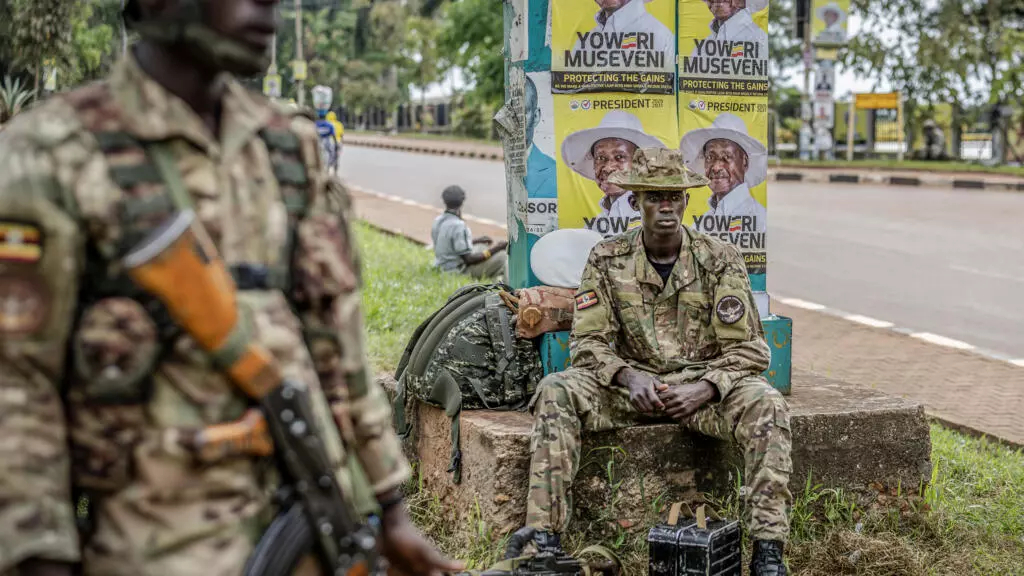
Security concerns have also intensified. Ssemanda described a “massive deployment” of the army across Kampala, with heavily armed soldiers patrolling the streets. “They have machine guns. It looks as if the country is heading toward war,” he said, adding that the objective appears to be to instill fear and deter citizens from voting.
Residents report an atmosphere of anxiety in the capital. According to Ssemanda, many people are staying indoors out of fear, likening the situation to a lockdown. He cautioned that the climate of intimidation could significantly affect voter turnout, with some citizens choosing not to go to polling stations.
A High-Stakes Political Contest
Politically, the vote is shaping up as a high-stakes contest at the top. President Yoweri Museveni, in power since 1986, is seeking a seventh term, campaigning on a message of stability under the slogan “Protecting the Gains.” His main challenger, opposition leader and former pop star Bobi Wine, has accused the government of tightening its grip on the political arena and has framed the election as a protest vote.
On the eve of the polls, Bobi Wine received symbolic backing from veteran opposition figure Kizza Besigye, who has been detained for more than a year on treason charges and called on supporters to vote for the opposition candidate.
Concerns Over Media Freedom and Vote Observation
The credibility of the electoral process is also under scrutiny due to concerns over media access and election observation.
Accredited foreign journalists report being turned away from recent campaign events, including a rally by President Museveni. Reporters Without Borders has cited an increase in violence against journalists in the run-up to the vote.
Tensions are also mounting around polling stations. Police have urged voters to leave immediately after casting their ballots in the interest of public order.
Rights advocates counter that citizens should be allowed to remain nearby to observe vote counting, provided they do not cause disturbances—an issue made more sensitive by the digital blackout, which has already hampered independent verification and the circulation of images.
With just one day to go before polling, the stakes extend beyond who wins the election. In a climate marked by restrictions, fear, and limited access to information, the credibility of the vote—and public acceptance of its outcome—remains a central concern.