






Gambiaj.com – (WASHINGTON, D.C) – The United States Senate on Tuesday, February 3, 2026, voted to reactivate the African Growth and Opportunity Act (AGOA) for a period of one year, ending months of uncertainty for African exporters after the trade program expired last fall. The measure was immediately promulgated by President Donald Trump, restoring duty-free access to the US market for a wide range of African products.
AGOA, first enacted in 2000, allows eligible African countries to export thousands of products to the United States without customs duties. It has been particularly significant for sectors such as vanilla production in Madagascar, automobile manufacturing in South Africa, and textile industries in Kenya and Lesotho.
The program had lapsed in September 2025 amid budgetary paralysis in Washington, leaving exporters in limbo. Faced with a lack of consensus on a comprehensive overhaul, US senators opted for what they described as an emergency solution, reactivating AGOA retroactively to September 30, 2025, but limiting the extension to just one year.
US Trade Representative Jamieson Greer said the White House intends to “modernize” AGOA and align it more closely with President Donald Trump’s “America First” trade policy, signaling that more substantive changes could be proposed within the next twelve months.
However, the short-term nature of the extension has exposed deep divisions within the US political establishment.
While some lawmakers, across party lines, support a long-term renewal of AGOA as a development tool to foster durable trade relations with Africa, others argue for a more restrictive, short-term framework.
Senator John Kennedy is among those advocating a tougher version of AGOA, viewing it as a geopolitical instrument to counter Chinese influence on the continent and to impose stricter political conditions on beneficiary countries.
Despite these disagreements, there is broad agreement in Washington that AGOA, designed more than two decades ago, no longer reflects current global economic realities. US officials argue that reforms should include increased American exports to Africa and greater involvement of US small and medium-sized enterprises to enhance reciprocal benefits.
In recent months, negotiations over AGOA’s renewal have also been used by the White House as leverage in broader diplomatic discussions.
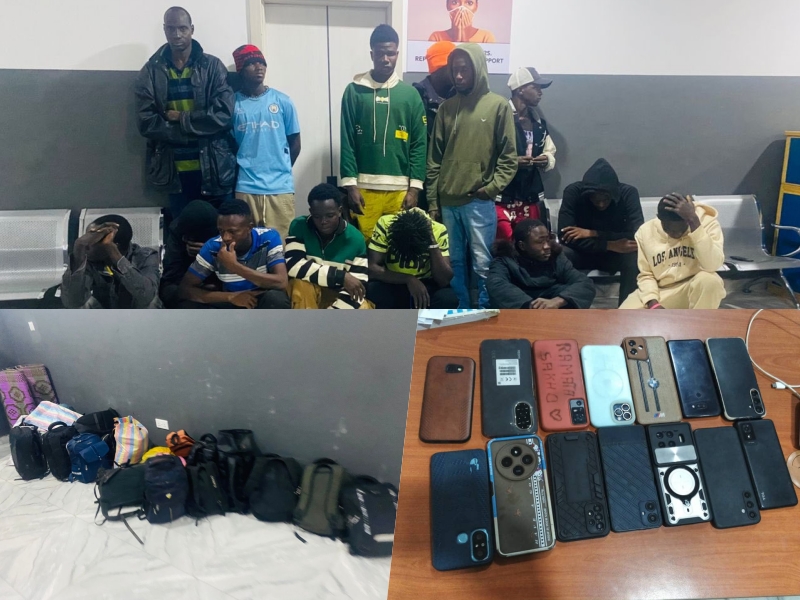
Ghana’s Foreign Affairs Minister disclosed that President Donald Trump had made support for extending AGOA conditional on Ghana’s willingness to accept nationals expelled from the United States.
For African businesses already exporting to the US, the one-year reactivation provides temporary relief. “This is likely to provide a breath of fresh air for exporting companies that already have their planned outlets in the United States,” said Julien Marcilly, chief economist at Global Sovereign Advisory.
However, he cautioned that the short window is unlikely to attract new investment. “Such investments require long-term guarantees, which are clearly not in place.”
The extension also comes with conditions. In exchange, Washington is demanding improved access to African markets, particularly for US farmers and livestock producers. Analysts say this may accelerate Africa’s ongoing efforts to diversify its trade partnerships.
“Over the past twenty years, despite AGOA, many African countries have actually exported less to the United States, with a few notable exceptions,” Marcilly noted. “This trend towards diversification of export destinations is likely to continue.”
Agriculture remains one of the sectors that has benefited most from AGOA, but shifting global demand may reshape future trade patterns.
With Asia’s food needs growing rapidly, experts suggest African agricultural exporters may increasingly prioritize Asian and regional markets, even as AGOA’s future hangs on the outcome of the promised US-led reform debate.