

Gambiaj.com – (UNITED NATIONS, New York) – Tensions between Washington and Tehran reached a boiling point at the UN Security Council on Thursday as U.S. officials warned the Iranian leadership that “all options are on the table” to stop a bloody domestic crackdown that has reportedly claimed more than 2,600 lives.
The emergency session, requested by the United States, featured a rare and high-stakes confrontation between U.S. diplomats, Iranian dissidents, and representatives of the Islamic Republic.
A Stern Warning from Washington
U.S. Ambassador to the UN Mike Waltz delivered a blunt message to the council, characterizing President Donald Trump as a “man of action” who is prepared to move beyond rhetoric.
“He has made it clear that all options are on the table to stop the slaughter,” Waltz said. “And no one should know that better than the leadership of the Iranian regime.”
The warning comes despite recent signals of de-escalation from President Trump, who suggested earlier in the week that the violence appeared to be subsiding. However, the atmosphere remains volatile. Regional allies—including Egypt, Oman, Saudi Arabia, and Qatar—have reportedly been lobbying the White House against military intervention, fearing a conflict could destabilize the global economy and the Middle East.
Testimonies of Terror
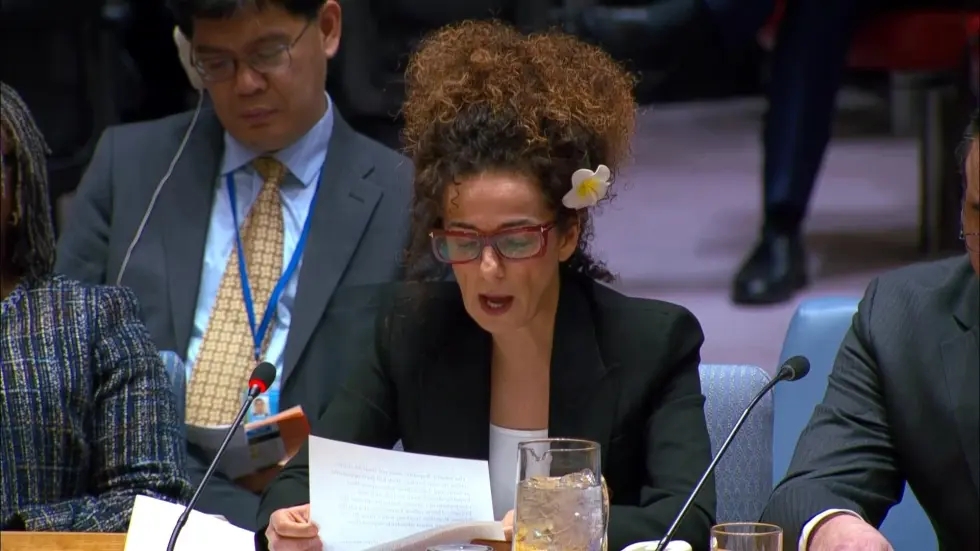
In a departure from standard diplomatic procedure, the U.S. invited two prominent Iranian dissidents, Masih Alinejad and Ahmad Batebi, to testify.
Alinejad, who was the target of a failed Iranian-backed assassination plot in New York, addressed the Iranian representative directly in a stunning exchange. “You have tried to kill me three times,” she said. “I have seen my would-be assassin with my own eyes… in my home in Brooklyn.”
Batebi offered a harrowing account of torture in Iranian prisons, describing how guards would pour salt into open wounds. He urged the international community not to abandon the Iranian people, pleading, “Don’t leave them alone.”
Rising Death Toll and Communication Blackout
While a massive security presence and a state-ordered internet blackout appear to have smothered the scale of the street demonstrations, the human cost continues to rise.
According to the Human Rights Activists News Agency (HRANA), at least 2,677 people have been killed since protests began late last month. This figure represents the deadliest unrest in Iran since the 1979 Islamic Revolution. The protests were initially sparked by a collapsing economy and the freefall of the national currency.
Global Pressure and Sanctions
In coordination with the UN meeting, the U.S. Treasury Department announced new sanctions targeting senior Iranian officials, including the secretary of Iran’s Supreme Council for National Security.
The U.S. is not alone in its pursuit of accountability. The Group of Seven (G7) and the European Union are also weighing additional sanctions. EU Chief Ursula von der Leyen stated the bloc is looking to strengthen measures “to push forward that this regime comes to an end and that there is change.”
Tehran and Moscow Push Back
Iran’s deputy ambassador, Hossein Darzi, dismissed the allegations, accusing the U.S. of orchestrating the unrest. He claimed Washington was using human rights as a “hollow pretext” to lay the groundwork for military intervention.
Russia remained Iran’s sole defender on the council, echoing Tehran’s stance and calling for an end to U.S. “intervention” in Iranian domestic affairs.
As the internet remains dark across much of Iran, the international community remains on edge, watching to see if Washington’s “all options” rhetoric will translate into further military or economic action.