


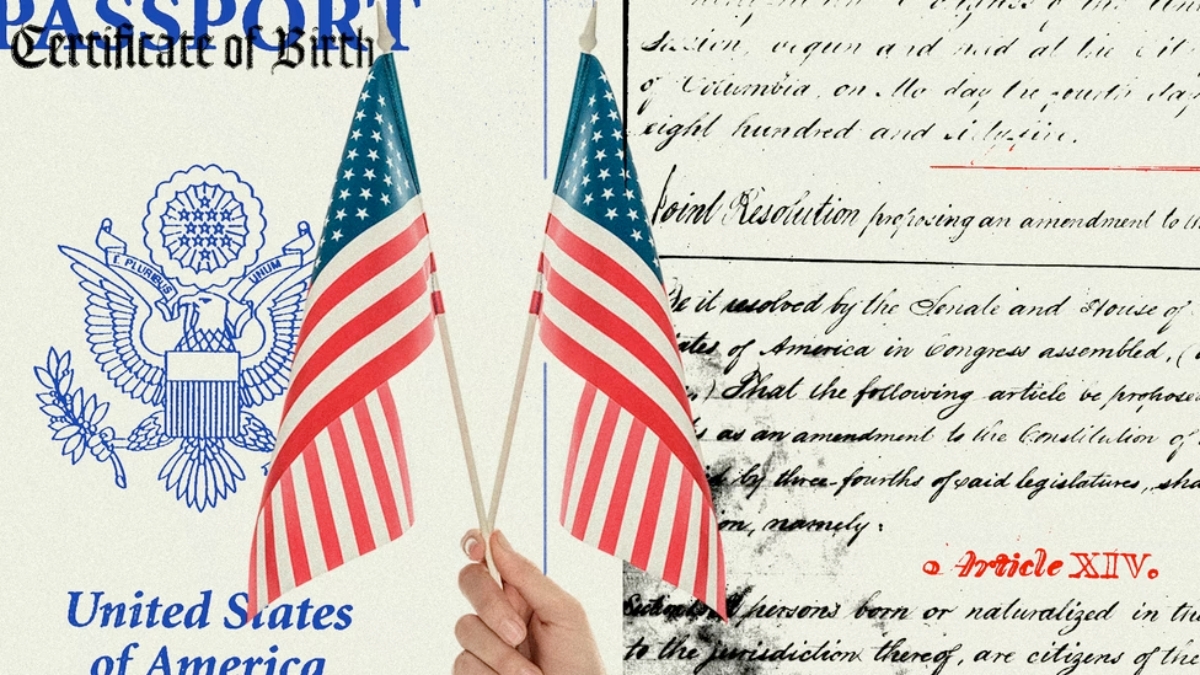
Gambiaj.com – (WASHINGTON, United States) – Oral arguments at the Supreme Court of the United States on Wednesday suggested that several justices harbor significant doubts about President Donald Trump’s attempt to restrict birthright citizenship through executive action.
The hearing, which centers on the administration’s interpretation of the Citizenship Clause of the Fourteenth Amendment to the United States Constitution, drew unusual attention after Trump attended the proceedings in person, an extraordinary moment widely regarded as the first time a sitting president observed Supreme Court arguments over one of his own major policies.
Throughout the arguments, questions from the bench indicated broad skepticism toward the administration’s legal reasoning, while several justices also pressed government lawyers on the practical implications of implementing such a policy.
Skepticism From Across The Bench
Much of the questioning focused on the administration’s claim that the phrase “subject to the jurisdiction thereof” in the amendment excludes children born in the United States to undocumented immigrants from automatic citizenship.
John Roberts, the Chief Justice, openly questioned the government’s interpretation, describing the examples offered to justify the policy as narrow and unusual.
“The examples you give to support that strike me as very quirky,” Roberts told the administration’s lawyer, D. John Sauer, suggesting that it would be difficult to expand such limited exceptions to cover a broad class of immigrants.
Justice Elena Kagan similarly challenged the government’s reading of the amendment, arguing that the constitutional text does not support the interpretation being advanced.
“The text of the clause does not support that,” Kagan said, indicating the administration appeared to rely on a “technical, esoteric meaning.”
Even conservative Justice Samuel Alito raised concerns, noting the case presents an unusual humanitarian dilemma because many undocumented immigrants have established long-term lives in the United States despite technically being removable under immigration law.
Policy Arguments Deemed Legally Irrelevant
Several justices also appeared unconvinced by the administration’s policy justifications for limiting birthright citizenship.
The government cited concerns about so-called “birth tourism,” where foreign nationals allegedly travel to the United States specifically to give birth so their children gain citizenship.
However, Roberts quickly pointed out that such policy concerns may have little bearing on the constitutional question before the court.
After asking government lawyers whether there was reliable evidence that birth tourism is widespread, Roberts acknowledged that the issue ultimately has “no impact on the legal analysis.”
Justice Brett Kavanaugh echoed this view, saying that while international comparisons with countries that lack birthright citizenship might be relevant in policy debates, the court must rely primarily on American constitutional history and precedent.
The Shadow Of A Landmark Precedent
A central point of debate during the hearing was the court’s 1898 ruling in United States v. Wong Kim Ark, which affirmed citizenship for a man born in San Francisco to Chinese parents.
Lawyers challenging Trump’s order argue that the precedent clearly establishes birthright citizenship for nearly all children born on U.S. soil.
While the administration maintained that its policy is consistent with the ruling, several justices appeared unconvinced.
Justice Sonia Sotomayor suggested the government’s argument effectively asks the court to overturn the precedent, even if it does not explicitly say so.
When Sauer insisted the administration was not seeking to reverse the ruling, Sotomayor replied bluntly that the legal outcome of their argument would effectively do exactly that.
Kavanaugh also indicated that if the court determines the precedent clearly supports the challengers’ position, the case could be resolved quickly with a short ruling reaffirming the earlier decision.
Concerns About Real-World Implementation
Justice Ketanji Brown Jackson focused her questioning on how the policy would work in practice, raising concerns about potential bureaucratic and legal complications.
Jackson asked whether hospitals or government officials would need to verify immigration documents immediately after a child’s birth to determine citizenship status.
“How does this work?” she asked, pressing the administration on how authorities would identify whether a newborn qualifies for citizenship.
Government lawyers suggested that the process would rely largely on existing systems used to issue Social Security numbers and birth certificates. But Jackson continued to question whether families would be forced into legal disputes after a child is denied citizenship.
“So, after their baby has been denied citizenship, then we can go through the process?” she asked pointedly.
Trump Observes Quietly From The Gallery
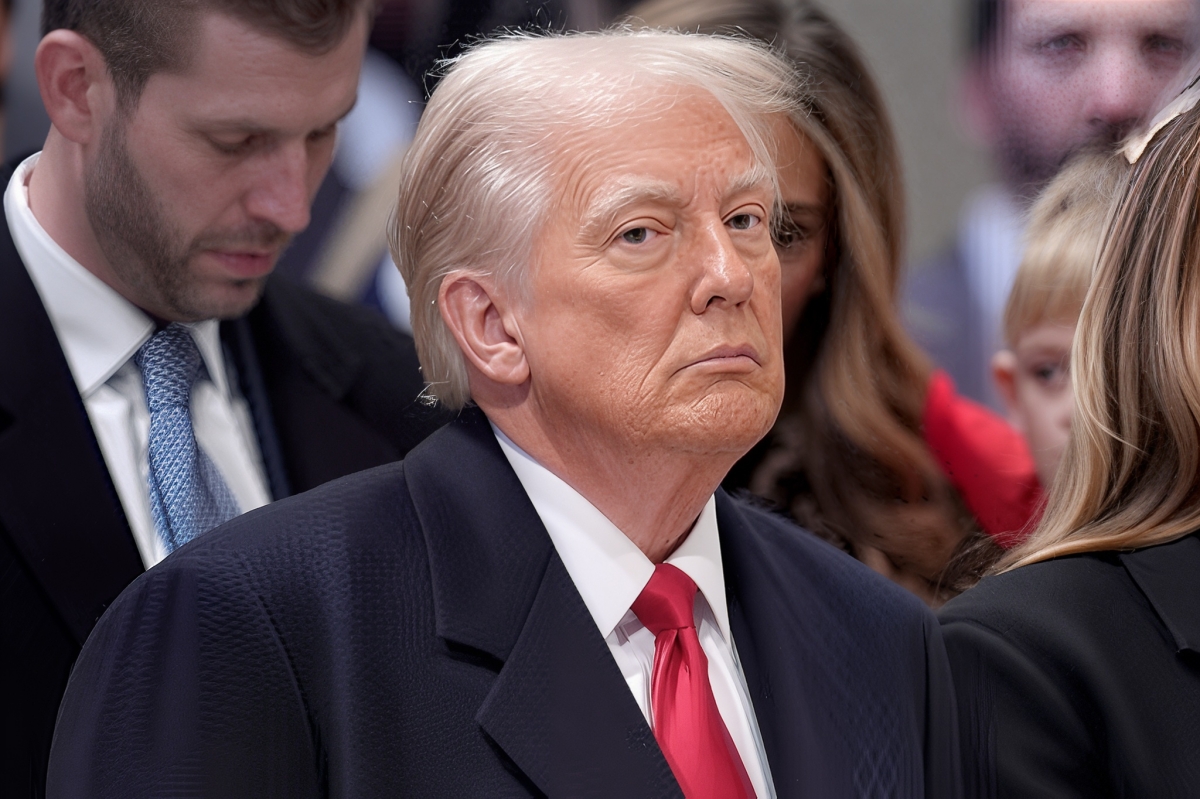
Trump attended the arguments alongside several senior administration officials, including Pam Bondi, Howard Lutnick, and David Warrington.
Unlike his appearances in lower courts during past legal battles, the president remained largely expressionless throughout the session and did not interact with lawyers during the arguments.
Court observers noted that most justices avoided acknowledging his presence, though Clarence Thomas briefly glanced toward the area where Trump was seated.
Trump listened to the government’s arguments before leaving the courtroom shortly after the opposing counsel began presenting their case.
Despite the president’s unusual attendance, the questioning suggested that the justices’ focus remained firmly on constitutional interpretation and precedent, factors that may ultimately determine the fate of the administration’s controversial immigration policy.




Leave a Reply